
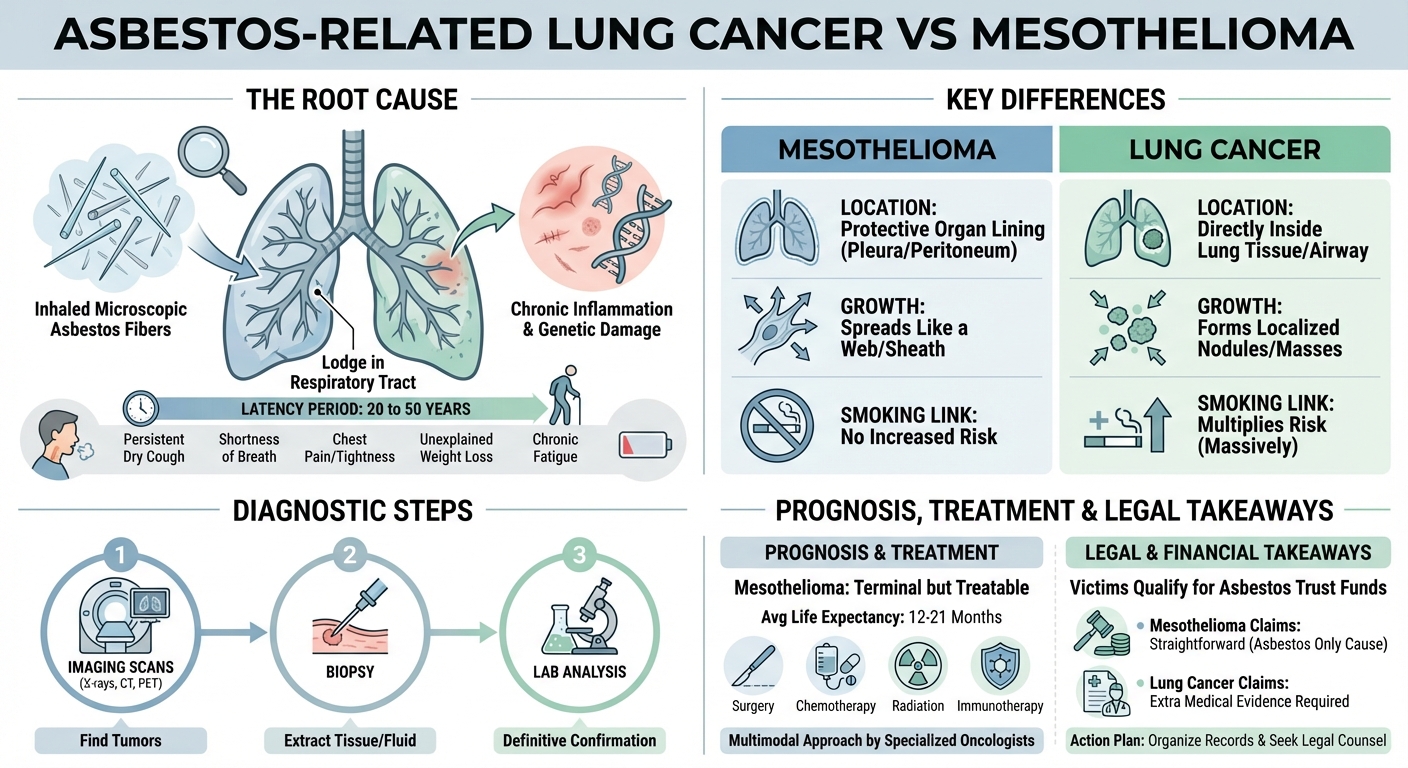
While both lung cancer and mesothelioma are caused by inhaling asbestos fibers, they are distinct diseases. Mesothelioma develops in the mesothelium—the thin lining surrounding the lungs or abdomen. In contrast, asbestos-related lung cancer forms inside the lung tissue itself. Both conditions have a latency period of decades.
Asbestos-Related Lung Cancer vs. Mesothelioma: Understanding the Connection
Exposure to asbestos is a well-documented cause of severe respiratory illnesses. While many people use the terms interchangeably, asbestos-related lung cancer and mesothelioma are two distinct diseases with different origins, diagnostic criteria, and treatment paths. Understanding the connection between them begins with knowing how asbestos interacts with the human body.
How Asbestos Fibers Damage the Body
Asbestos is a naturally occurring mineral composed of microscopic, durable fibers. When asbestos-containing materials are disturbed, these invisible fibers become airborne. If inhaled or swallowed, the fibers can bypass the body’s natural filtration systems and lodge deep within the respiratory tract or digestive system. Because the body cannot break down or expel these sharp fibers, they cause chronic inflammation, scarring, and genetic cellular damage that can eventually trigger cancer.
The Latency Period: Why Symptoms Take Decades to Appear
One of the most dangerous aspects of asbestos exposure is its prolonged latency period. Neither lung cancer nor mesothelioma develops immediately. It typically takes anywhere from 20 to 50 years after the initial exposure for symptoms to manifest. This long delay often makes it difficult for patients to connect their current illness to a job or living situation from decades past.
Key Differences Between Mesothelioma and Lung Cancer
Though both cancers share a common cause in asbestos exposure, they behave very differently in the body.
Location of the Cancer (Mesothelium vs. Lung Tissue)
The primary difference lies in where the tumors originate. Mesothelioma develops in the mesothelium, which is the thin, protective membrane surrounding the lungs (pleural mesothelioma), abdomen (peritoneal mesothelioma), or heart. Asbestos-related lung cancer, on the other hand, develops directly inside the lung tissue itself, typically starting in the lining of the bronchi or bronchioles.
The Role of Smoking (Synergistic Risk for Lung Cancer vs. No Link to Mesothelioma)
Smoking plays a drastically different role in these two diseases. Smoking does not cause mesothelioma, nor does it increase the risk of developing it. However, smoking and asbestos exposure have a synergistic effect on lung cancer. An individual who smokes and is exposed to asbestos is at a massively multiplied risk of developing lung cancer compared to someone with only one of those risk factors.
Differences in Tumor Growth and Spread
Lung cancer generally forms as distinct, localized nodules or masses within the lung, which can eventually metastasize to other organs. Mesothelioma grows quite differently; it typically forms a network of small tumors that spread like a sheath or web across the lining of the lungs or abdomen, making surgical removal uniquely challenging.
Symptoms and Diagnostic Challenges
Because these diseases affect the same general area of the body, distinguishing between them requires specialized medical attention.
Overlapping Symptoms (Cough, Chest Pain, Shortness of Breath)
In their early stages, both cancers present symptoms that mimic less severe respiratory conditions, such as asthma or pneumonia. Common overlapping symptoms include:
- Persistent, dry cough
- Shortness of breath (dyspnea)
- Chest pain or tightness
- Unexplained weight loss
- Fatigue
Imaging and Biopsies: How Doctors Confirm the Diagnosis
To differentiate between lung cancer and mesothelioma, oncologists rely on a combination of imaging scans (X-rays, CT scans, and PET scans) to identify the location and growth pattern of the tumors. However, imaging alone is not enough. A biopsy—the extraction and laboratory analysis of tissue or fluid—is the only definitive way to confirm whether the cancer cells are mesothelioma or lung carcinoma.
Prognosis and Life Expectancy
A cancer diagnosis naturally brings urgent questions about the future. Below are answers to common questions regarding prognosis.
What is the life expectancy of someone with pleural mesothelioma?
The life expectancy of someone with pleural mesothelioma is typically between 12 and 21 months after diagnosis, provided they receive treatment. However, survival rates vary widely based on the patient’s age, overall health, cancer stage, and how well the tumor responds to therapies like surgery or chemotherapy.
Is mesothelioma terminal?
Yes, mesothelioma is generally considered a terminal cancer because there is currently no definitive cure. However, it is treatable. Advances in multimodal therapies, including surgery, chemotherapy, and immunotherapy, can significantly extend a patient’s life expectancy, slow tumor growth, and improve their overall quality of life.
What is the longest someone has lived with mesothelioma?
While rare, the longest someone has lived with mesothelioma exceeds 20 years. Paul Kraus, diagnosed in 1997, is widely recognized as the longest-living survivor. Exceptional long-term survival usually depends on early detection, aggressive multimodal treatment, favorable tumor cell types, and overall excellent physical health.
What is the life expectancy of asbestosis patients?
The life expectancy of asbestosis patients varies, as it is a chronic, non-cancerous lung disease rather than a terminal cancer. Many patients live for decades after their diagnosis. However, severe cases can significantly reduce life expectancy by causing progressive heart failure or respiratory failure over time.
Treatment Options for Asbestos-Related Cancers
Treatment plans depend heavily on the specific diagnosis, the stage of the disease, and the patient’s overall health.
Surgery, Chemotherapy, and Radiation
Both lung cancer and mesothelioma are typically treated using a multimodal approach:
- Surgery: Used to remove tumors or affected tissue. For lung cancer, this might mean a lobectomy. For mesothelioma, it may involve a pleurectomy/decortication (P/D) or extrapleural pneumonectomy (EPP).
- Chemotherapy: Systemic drugs used to shrink tumors and kill cancer cells.
- Radiation: Targeted energy beams used to control localized tumor growth and alleviate pain.
- Immunotherapy: Emerging treatments that help the body’s immune system recognize and attack cancer cells.
Seeking Specialists
Because asbestos-related cancers are complex and rare (especially mesothelioma), consulting with a specialized oncologist is critical. If you are in Texas, exploring MD Anderson and Mesothelioma in Houston: Treatment, Specialists, and Legal Options can provide insight into accessing world-class care.
Why Your Specific Diagnosis Matters for Legal Claims
From a legal perspective, knowing whether you have lung cancer or mesothelioma is vital, as it dictates how your compensation claim will be structured.
Asbestos Trust Funds for Lung Cancer vs. Mesothelioma
Bankrupt asbestos companies have established billions of dollars in trust funds to compensate victims. Both asbestos-related lung cancer and mesothelioma qualify for these funds. However, mesothelioma claims often have a more straightforward path to compensation because asbestos is the only known cause of the disease. Lung cancer claims may require additional medical evidence to prove that asbestos—rather than smoking or other factors—was a substantial contributing cause.
Next Steps After a Diagnosis
If you or a loved one has recently received a diagnosis, protecting your health and your legal rights should be your top priorities. Start by reading I Was Just Diagnosed with Mesothelioma: What to Do First to organize your medical and legal approach.
Once you are ready to explore financial recovery, learn about the process in our guide to a Mesothelioma Lawsuit: How to File a Claim and What to Expect. Finally, to understand the potential value of your case, review Mesothelioma Compensation: How Much Can You Receive? to ensure your family’s financial future is secured.
 Call (713) 747-7777