
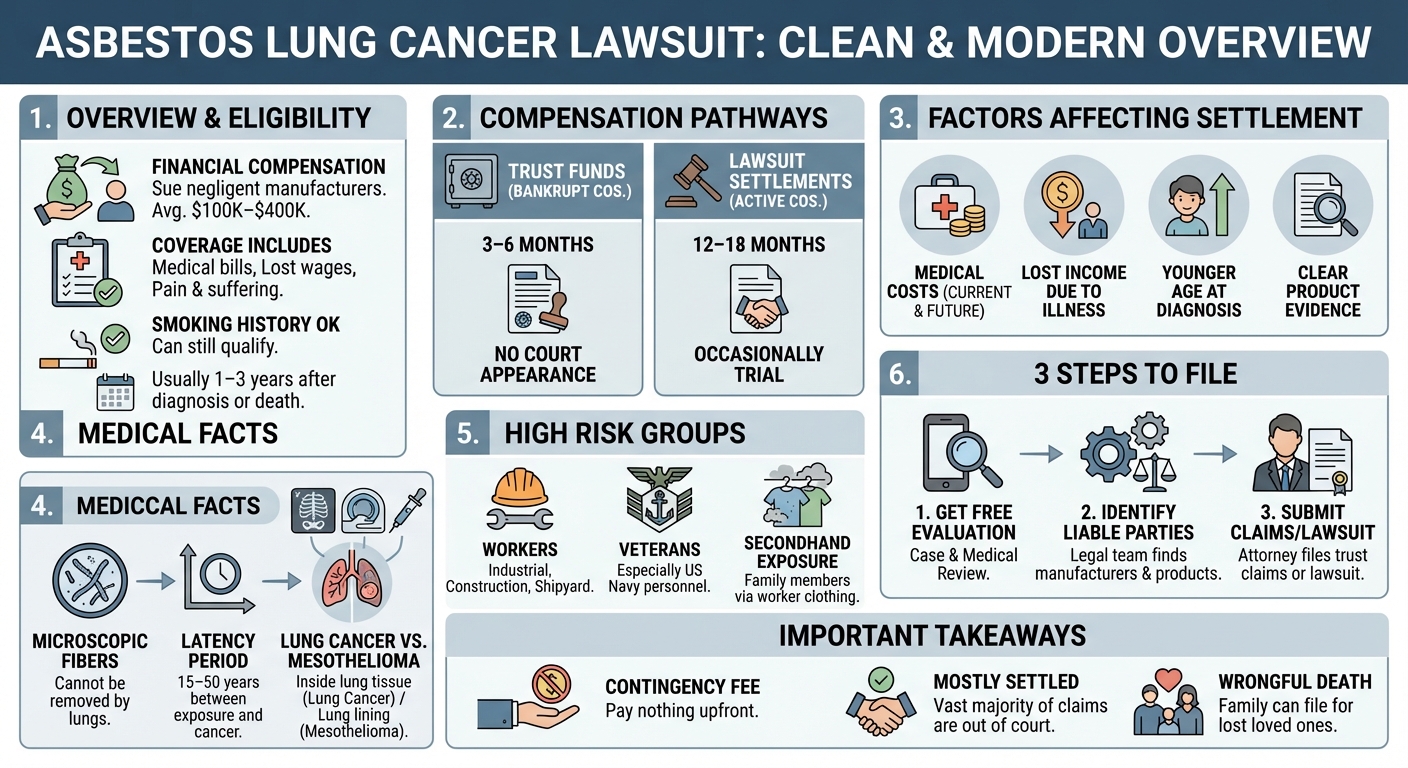
An asbestos lung cancer lawsuit allows victims exposed to asbestos to seek financial compensation from negligent manufacturers. Average settlements range from $100,000 to $400,000. You may qualify even if you have a history of smoking. Compensation covers medical bills, lost wages, and pain and suffering.
Asbestos Lung Cancer Lawsuits: Eligibility, Settlements, and Next Steps
A lung cancer diagnosis is devastating, and learning it was caused by preventable asbestos exposure can make the situation even more overwhelming. For decades, manufacturers knew about the severe health risks of asbestos but failed to warn workers and consumers. Today, victims can file an asbestos lung cancer lawsuit to seek justice and secure financial stability for their families.
What is the Average Settlement for Asbestos Lung Cancer?
The average settlement for asbestos lung cancer typically ranges from $100,000 to $400,000. However, compensation varies widely based on individual case factors. Some plaintiffs receive multi-million dollar verdicts if the case goes to trial, while asbestos trust fund claims often provide faster, standardized payouts without court appearances.
Typical Payout Ranges ($100,000 to $400,000+)
While the average payout sits in the six-figure range, total compensation can be much higher depending on the severity of the damages and the number of liable companies. Many victims file claims against multiple asbestos trust funds simultaneously, which can significantly increase the total payout.
Asbestos Trust Funds vs. Trial Verdicts
There are two primary avenues for compensation, and your attorney may pursue both depending on your case:
| Compensation Type | Description | Timeline |
|---|---|---|
| Asbestos Trust Funds | Bankrupt asbestos companies were forced to set aside billions in trust funds to pay future victims. Claims are processed without going to court. | Typically 3 to 6 months |
| Lawsuit Settlements & Verdicts | Claims filed against companies that are still in business. These can settle out of court or go to trial before a jury. | 12 to 18+ months |
Key Factors That Impact Your Settlement Amount
- Medical Expenses: Past, current, and future costs of cancer treatments, surgeries, and medications.
- Lost Wages: Compensation for income lost due to illness and inability to work.
- Age at Diagnosis: Younger patients often receive higher settlements due to a longer period of lost earning capacity.
- Proof of Exposure: The strength of the evidence linking your specific lung cancer to a specific company’s asbestos product.
Who Qualifies for an Asbestos Lung Cancer Lawsuit?
Proving Workplace or Household Asbestos Exposure
To qualify for a claim, you must demonstrate that you were exposed to asbestos and subsequently developed lung cancer. This requires gathering employment records, union documentation, military service records, and medical files. Experienced asbestos attorneys have extensive databases of job sites and products to help pinpoint exactly when and where you were exposed.
Can You File a Claim if You Were a Smoker?
Yes. You can absolutely file an asbestos lung cancer lawsuit even if you have a history of smoking. Medical science recognizes a synergistic effect between smoking and asbestos exposure—meaning the combination of the two increases your risk of lung cancer far more than either factor alone. While smoking may be used by the defense to reduce liability, it does not disqualify you from receiving compensation.
Statute of Limitations: Deadlines to File Your Claim
The statute of limitations dictates how long you have to file a lawsuit. For asbestos claims, this clock usually starts ticking on the date of your lung cancer diagnosis (personal injury claim) or the date of a loved one’s death (wrongful death claim). Deadlines vary by state, generally ranging from one to three years. It is critical to consult a lawyer immediately to avoid missing this window.
The Medical Reality: Understanding Asbestos in the Lungs
How do you know if you have asbestos in your lungs?
You cannot feel asbestos fibers when you breathe them in. To know if you have asbestos in your lungs, doctors rely on imaging tests like chest X-rays or CT scans, which reveal lung scarring or pleural plaques. A lung biopsy can definitively confirm the presence of asbestos fibers.
Can the lungs remove asbestos?
No, the lungs cannot effectively remove asbestos. Because asbestos fibers are microscopic, sharp, and highly durable, they become permanently trapped deep within lung tissue. Over decades, these lodged fibers cause chronic inflammation, scarring, and cellular damage that can eventually lead to lung cancer or mesothelioma.
How long can you live with asbestos in your lungs?
You can live with asbestos in your lungs for decades without experiencing any symptoms. The latency period between initial asbestos exposure and the development of diseases like lung cancer typically ranges from 15 to 50 years. Once diagnosed with lung cancer, life expectancy depends heavily on the cancer’s stage.
Asbestos Lung Cancer vs. Mesothelioma: Key Differences
While both are caused by asbestos, they are distinct diseases. Asbestos lung cancer develops inside the lung tissue itself. Mesothelioma is a rare cancer that develops in the pleura—the thin protective lining surrounding the lungs. Both conditions qualify for substantial legal compensation.
How to File an Asbestos Lung Cancer Claim
Step 1: Free Case Evaluation and Medical Review
The process begins with a free consultation. An attorney will review your medical diagnosis and discuss your work history to determine if you have a viable claim.
Step 2: Identifying Liable Manufacturers and Products
Your legal team will investigate your past to identify which asbestos-containing products you handled and which companies manufactured them. This step is crucial for determining where to file your claims.
Step 3: Submitting Trust Fund Claims or Filing a Lawsuit
Once evidence is gathered, your attorney will file the necessary paperwork. They will negotiate with defendants for a settlement or submit claims to the appropriate asbestos trust funds on your behalf.
Top Industries and Occupations at Risk for Asbestos Exposure
Construction, Shipyard, and Industrial Workers
Before the 1980s, asbestos was heavily used in insulation, roofing, pipefitting, and automotive brakes. Workers in construction, shipyards, power plants, and auto repair shops faced some of the highest daily exposure levels.
Military Veterans and Asbestos Exposure
Veterans, particularly those who served in the U.S. Navy, are at a high risk for asbestos lung cancer. Asbestos was used extensively on naval vessels for fireproofing and insulation. Veterans can file trust fund claims without suing the military or affecting their VA benefits.
Secondhand Exposure for Family Members
You do not have to have worked directly with asbestos to qualify. Many spouses and children developed lung cancer from secondhand exposure—breathing in asbestos dust brought home on the clothing, hair, or tools of industrial workers.
Frequently Asked Questions About Asbestos Lung Cancer Claims
How much does it cost to hire an asbestos lawyer?
Most asbestos attorneys work on a contingency fee basis. This means you pay nothing upfront, and the law firm only collects a percentage of your settlement if they successfully win compensation for you.
Will I have to go to court to get a settlement?
It is highly unlikely. The vast majority of asbestos lung cancer lawsuits are settled out of court or paid through asbestos trust funds. If your case does go to trial, your attorney will handle the litigation process.
Can family members file a wrongful death lawsuit for asbestos lung cancer?
Yes. If a loved one passes away from asbestos-related lung cancer, surviving family members (such as a spouse or children) can file a wrongful death lawsuit or trust fund claim to recover medical bills, funeral expenses, and loss of financial support.
 Call (713) 747-7777