
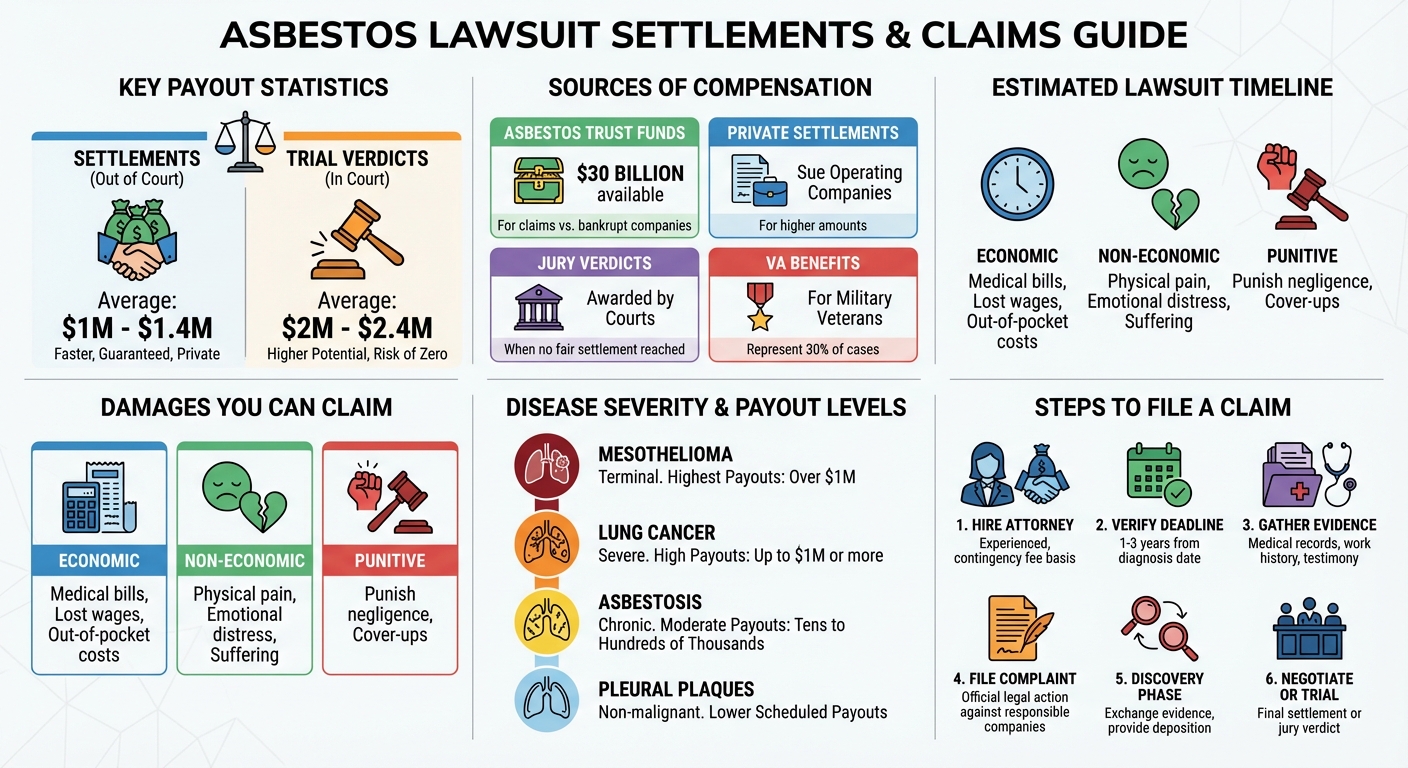
The average asbestos lawsuit settlement ranges from $1 million to $1.4 million. Compensation depends on your specific diagnosis, medical expenses, and evidence of exposure. Cases that go to trial can result in higher jury verdicts, typically averaging between $2 million and $2.4 million, though out-of-court settlements resolve much faster.
Asbestos Lawsuit Settlements: Average Payouts & Timeline Guide
If you or a loved one has been diagnosed with an asbestos-related illness, pursuing legal action can provide crucial financial security. Asbestos lawsuit settlements help cover mounting medical bills, lost income, and the physical and emotional toll of the disease. This comprehensive guide breaks down average payouts, the timeline for receiving compensation, and the steps required to file a successful claim.
What is the average asbestos settlement amount?
The average asbestos settlement amount typically ranges between $1 million and $1.4 million. However, compensation varies widely based on the severity of the diagnosis, medical expenses, and the specific companies involved. Some cases involving severe illnesses like mesothelioma can result in much higher payouts or multi-million dollar trial verdicts.
Typical Settlement Ranges ($1 Million to $1.4 Million)
Most out-of-court asbestos settlements fall within the $1 million to $1.4 million range. These figures represent the total compensation negotiated between your legal team and the defendants (usually the manufacturers or distributors of asbestos-containing products). Because settlements are negotiated privately, they offer a guaranteed payout without the unpredictability of a jury trial.
Trust Fund Payouts vs. Private Settlements
Many companies responsible for asbestos exposure filed for bankruptcy to avoid mass litigation. In response, courts ordered them to establish Asbestos Bankruptcy Trust Funds.
- Trust Fund Payouts: These are predetermined amounts based on a scheduled value for your specific disease. They often pay out faster but may yield lower individual amounts (typically ranging from low five figures to low six figures per trust).
- Private Settlements: These involve suing solvent (still operating) companies. They generally take slightly longer to negotiate but result in significantly higher compensation.
Average Trial Verdict Amounts
If a settlement cannot be reached, your case may go to trial. Average trial verdicts for asbestos cases are higher—often between $2 million and $2.4 million. However, trials carry the risk of a jury ruling in favor of the defendant, which would result in zero compensation.
How much can you sue for asbestos?
You can sue for asbestos compensation ranging from thousands to millions of dollars, depending on your specific damages. Plaintiffs typically seek recovery for medical bills, lost income, and pain and suffering. In cases of extreme corporate negligence, juries may also award substantial punitive damages, significantly increasing the total payout.
Calculating Economic Damages (Medical Bills and Lost Wages)
Economic damages are the quantifiable financial losses caused by your illness. Your attorney will calculate:
- Past and future medical expenses (surgeries, chemotherapy, hospital stays).
- Lost wages and diminished earning capacity if you are forced to stop working.
- Out-of-pocket costs, such as travel for specialized medical treatment.
Non-Economic Damages (Pain and Suffering)
Non-economic damages compensate you for the intangible impacts of the disease. This includes physical pain, emotional distress, loss of enjoyment of life, and loss of consortium for your spouse. Because illnesses like mesothelioma are incredibly painful and terminal, non-economic damages often make up a significant portion of the settlement.
Punitive Damages for Corporate Negligence
In cases where a company knew about the dangers of asbestos but actively hid them from workers and the public, juries may award punitive damages. These are designed to punish the wrongdoer and deter future misconduct. Punitive damages can exponentially increase the final verdict amount.
What are the four major asbestos-related diseases?
The four major asbestos-related diseases are mesothelioma, asbestos-related lung cancer, asbestosis, and pleural plaques or thickening. Mesothelioma and lung cancer are severe, fatal malignancies that typically yield the highest settlements. Asbestosis and pleural conditions are non-cancerous but still cause significant respiratory impairment, qualifying victims for substantial legal compensation.
Mesothelioma
Mesothelioma is a rare, aggressive cancer that develops in the lining of the lungs, abdomen, or heart. It is almost exclusively caused by asbestos exposure. Because of its severity and poor prognosis, mesothelioma claims consistently result in the highest settlement and verdict amounts.
Asbestos-Related Lung Cancer
While smoking is the leading cause of lung cancer, asbestos exposure significantly increases the risk. If a patient has a history of asbestos exposure and develops lung cancer, they are often eligible for compensation, especially if they can prove the exposure was a substantial contributing factor.
Asbestosis
Asbestosis is a chronic, non-cancerous respiratory disease caused by inhaling asbestos fibers, which scar lung tissue. This scarring restricts breathing and worsens over time. While payouts are generally lower than for mesothelioma, asbestosis victims still receive substantial compensation to cover ongoing medical care.
Pleural Plaques and Pleural Thickening
These conditions involve the scarring and thickening of the pleura (the tissue surrounding the lungs). While they are non-malignant, they serve as undeniable biomarkers of asbestos exposure and can cause chest pain and breathing difficulties. Compensation is available, primarily through asbestos trust funds.
How Your Diagnosis Impacts Your Payout
Your specific diagnosis is the most heavily weighted factor in determining your settlement value.
| Diagnosis | Severity | Typical Compensation Level |
|---|---|---|
| Mesothelioma | Malignant / Terminal | Highest ($1M – $2.4M+) |
| Lung Cancer | Malignant | High (Hundreds of thousands to $1M+) |
| Asbestosis | Non-Malignant / Chronic | Moderate (Tens to hundreds of thousands) |
| Pleural Plaques | Non-Malignant | Lower (Trust fund scheduled payouts) |
Types of Asbestos Compensation Available
Asbestos Bankruptcy Trust Funds
Over 60 trust funds currently hold an estimated $30 billion for asbestos victims. If the company responsible for your exposure is bankrupt, your lawyer will file a claim directly with their trust fund. You can file claims with multiple trusts if exposed to multiple products.
Out-of-Court Settlements
A private settlement is a legally binding agreement where the defendant agrees to pay a specific amount to resolve the lawsuit before a jury makes a decision. This is the most common resolution, offering a guaranteed payout and privacy.
Jury Verdicts
If a fair settlement cannot be reached, your attorney will present your case to a judge and jury. While verdicts can result in record-breaking compensation, they also require a longer timeline and carry the risk of an unfavorable ruling.
VA Benefits for U.S. Navy and Military Veterans
Veterans, particularly those who served in the U.S. Navy, represent nearly 30% of all mesothelioma cases due to the heavy use of asbestos on ships and in shipyards. Veterans can file for VA Disability Compensation and VA Healthcare alongside private lawsuits and trust fund claims.
How long does an asbestos lawsuit take to settle?
An asbestos lawsuit typically takes 12 to 18 months to settle. However, courts often expedite claims for plaintiffs facing severe health declines, potentially resolving them in less than a year. The timeline depends on the discovery process, settlement negotiations, and whether the case ultimately proceeds to a jury trial.
The Standard Timeline: 12 to 18 Months
From the moment you hire an attorney to the day you receive your settlement check, the standard timeline is roughly one to one-and-a-half years. This allows time for thorough investigation, filing the complaint, and back-and-forth negotiations.
Expedited Claims for Severe Illness
Because mesothelioma is an aggressive disease, many state courts allow asbestos cases to be fast-tracked. If the plaintiff is in declining health, a judge can order an expedited trial date, which forces defendants to the negotiating table much faster—often within 6 to 8 months.
Phases of the Lawsuit (Filing, Discovery, Negotiation)
- Filing the Complaint: Your lawyer drafts and files the legal paperwork against the defendants.
- Discovery: Both sides exchange evidence. You may be required to give a deposition detailing your work history and exposure.
- Negotiation: Attorneys use the evidence gathered during discovery to negotiate a fair settlement amount.
Largest Asbestos Lawsuit Settlements in the US
Notable Multi-Million Dollar Verdicts
While average settlements hover around $1.4 million, trial verdicts can be staggering, especially when corporate cover-ups are exposed. Notable historical verdicts include:
- $250 Million: Awarded to an Indiana steel mill worker diagnosed with mesothelioma.
- $190 Million: Awarded to five New York naval shipyard workers.
- $22 Million: Awarded to a painter and drywall worker exposed to asbestos-containing joint compound.
Why Some Cases Go to Trial Instead of Settling
Cases usually go to trial when a defendant refuses to offer a fair settlement or denies liability entirely. Experienced asbestos attorneys prepare every case as if it will go to trial, which ironically increases the likelihood of a generous out-of-court settlement.
How to File an Asbestos Claim
Understanding the Statute of Limitations in Your State
Every state has a strict deadline for filing an asbestos lawsuit, known as the statute of limitations. This window typically ranges from 1 to 3 years. Crucially, the clock starts ticking from the date of your diagnosis, not the date of your exposure (which may have been decades ago).
Gathering Evidence of Exposure and Medical Records
To build a strong case, your legal team will need:
- Official medical records confirming an asbestos-related diagnosis.
- Employment records, union dispatch slips, or military service records.
- Testimony from former coworkers who can verify the presence of asbestos at your job site.
Choosing the Right Asbestos Attorney
Asbestos litigation is highly complex. It is vital to choose a law firm with dedicated experience in mass torts and asbestos claims. Look for attorneys who offer free case evaluations and work on a contingency fee basis—meaning you pay nothing out of pocket, and they only get paid if they win your case.
 Call (713) 747-7777