
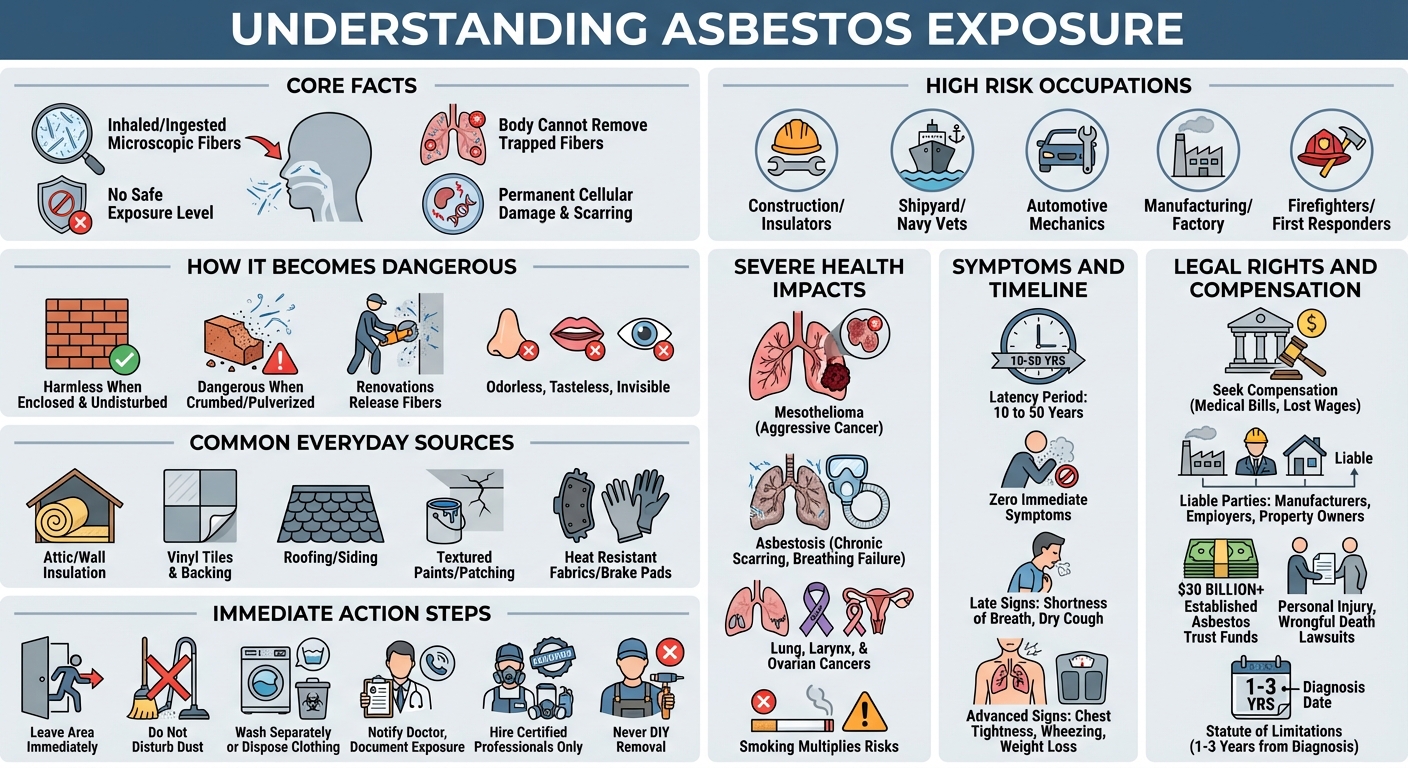
Asbestos exposure occurs when microscopic asbestos fibers become airborne and are inhaled or ingested. There is no safe level of exposure. Over time, trapped fibers cause inflammation and scarring, leading to severe health conditions like mesothelioma, lung cancer, and asbestosis, often decades after the initial exposure.
Understanding Asbestos Exposure: Causes and Risk Factors
Asbestos is a naturally occurring mineral once prized for its heat resistance, tensile strength, and insulating properties. However, it is now recognized as a highly toxic carcinogen. Understanding how exposure occurs is the first step in protecting your health and your legal rights.
How Asbestos Fibers Become Airborne
Asbestos is generally harmless when it is fully enclosed and undisturbed. The danger arises when asbestos-containing materials become “friable”—meaning they are easily crumbled, crushed, or pulverized by hand pressure. When these materials are damaged, cut, or disturbed during renovations or demolition, microscopic asbestos fibers are released into the air. Because these fibers are odorless, tasteless, and invisible to the naked eye, individuals can inhale or ingest them without ever realizing they have been exposed.
High-Risk Occupations and Workplaces
Historically, occupational exposure has been the leading cause of asbestos-related diseases. Millions of American workers were exposed to asbestos before strict regulations were enacted in the late 1970s and 1980s. High-risk occupations include:
- Construction Workers: Carpenters, roofers, and insulators handling building materials.
- Shipyard Workers and Navy Veterans: Asbestos was heavily used in shipbuilding for boiler rooms and pipe insulation.
- Automotive Mechanics: Frequent exposure to asbestos-containing brake pads and clutches.
- Manufacturing and Factory Workers: Employees in plants producing textiles, plastics, and paper.
- Firefighters and First Responders: Exposure to burning or collapsing older buildings.
Common Asbestos-Containing Products
Before its dangers were widely acknowledged, asbestos was used in over 3,000 commercial products. Common sources of exposure include:
- Attic and wall insulation (e.g., vermiculite insulation)
- Vinyl floor tiles and the backing on vinyl sheet flooring
- Roofing and siding shingles
- Textured paint and patching compounds used on wall and ceiling joints
- Heat-resistant fabrics and automotive friction products
Health Risks: Diseases Linked to Asbestos
According to the Occupational Safety and Health Administration (OSHA), there is no “safe” level of asbestos exposure. Prolonged or intense exposure significantly increases the risk of developing severe respiratory and systemic diseases.
Mesothelioma
Mesothelioma is a rare, aggressive cancer that develops in the mesothelium, the thin layer of tissue that covers most of your internal organs. The most common form is pleural mesothelioma (affecting the lung lining), but it can also affect the abdomen (peritoneal) or heart (pericardial). Asbestos exposure is the primary known cause of this devastating disease.
Asbestosis
Asbestosis is a chronic, non-cancerous respiratory disease caused by inhaling asbestos fibers. The fibers aggravate lung tissues, causing them to scar. This scarring (fibrosis) makes it difficult for the lungs to expand and contract, leading to severe shortness of breath and permanent lung damage.
Lung Cancer and Other Cancers
Asbestos exposure significantly increases the risk of developing lung cancer, especially in individuals who also smoke. The combination of smoking and asbestos exposure creates a synergistic effect, multiplying the cancer risk. Additionally, health agencies have definitively linked asbestos exposure to cancers of the larynx (voice box) and ovaries.
Symptoms and Biological Impact
The biological impact of asbestos is insidious because the damage occurs on a cellular level over a long period.
What are the first signs of asbestos exposure?
There are no immediate symptoms during asbestos exposure. However, the first signs of asbestos-related diseases—appearing decades later—include shortness of breath, a persistent dry cough, chest tightness, wheezing, and unexplained weight loss. If you experience these, consult a pulmonologist immediately.
Does your body get rid of asbestos?
No, your body cannot easily get rid of asbestos. Because asbestos fibers are microscopic, sharp, and highly durable, they bypass the body’s natural filtration systems. Once inhaled, they lodge deep into lung tissue and the pleural lining, remaining trapped there permanently and causing long-term cellular damage.
The Latency Period: Why Symptoms Take Decades
One of the most challenging aspects of asbestos exposure is its “latency period.” It typically takes anywhere from 10 to 50 years after the initial exposure for symptoms of mesothelioma, asbestosis, or lung cancer to manifest. This long delay often makes it difficult for victims to immediately connect their current health issues to past occupational or environmental exposure.
Actionable Steps: Dealing with Exposure and Home Safety
If you suspect you have encountered asbestos, taking the right steps can mitigate your risk and protect your household.
What do you do if you are exposed to asbestos?
If you are exposed to asbestos, immediately leave the area and prevent others from entering. Do not sweep, vacuum, or disturb the dust. Wash your clothes separately or dispose of them. Finally, notify your doctor to document the exposure in your medical records for future monitoring.
Is it safe to live in a house with an asbestos ceiling?
Yes, it is generally safe to live in a house with an asbestos ceiling, provided the material is in good condition and left completely undisturbed. Asbestos only poses a health risk when it is damaged, crumbling, or scraped, which releases toxic fibers into the air.
When to Hire a Certified Asbestos Abatement Professional
Never attempt to remove asbestos yourself. If you are planning a major renovation, or if asbestos-containing materials in your home are damaged (e.g., peeling, water-damaged, or crumbling), you must hire a certified asbestos abatement professional. They use specialized equipment, negative air pressure, and safe disposal methods to remove or encapsulate the hazard without contaminating your home.
Legal Rights and Compensation for Asbestos Victims
Because the dangers of asbestos were known by manufacturers long before workers were warned, victims of asbestos exposure have robust legal rights to seek compensation for medical bills, lost wages, and pain and suffering.
Who is Liable for Asbestos Exposure?
Liability often falls on the companies that mined, manufactured, or sold asbestos-containing products. In some cases, employers or property owners who failed to provide a safe environment or adequate protective gear may also be held liable.
Filing an Asbestos Trust Fund Claim or Lawsuit
Many asbestos manufacturers filed for bankruptcy to avoid lawsuits. However, courts forced these companies to establish Asbestos Trust Funds to compensate future victims. Currently, there is over $30 billion available in these trusts. If the responsible company is still in business, victims may pursue a personal injury lawsuit. If a loved one has passed away from an asbestos-related disease, surviving family members can file a wrongful death lawsuit.
Statute of Limitations for Asbestos Claims
The statute of limitations for filing an asbestos claim varies by state, typically ranging from one to three years. Crucially, because of the long latency period, the clock usually starts ticking on the date of diagnosis (or the date of death), not the date of exposure. Consulting an experienced asbestos attorney immediately after a diagnosis is critical to preserving your right to compensation.
 Call (713) 747-7777