
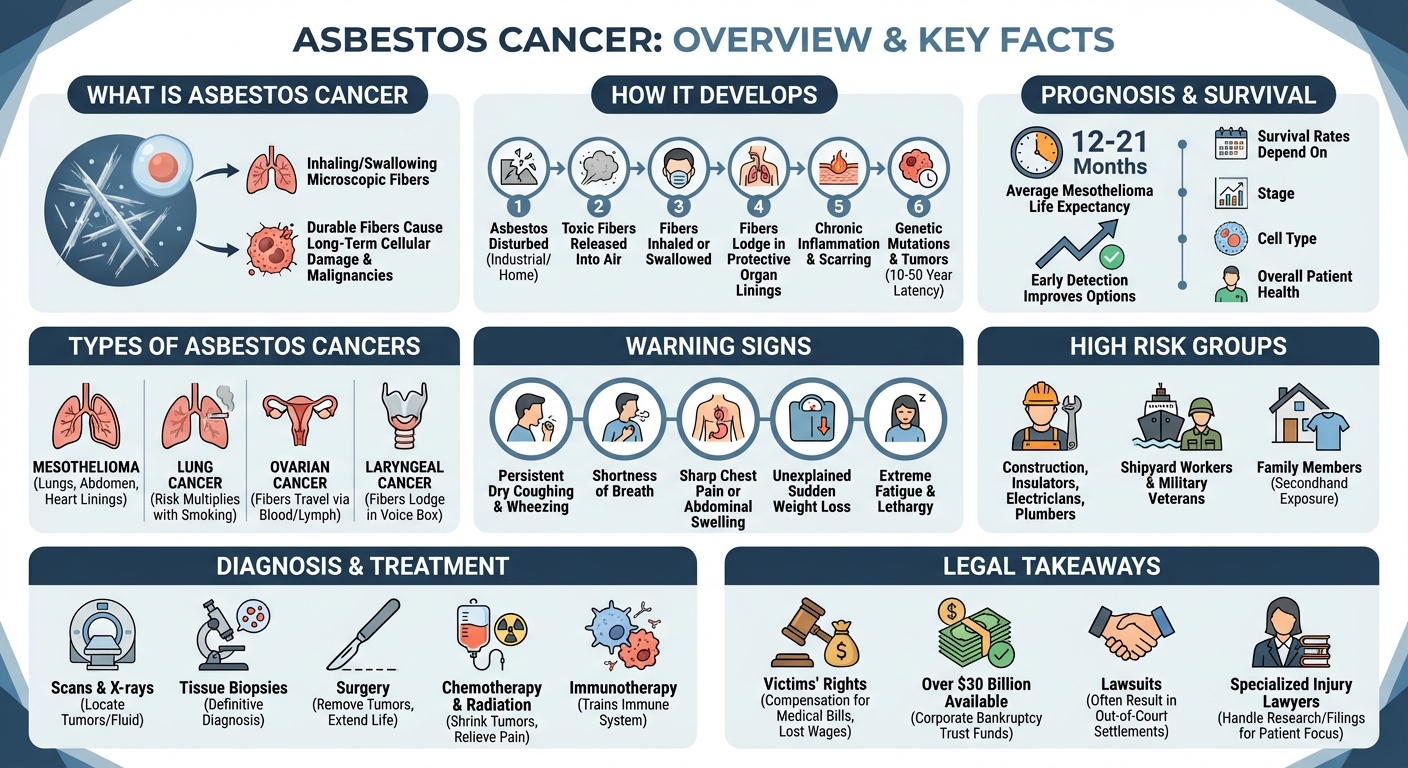
Asbestos cancer refers to malignancies caused by inhaling or swallowing microscopic asbestos fibers. The most well-known type is mesothelioma, which affects the lining of the lungs or abdomen. Asbestos exposure is also a primary cause of lung cancer, ovarian cancer, and laryngeal cancer.
Understanding Asbestos Cancer: An Overview
Asbestos cancer refers to a group of severe malignancies triggered by exposure to asbestos, a naturally occurring fibrous mineral once heavily used in construction and manufacturing. Because these microscopic fibers are incredibly durable, they cannot be broken down by the human body, leading to long-term cellular damage.
How Asbestos Exposure Leads to Cancer
When asbestos-containing materials are disturbed, they release invisible fibers into the air. If inhaled or swallowed, these fibers travel deep into the lungs or digestive tract and lodge into the protective lining of internal organs (the mesothelium). Over time, the trapped fibers cause chronic inflammation, scarring, and genetic mutations that eventually develop into cancerous tumors.
The Latency Period of Asbestos-Related Diseases
One of the most dangerous aspects of asbestos cancer is its prolonged latency period. It typically takes anywhere from 10 to 50 years after the initial exposure for symptoms to appear. This means individuals exposed in the 1970s or 1980s may only now be receiving a diagnosis.
What cancers are caused by asbestos?
Asbestos exposure is scientifically proven to cause several types of cancer. The most common are mesothelioma (cancer of the organ linings) and asbestos-related lung cancer. Additionally, inhaling or swallowing asbestos fibers can lead to ovarian cancer and laryngeal (voice box) cancer.
Mesothelioma (Pleural, Peritoneal, and Pericardial)
Mesothelioma is the signature asbestos cancer. It is almost exclusively caused by asbestos exposure and is categorized by where the tumors form:
- Pleural Mesothelioma: Forms in the lining of the lungs (pleura) and accounts for about 75% of all cases.
- Peritoneal Mesothelioma: Develops in the lining of the abdomen (peritoneum).
- Pericardial Mesothelioma: A very rare form that affects the lining around the heart.
Asbestos-Related Lung Cancer
While smoking is the leading cause of lung cancer, asbestos exposure significantly increases the risk. When a person has a history of both smoking and asbestos exposure, the risk of developing lung cancer multiplies exponentially due to the synergistic effect of the two carcinogens.
Ovarian Cancer
Research confirms that asbestos fibers can reach the ovaries, likely traveling through the bloodstream or lymphatic system after being inhaled or swallowed. Women who worked with asbestos or experienced secondhand exposure are at a heightened risk.
Laryngeal Cancer
Inhaled asbestos fibers can lodge in the voice box (larynx) on their way to the lungs. Over time, the resulting irritation and cellular damage can lead to laryngeal cancer.
What are the signs of asbestos cancer?
The signs of asbestos cancer often mimic less serious respiratory issues. Common symptoms include persistent dry coughing, shortness of breath, chest or abdominal pain, unexplained weight loss, and severe fatigue. Because these symptoms take decades to appear, early detection is difficult.
Common Respiratory Symptoms (Coughing, Shortness of Breath)
As tumors grow in the chest cavity or lungs, they restrict airway expansion. Patients frequently experience a persistent, raspy cough, wheezing, and a feeling of being out of breath even during light physical activity.
Chest and Abdominal Pain
Pleural mesothelioma and lung cancer often cause sharp, aching pain under the ribcage. If the cancer is peritoneal (in the abdomen), patients may experience abdominal swelling, bloating, and localized pain caused by fluid buildup (ascites).
Unexplained Weight Loss and Fatigue
As the body expends energy fighting the malignancy, patients often suffer from extreme lethargy. Sudden, unexplained weight loss and a loss of appetite are common systemic signs of advanced asbestos cancer.
Prognosis and Life Expectancy
What is the life expectancy of a person with mesothelioma?
The life expectancy of a person with mesothelioma typically ranges from 12 to 21 months after diagnosis. However, survival rates depend heavily on the cancer’s stage, the patient’s age, and their overall health. Some patients live several years with aggressive treatment.
What is the life expectancy of asbestosis patients?
While asbestosis is a chronic, non-cancerous lung disease, it significantly impacts longevity. The life expectancy of asbestosis patients varies widely; many live for decades with proper symptom management. However, severe cases can lead to fatal complications like heart failure or increase cancer risks.
Factors That Affect Survival Rates
A patient’s prognosis is influenced by several key factors:
- Cancer Stage: Early-stage cancers localized to one area have a much better prognosis than those that have metastasized.
- Cell Type: In mesothelioma, epithelioid cells respond better to treatment than sarcomatoid or biphasic cells.
- Patient Health: Younger, healthier patients are better candidates for aggressive, life-extending surgeries.
Who is at Risk? Common Occupations and Exposure Sites
Before strict regulations were enacted in the late 20th century, asbestos was used in thousands of commercial and industrial products.
Construction and Insulation Workers
Construction workers, electricians, plumbers, and insulators frequently handled asbestos-laden drywall, pipe insulation, and roofing materials. These trades remain among the highest-risk occupations for developing asbestos cancer.
Shipyard Workers and Military Veterans
The U.S. military, particularly the Navy, used asbestos extensively in ships and submarines for fireproofing. Veterans who served between WWII and the Vietnam War face disproportionately high rates of mesothelioma.
Secondhand Exposure Risks
Family members of industrial workers were also put at risk. Workers unknowingly brought toxic asbestos dust home on their clothes, hair, and tools, leading to secondhand exposure for spouses who did the laundry and children who hugged them.
Diagnosis and Treatment Options
Imaging Tests and Biopsies
Diagnosing asbestos cancer begins with imaging scans, such as X-rays, CT scans, or MRIs, to identify tumors or fluid buildup. However, the only definitive way to confirm an asbestos cancer diagnosis is through a tissue biopsy, where a small sample is extracted and examined under a microscope.
Surgery, Chemotherapy, and Radiation
Treatment plans are highly individualized:
| Treatment Type | Purpose |
|---|---|
| Surgery | To remove tumors and surrounding tissue. Procedures like pleurectomy with decortication (P/D) can extend life. |
| Chemotherapy | Uses drugs to shrink tumors and kill cancer cells. Often used in combination with surgery. |
| Radiation Therapy | Targets specific areas to relieve pain and prevent tumors from seeding in surgical incisions. |
Emerging Clinical Trials
Immunotherapy has become a frontline treatment for mesothelioma, helping the patient’s immune system recognize and attack cancer cells. Clinical trials continue to test gene therapies and targeted drug treatments, offering hope for improved survival rates.
Legal Options for Asbestos Cancer Patients
Because the dangers of asbestos were hidden by manufacturers for decades, victims of asbestos cancer have robust legal rights to seek financial compensation to cover medical bills and lost wages.
Filing an Asbestos Trust Fund Claim
Many asbestos companies filed for bankruptcy to avoid lawsuits. In response, courts forced them to establish asbestos trust funds. Today, there is over $30 billion available in these trusts to compensate victims without the need for a trial.
Mesothelioma Lawsuits and Settlements
Patients can file personal injury lawsuits against the negligent companies responsible for their exposure. The vast majority of these cases result in out-of-court settlements, providing families with financial security relatively quickly.
How an Injury Lawyer Can Help
Navigating asbestos litigation requires specialized legal expertise. An experienced asbestos injury lawyer will investigate your work history, identify the specific products that caused your illness, and handle all legal filings so you can focus entirely on your medical treatment.
 Call (713) 747-7777