
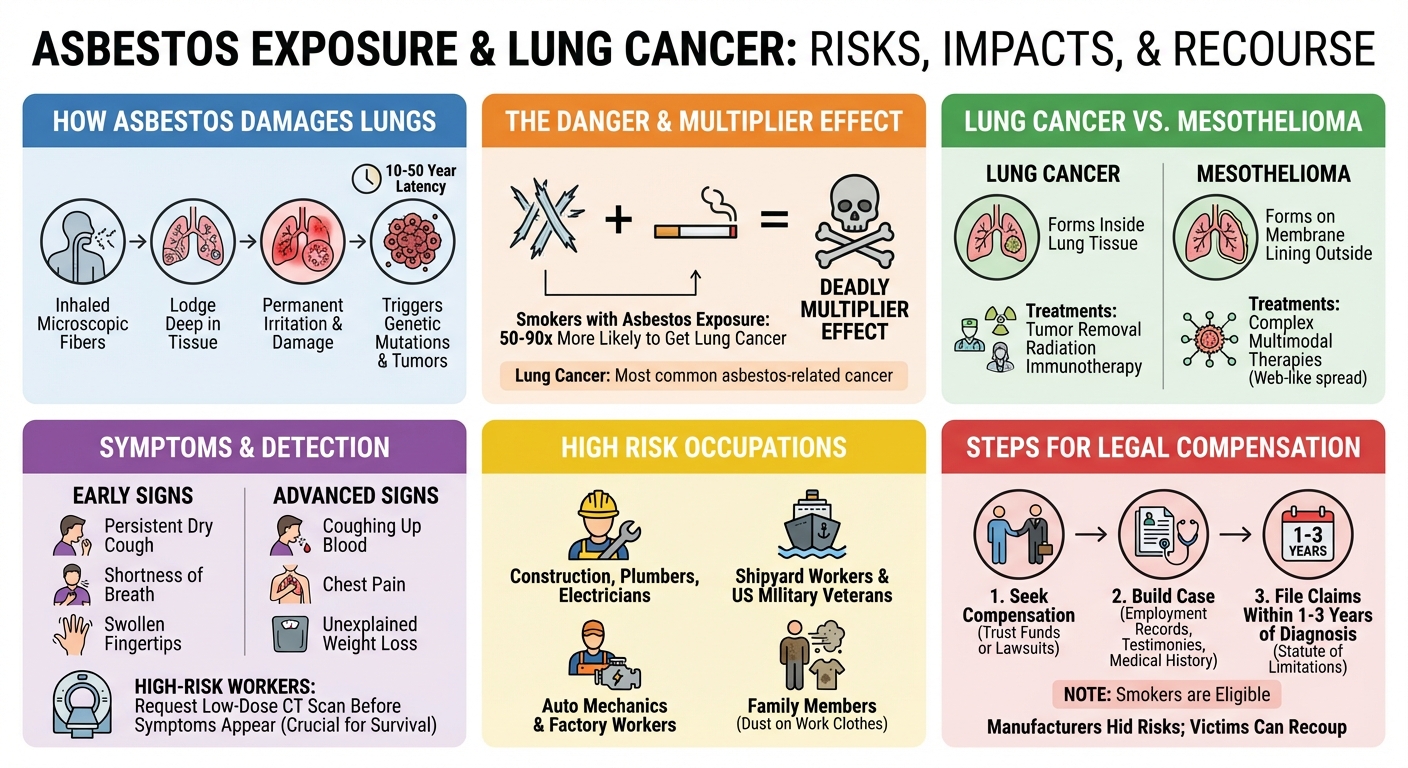
Asbestos exposure significantly increases the risk of developing lung cancer. When microscopic asbestos fibers are inhaled, they become trapped in lung tissue, causing long-term inflammation and genetic mutations. It can take 10 to 50 years after exposure for asbestos-related lung cancer to develop, making early screening crucial for high-risk workers.
Understanding the Link Between Asbestos and Lung Cancer
Exposure to asbestos is a well-documented, highly dangerous cause of respiratory disease. While many people associate asbestos primarily with mesothelioma, it is also a leading cause of occupational lung cancer. Understanding how this toxic mineral affects the respiratory system is the first step toward protecting your health and your legal rights.
How Inhaled Asbestos Fibers Damage Lung Tissue Over Time
Asbestos is composed of microscopic, durable fibers. When asbestos-containing materials are disturbed, these invisible fibers become airborne. Once inhaled, they bypass the body’s natural filtration systems and lodge deep within the lung tissue. Because the human body cannot break down or expel these fibers, they remain trapped, causing chronic irritation, inflammation, and cellular damage. Over decades, this continuous irritation can trigger genetic mutations that lead to the formation of malignant lung tumors.
The Latency Period: Why Symptoms Take 10 to 50 Years to Appear
One of the most insidious aspects of asbestos-related lung cancer is its prolonged latency period. The disease rarely develops immediately after exposure. Instead, it typically takes anywhere from 10 to 50 years for tumors to grow large enough to cause noticeable symptoms. This means that individuals exposed to asbestos in the 1970s, 1980s, or 1990s are just now reaching their peak risk period.
The Multiplier Effect: Asbestos Exposure Combined with Smoking
While asbestos alone is a potent carcinogen, combining it with tobacco smoke creates a deadly “multiplier effect.” Studies show that individuals who smoke and have a history of asbestos exposure are up to 50 to 90 times more likely to develop lung cancer than the general population. The toxins in cigarette smoke and the physical scarring from asbestos fibers work together to rapidly accelerate cellular damage.
Asbestos-Related Lung Cancer vs. Mesothelioma
Although both are caused by asbestos exposure, asbestos-related lung cancer and mesothelioma are two distinct diseases with different diagnostic criteria and treatment paths.
Key Differences in Tumor Location
- Asbestos-Related Lung Cancer: Tumors form inside the lung tissue itself (the parenchyma). It is biologically identical to lung cancer caused by smoking.
- Pleural Mesothelioma: Tumors form on the pleura, which is the thin, protective membrane lining the outside of the lungs and the inside of the chest cavity.
Differences in Diagnosis and Treatment Options
Because asbestos-related lung cancer develops within the lung, it is often treated with traditional lung cancer protocols, including lobectomies (removal of a lung lobe), targeted radiation, and chemotherapy. Mesothelioma, however, spreads in a web-like fashion across the lung lining, making surgical removal much more complex and heavily reliant on specialized multimodal therapies.
What is the most common cancer caused by asbestos?
Lung cancer is actually the most common cancer caused by asbestos. While mesothelioma is almost exclusively linked to asbestos exposure, making it the most well-known, research indicates that asbestos-related lung cancer occurs at a rate up to six times higher than mesothelioma among exposed workers.
Symptoms and Early Warning Signs
Because the latency period is so long, early detection is critical for improving survival rates. Unfortunately, early-stage asbestos-related lung cancer often presents with mild symptoms that are easily mistaken for common respiratory infections or aging.
What are the first signs of asbestos poisoning?
The first signs of asbestos poisoning usually manifest as mild respiratory issues. Patients frequently experience a persistent dry cough, shortness of breath during routine activities, a tight feeling in the chest, and a crackling sound when breathing. Clubbing, or the swelling of the fingertips, is also a common early indicator.
Common Symptoms of Asbestos-Related Lung Cancer
As the disease progresses and tumors grow, symptoms become more severe. Patients should be on high alert for:
- A chronic cough that worsens over time
- Coughing up blood (hemoptysis)
- Persistent chest, shoulder, or back pain
- Unexplained weight loss and fatigue
- Frequent respiratory infections, such as bronchitis or pneumonia
When to Request an Occupational Health Screening or CT Scan
If you worked in a high-risk industry prior to the 1990s, you should not wait for symptoms to appear. Inform your primary care physician about your occupational history and request a low-dose CT scan. X-rays are often insufficient for catching early-stage lung cancer or subtle asbestos scarring (asbestosis).
Diagnosis, Prognosis, and Lung Health
Receiving a diagnosis requires a comprehensive medical and occupational evaluation.
How Doctors Confirm Asbestos as the Cause of Lung Cancer
Because asbestos-related lung cancer looks identical to smoking-related lung cancer under a microscope, doctors rely on the Helsinki Criteria to establish causation. This involves proving a significant history of asbestos exposure (usually a minimum of 10 years prior to diagnosis) and identifying markers of asbestos exposure, such as pleural plaques or asbestos bodies in lung tissue biopsies.
What is the life expectancy of asbestosis patients?
The life expectancy of asbestosis patients varies widely based on the severity of lung scarring. Many patients live for 10 to 20 years or more after diagnosis with proper medical management. However, having asbestosis significantly increases the risk of eventually developing fatal asbestos-related lung cancer.
Can your lungs recover from asbestos?
No, your lungs cannot recover from asbestos exposure. The human body is unable to dissolve or expel trapped asbestos fibers. The resulting scar tissue and cellular damage are permanent and irreversible. However, medical treatments and lifestyle changes, like quitting smoking, can help manage symptoms and slow disease progression.
Current Treatment Options
Treatment for asbestos-related lung cancer depends on the stage of the disease at diagnosis. Options include:
- Surgery: Removing the tumor and surrounding tissue (wedge resection, lobectomy, or pneumonectomy).
- Chemotherapy & Radiation: Used to shrink tumors before surgery or kill remaining cancer cells post-operation.
- Immunotherapy: Cutting-edge drugs that help the patient’s own immune system recognize and attack lung cancer cells.
Who is at Risk? High-Exposure Occupations
For decades, asbestos was prized for its heat resistance and durability, making it a staple in thousands of industrial and commercial products. Millions of American workers were unknowingly exposed.
Construction Workers, Electricians, and Plumbers
Tradespeople who worked with insulation, drywall, roofing shingles, floor tiles, and pipe cement were heavily exposed. Plumbers and electricians frequently cut through asbestos-laden materials, releasing toxic dust into poorly ventilated workspaces.
Shipyard Workers and U.S. Military Veterans
The U.S. Navy used asbestos extensively in shipbuilding from the 1930s through the 1970s. Veterans who served in boiler rooms, engine rooms, and sleeping quarters below deck faced massive exposure levels. Shipyard workers who built and dismantled these vessels share the same high risk.
Auto Mechanics and Manufacturing Workers
Mechanics who repaired brakes and clutches were frequently exposed to asbestos dust. Factory workers who manufactured textiles, gaskets, and insulation materials also inhaled dangerous quantities of fibers daily.
Secondhand (Take-Home) Asbestos Exposure Risks
You did not have to work directly with asbestos to be at risk. Spouses and children of industrial workers frequently inhaled asbestos fibers that were brought into the home on dusty work clothes, shoes, and hair—a phenomenon known as secondhand or “take-home” exposure.
Legal Rights and Compensation for Asbestos-Related Lung Cancer
If you or a loved one has been diagnosed with lung cancer and have a history of asbestos exposure, you may be entitled to significant financial compensation.
Why Asbestos Victims Are Entitled to Financial Compensation
Corporate documents uncovered during decades of litigation prove that many asbestos manufacturers knew about the deadly health risks of their products as early as the 1930s. Rather than warning workers, they hid the dangers to protect their profits. The law holds these companies financially accountable for the harm they caused.
Filing Claims Through Asbestos Trust Funds vs. Personal Injury Lawsuits
- Asbestos Trust Funds: Many negligent companies filed for bankruptcy to avoid lawsuits. In response, courts forced them to establish multi-billion-dollar trust funds to compensate current and future victims. Claims against these trusts do not require going to court.
- Personal Injury Lawsuits: If the companies responsible for your exposure are still in business, your attorney can file a lawsuit against them to recover damages for medical bills, lost wages, and pain and suffering.
How to Prove Your Lung Cancer is Tied to Occupational Exposure
An experienced asbestos attorney will help you build a case by gathering employment records, union dispatch slips, co-worker testimonies, and medical records. Even if you smoked, you can still recover compensation, as the law recognizes the “multiplier effect” of asbestos and tobacco.
Statute of Limitations: Why Acting Quickly is Crucial
The law strictly limits the amount of time you have to file an asbestos claim. This time limit, known as the statute of limitations, varies by state but generally ranges from one to three years from the date of your lung cancer diagnosis. Failing to file within this window will permanently bar you from recovering the compensation you deserve. Contacting a specialized legal team immediately after a diagnosis is the best way to protect your rights.
 Call (713) 747-7777