

Table of contents
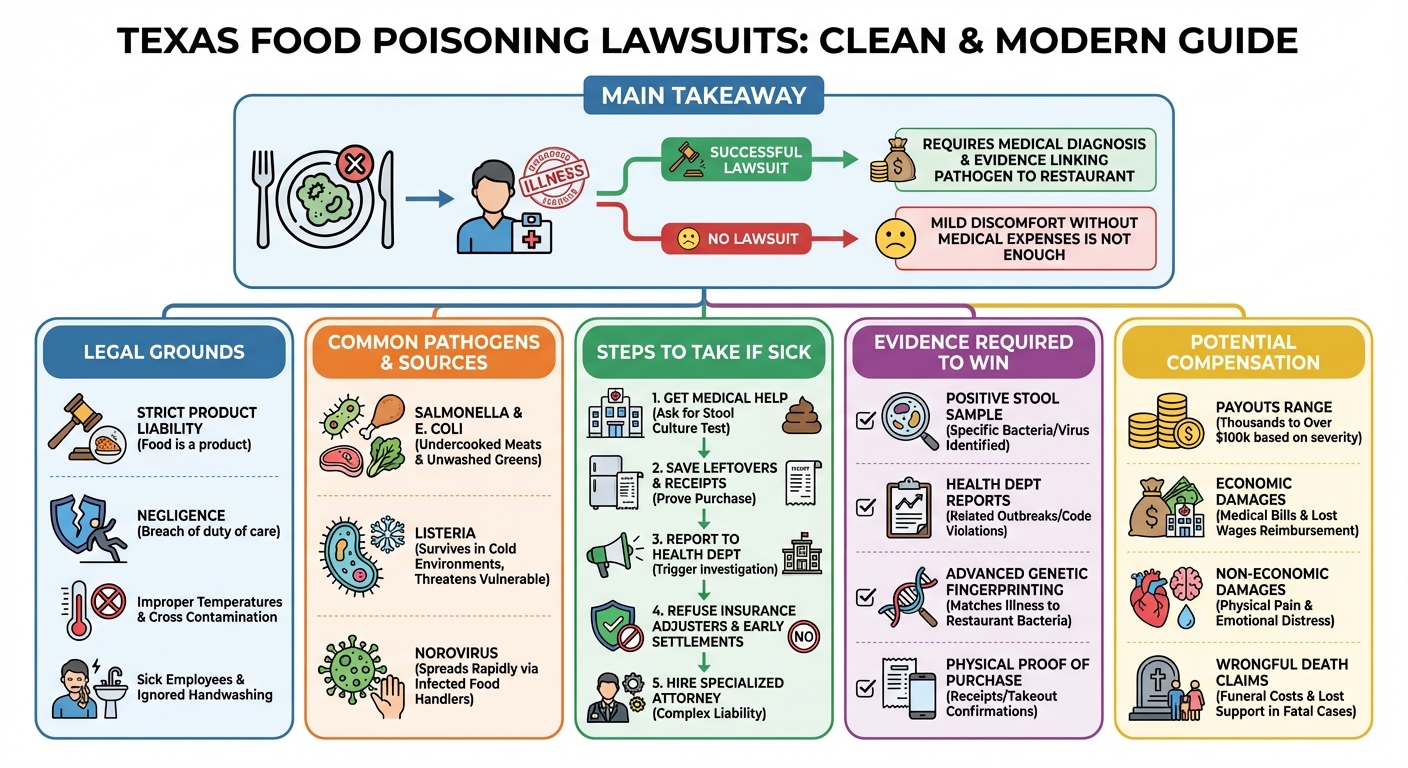
In Texas, you can sue a restaurant for food poisoning if you can prove their contaminated food directly caused your illness. Successful lawsuits require a medical diagnosis, such as a positive stool sample, and evidence linking the specific pathogen to the restaurant, allowing you to recover medical expenses and lost wages.
Texas Food Poisoning Lawsuits: Holding Restaurants Accountable
Dining out should not end in a trip to the emergency room. Unfortunately, severe foodborne illnesses occur frequently when restaurants fail to follow proper food safety protocols. In Texas, food poisoning is treated seriously under personal injury and product liability laws. If a restaurant’s negligence caused you to contract a severe illness, you have the right to hold them legally and financially accountable for your medical bills, lost income, and suffering.
Can you sue for food poisoning in Texas?
Yes, you can sue a restaurant for food poisoning in Texas if you can prove that the establishment served contaminated food that directly caused your diagnosed illness. These claims typically fall under product liability or negligence laws, requiring solid medical evidence to link your sickness to the specific restaurant.
Understanding Strict Product Liability in Texas
Under Texas law, food served at a restaurant is considered a product. If a restaurant sells food that is unreasonably dangerous due to contamination (such as harmful bacteria or viruses), they can be held strictly liable for the resulting damages. In strict liability cases, you do not necessarily have to prove exactly how the restaurant was negligent; you only need to prove that the food was defective when it left their control and that the defect caused your illness.
Proving Negligence Against a Restaurant or Supplier
Alternatively, you can pursue a negligence claim. This requires demonstrating that the restaurant breached its duty of care to its customers. Common examples of negligence include:
- Failing to store raw meats at the correct temperature.
- Cross-contamination between raw and cooked foods.
- Allowing sick employees to handle food.
- Ignoring basic sanitation and handwashing protocols.
How to Prove a Texas Restaurant Caused Your Foodborne Illness
The biggest hurdle in a food poisoning lawsuit is causation—proving beyond a doubt that the specific restaurant’s food made you sick, rather than something else you ate days prior.
The Importance of Medical Diagnosis and Stool Samples
You cannot win a lawsuit based solely on a stomach ache. You must seek medical attention and request a stool sample test. This test identifies the exact pathogen (e.g., Salmonella, E. coli) causing your illness, which is the foundational evidence needed for your claim.
Texas Department of State Health Services (DSHS) Investigations
When local health departments or the Texas DSHS investigate an outbreak, their findings are invaluable. If a health inspector finds health code violations at the restaurant or links multiple illnesses to the same establishment, this creates a powerful piece of evidence for your lawsuit.
Genetic Fingerprinting of Pathogens
Advanced medical testing, such as Whole Genome Sequencing (WGS) or Pulsed-Field Gel Electrophoresis (PFGE), can genetically match the bacteria in your stool sample to the bacteria found in the restaurant’s food or on their surfaces. This “genetic fingerprint” is often the smoking gun in food poisoning litigation.
Preserving Leftovers and Receipts
Evidence disappears quickly. If you have leftovers, keep them in your refrigerator—they can be tested for pathogens. Additionally, preserve your receipt, credit card statement, or takeout confirmation to prove you purchased and consumed food from the restaurant on the date in question.
Can you sue a restaurant for spoiled food?
Yes, you can sue a restaurant for spoiled food if consuming it resulted in a medically diagnosed illness and quantifiable financial damages. Simply being served spoiled food without getting sick, or experiencing only mild, temporary discomfort without medical expenses, is generally not enough grounds for a successful lawsuit.
Common Foodborne Pathogens in Texas Restaurant Lawsuits
Different pathogens have different incubation periods and symptoms, which plays a critical role in tracing the illness back to a specific meal.
Salmonella and E. Coli Outbreaks
These are among the most common culprits in restaurant lawsuits. Salmonella is frequently linked to undercooked poultry and cross-contamination, while E. coli is often traced to undercooked ground beef or unwashed leafy greens. Both can cause severe dehydration, bloody diarrhea, and kidney failure.
Listeria and Severe Complications
Listeria is highly dangerous, particularly for pregnant women, the elderly, and immunocompromised individuals. It can survive in cold environments and is often found in deli meats and unpasteurized dairy. Listeria infections can lead to meningitis, miscarriages, and death.
Norovirus and Food Handler Contamination
Often called the “stomach flu,” Norovirus is highly contagious. In restaurant settings, it is almost always spread by an infected food handler who failed to wash their hands properly before touching ready-to-eat foods.
How much money can you get from suing a restaurant for food poisoning?
The money you can get from suing a restaurant for food poisoning ranges from a few thousand dollars for mild cases to over $100,000 for severe illnesses requiring hospitalization. Settlements depend heavily on your total medical expenses, lost income, and the severity of your pain, suffering, and long-term health impacts.
How much compensation can you get for food poisoning?
Compensation for food poisoning varies widely based on the severity of the illness. Victims can recover economic damages for medical bills and lost wages, as well as non-economic damages for pain, suffering, and emotional distress. Severe cases involving long-term organ damage yield the highest compensation.
Economic Damages: Medical Bills and Lost Wages
Economic damages reimburse you for out-of-pocket losses. This includes emergency room visits, hospital stays, IV fluids, prescription medications, and any wages you lost because you were too sick to work.
Non-Economic Damages: Pain, Suffering, and Emotional Distress
Severe food poisoning is physically agonizing. Non-economic damages compensate you for the physical pain, mental anguish, and loss of enjoyment of life you experienced during your illness and recovery.
Wrongful Death Claims in Fatal Food Poisoning Cases
Tragically, food poisoning can be fatal. If a loved one died due to a severe foodborne illness contracted at a restaurant, surviving family members can file a wrongful death lawsuit to recover funeral expenses, loss of consortium, and loss of future financial support.
Crucial Steps to Take If You Get Sick at a Restaurant
Protecting your health and your legal rights requires immediate action.
Seek Immediate Medical Attention
Go to urgent care or the ER. Tell the doctor you suspect food poisoning and specifically ask for a stool culture to identify the pathogen.
Report the Illness to Local Health Authorities
Contact your local county health department. Your report could trigger an inspection that uncovers unsanitary conditions, preventing others from getting sick and providing crucial evidence for your case.
Do Not Give a Recorded Statement to the Restaurant’s Insurance
Restaurant insurance adjusters may call you quickly, offering a small gift card or a minimal settlement in exchange for signing a release. Do not speak to them or sign anything without consulting an attorney.
Why You Need a Texas Food Poisoning Attorney
Proving a food poisoning case is highly technical. Restaurants and their corporate insurers have aggressive legal teams dedicated to denying liability and shifting the blame.
Navigating Complex Corporate Liability
An experienced attorney knows how to subpoena health department records, work with infectious disease experts, and trace the supply chain to determine if the restaurant, a distributor, or a food manufacturer is ultimately liable for your illness.
Free Case Evaluation for Texas Residents
If you or a loved one suffered a severe, medically diagnosed foodborne illness after eating at a Texas restaurant, you deserve justice. Contact our legal team today for a free, no-obligation case evaluation to discuss your legal options and potential compensation.