

Table of contents
Yes, you can file a carbon monoxide poisoning apartment lawsuit if your landlord’s negligence caused your exposure. Tenants can sue for medical bills, lost wages, and pain and suffering if property owners fail to maintain safe appliances, fix faulty furnaces, or install functional carbon monoxide detectors as required by law.
Understanding Carbon Monoxide Poisoning Apartment Lawsuits
Carbon monoxide (CO) is a colorless, odorless, and tasteless gas that can cause severe neurological damage or death when inhaled. In rental properties, tenants rely on landlords and property managers to maintain a safe living environment. When property owners cut corners on maintenance or ignore safety regulations, the results can be catastrophic.
The Silent Killer in Rental Properties
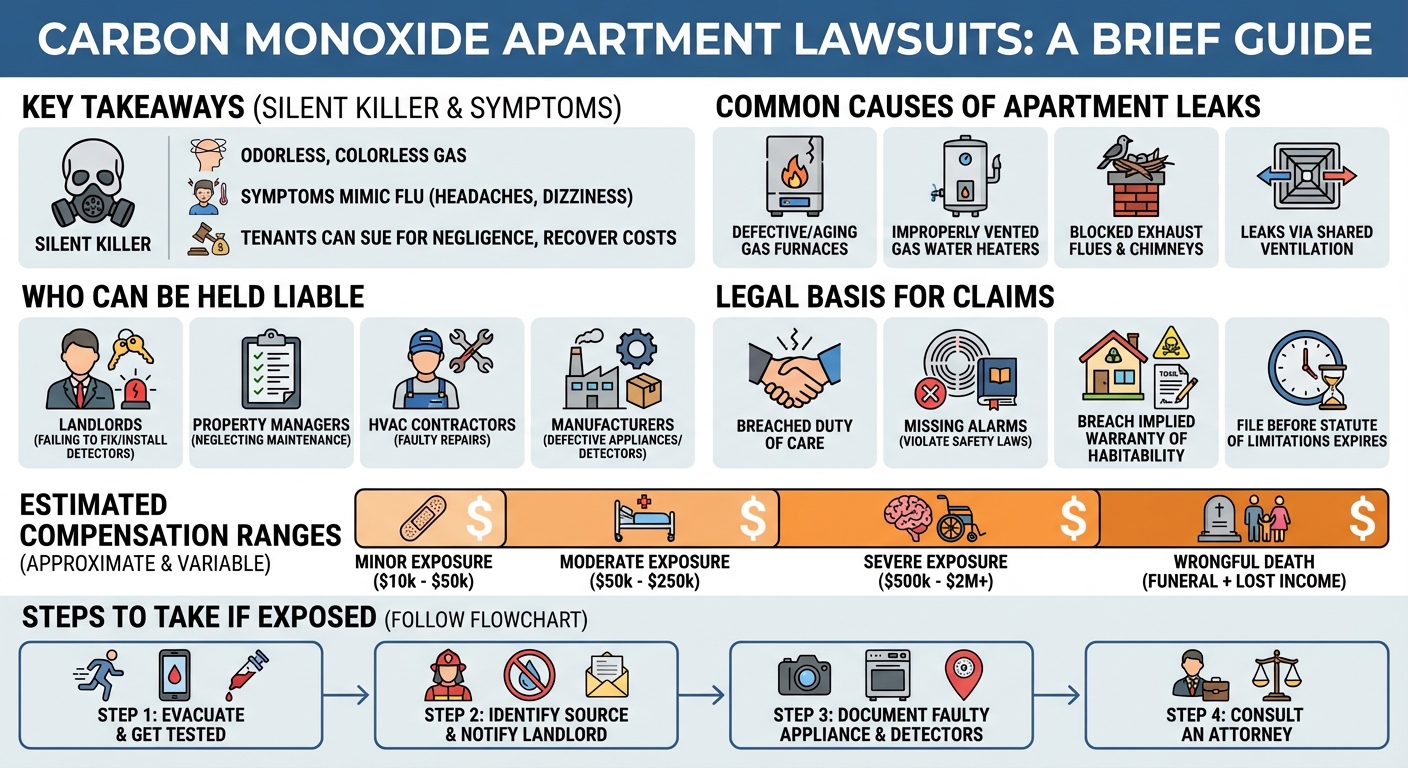
Because carbon monoxide cannot be detected by human senses, it is often referred to as the “silent killer.” Exposure typically happens while tenants are sleeping or relaxing, making early detection impossible without functioning alarms. Symptoms mimic the flu—headaches, dizziness, nausea, and confusion—often leading victims to ignore the warning signs until it is too late.
Why Landlords Can Be Held Accountable
Landlords have a legal obligation to ensure their rental units are safe for habitation. This includes properly maintaining fuel-burning appliances, ensuring adequate ventilation, and complying with local building codes regarding CO detectors. When a landlord’s negligence leads to a toxic gas leak, victims have the right to file a carbon monoxide poisoning apartment lawsuit to recover damages.
Can you sue for carbon monoxide poisoning?
Yes, you can sue for carbon monoxide poisoning if your injuries were caused by another party’s negligence. To build a successful claim, you must prove that a landlord, property manager, or manufacturer breached their duty of care, resulting in toxic exposure that caused your physical and financial damages.
Establishing Duty of Care and Negligence
To win a personal injury lawsuit, your attorney must establish four key elements: duty of care, breach of duty, causation, and damages. In a CO poisoning case, this means proving the defendant had a responsibility to keep you safe, failed to do so (e.g., ignoring a broken furnace), and directly caused your toxic exposure and subsequent medical bills.
Statute of Limitations for CO Poisoning Claims
Every state has a statute of limitations that dictates how long you have to file a lawsuit, typically ranging from one to four years from the date of the injury. If you fail to file your claim within this legal window, you will permanently lose your right to seek compensation. Consulting a personal injury attorney immediately ensures your case is filed on time.
Can you sue an apartment for carbon monoxide poisoning?
Yes, you can sue an apartment complex or landlord for carbon monoxide poisoning. Tenants have the right to file a premises liability lawsuit if the property owner failed to maintain safe premises, ignored faulty fuel-burning appliances, or neglected to install functioning carbon monoxide detectors as required by state housing laws.
Proving Landlord Liability in Rental Units
Holding a landlord liable requires evidence that they knew, or should have known, about the hazard. This can be proven through maintenance records, previous tenant complaints, or inspection reports showing a history of neglected repairs on gas-powered appliances or ventilation systems.
Failure to Install or Maintain CO Detectors
Most states mandate that landlords install carbon monoxide detectors in rental units, particularly near bedrooms and fuel-burning appliances. If your landlord failed to install these alarms, or ignored your requests to fix a broken detector, this constitutes strong evidence of negligence in a lawsuit.
Breach of the Implied Warranty of Habitability
When you sign a lease, the landlord implicitly guarantees that the apartment is fit for human occupation. A carbon monoxide leak is a direct breach of this “implied warranty of habitability.” This legal doctrine provides a strong foundation for tenants seeking compensation for injuries sustained due to unsafe living conditions.
Can you get carbon monoxide poisoning in an apartment complex?
Yes, you can easily get carbon monoxide poisoning in an apartment complex. Toxic gas can leak from poorly maintained shared furnaces, defective water heaters, or blocked ventilation flues. Because apartment units often share airspaces and ductwork, a carbon monoxide leak in one unit can quickly spread to neighboring apartments.
Faulty Furnaces and HVAC Systems
The most common source of CO leaks in apartments is a defective or aging gas furnace. Cracked heat exchangers or poorly tuned burners can release high levels of carbon monoxide directly into the building’s HVAC system, distributing the toxic gas throughout the complex.
Defective Fuel-Burning Water Heaters
Gas water heaters require proper venting to expel combustion byproducts outdoors. If the venting pipe is disconnected, rusted, or improperly installed, carbon monoxide will accumulate in the utility closet and seep into the surrounding living spaces.
Blocked Flues and Poor Ventilation
Even perfectly functioning appliances can cause CO poisoning if their exhaust flues are blocked by bird nests, debris, or heavy snow. Landlords are responsible for conducting seasonal inspections to ensure all chimneys and exhaust vents are clear and drawing air properly.
Shared Airspaces and Multi-Unit Risks
In multi-family dwellings, a hazard in one apartment threatens everyone. A tenant improperly using a gas generator or charcoal grill indoors, or a leak originating in a shared basement boiler room, can easily travel through shared walls, floors, and ventilation shafts, poisoning tenants multiple floors away.
What is the average payout for carbon monoxide poisoning?
The average payout for carbon monoxide poisoning varies widely, typically ranging from tens of thousands for minor exposure to multi-million dollar verdicts for severe brain injuries or wrongful death. Settlement amounts depend heavily on the victim’s medical bills, long-term neurological damage, lost earning capacity, and the defendant’s degree of negligence.
Settlement Ranges for Minor vs. Severe Exposure
Compensation is directly tied to the severity of the injury. Below is a general breakdown of how cases are typically valued:
| Exposure Level | Typical Damages | Estimated Settlement Range |
|---|---|---|
| Minor Exposure | ER visits, oxygen therapy, temporary missed work, minor distress. | $10,000 – $50,000 |
| Moderate Exposure | Hospitalization, hyperbaric chamber treatments, short-term memory issues. | $50,000 – $250,000 |
| Severe Exposure | Permanent neurological damage, lifelong care, loss of earning capacity. | $500,000 – $2,000,000+ |
Compensation for Traumatic Brain Injuries (TBI)
Severe CO poisoning deprives the brain of oxygen, often resulting in anoxic brain injuries. Victims may suffer from permanent cognitive deficits, personality changes, and motor skill impairment. Lawsuits involving brain injuries yield the highest payouts because they must cover a lifetime of specialized medical care, rehabilitation, and diminished quality of life.
Wrongful Death Lawsuit Settlements
Tragically, many CO leaks are fatal. Surviving family members can file a wrongful death lawsuit against the negligent landlord. These settlements compensate the family for funeral expenses, loss of the deceased’s future income, loss of consortium, and the emotional trauma of losing a loved one.
Notable CO Poisoning Jury Awards and Settlements
Courts frequently award massive verdicts to punish egregious landlord negligence. For example, in a highly publicized 2011 case in Wisconsin, a jury awarded a $28.5 million settlement to a woman who suffered permanent brain damage due to a faulty apartment furnace. While every case is unique, these high-value verdicts highlight the severe financial liability landlords face when they ignore safety protocols.
Who Else Can Be Held Liable for a CO Leak?
While landlords are the primary defendants in apartment lawsuits, other parties may share the blame depending on the circumstances of the leak.
Property Management Companies
If the landlord hired a property management firm to handle day-to-day maintenance, and that firm ignored repair requests or failed to conduct routine safety inspections, the management company can be named as a co-defendant in the lawsuit.
Third-Party HVAC Maintenance Contractors
Sometimes a landlord does the right thing by hiring a professional HVAC company to service the furnace, but the technician performs the work negligently. If a contractor fails to spot a cracked heat exchanger or improperly installs a vent, they can be held liable for professional negligence.
Appliance Manufacturers (Product Liability)
If the carbon monoxide leak was caused by a design flaw or manufacturing defect in the furnace, water heater, or the CO detector itself, victims can pursue a product liability lawsuit against the manufacturer of the defective equipment.
Steps to Take If Exposed to Carbon Monoxide in Your Rental
Protecting your health and preserving evidence are your top priorities following a CO leak. Take the following steps immediately:
- Seek Immediate Medical Attention: Evacuate the apartment and call 911. Request a blood test to measure your carboxyhemoglobin levels, as this is critical medical evidence for your claim.
- Report the Leak to Authorities and the Landlord: Ensure the fire department or utility company identifies the source of the leak and red-tags the dangerous appliance. Notify your landlord in writing.
- Document the Scene and CO Detectors: Take photos of the appliance in question, the location of any CO detectors (or lack thereof), and any medical records or expenses you incur.
- Consult a Premises Liability Attorney: Do not speak to the landlord’s insurance company or accept a quick settlement offer before consulting an experienced personal injury lawyer who specializes in toxic exposure cases.