

Table of contents
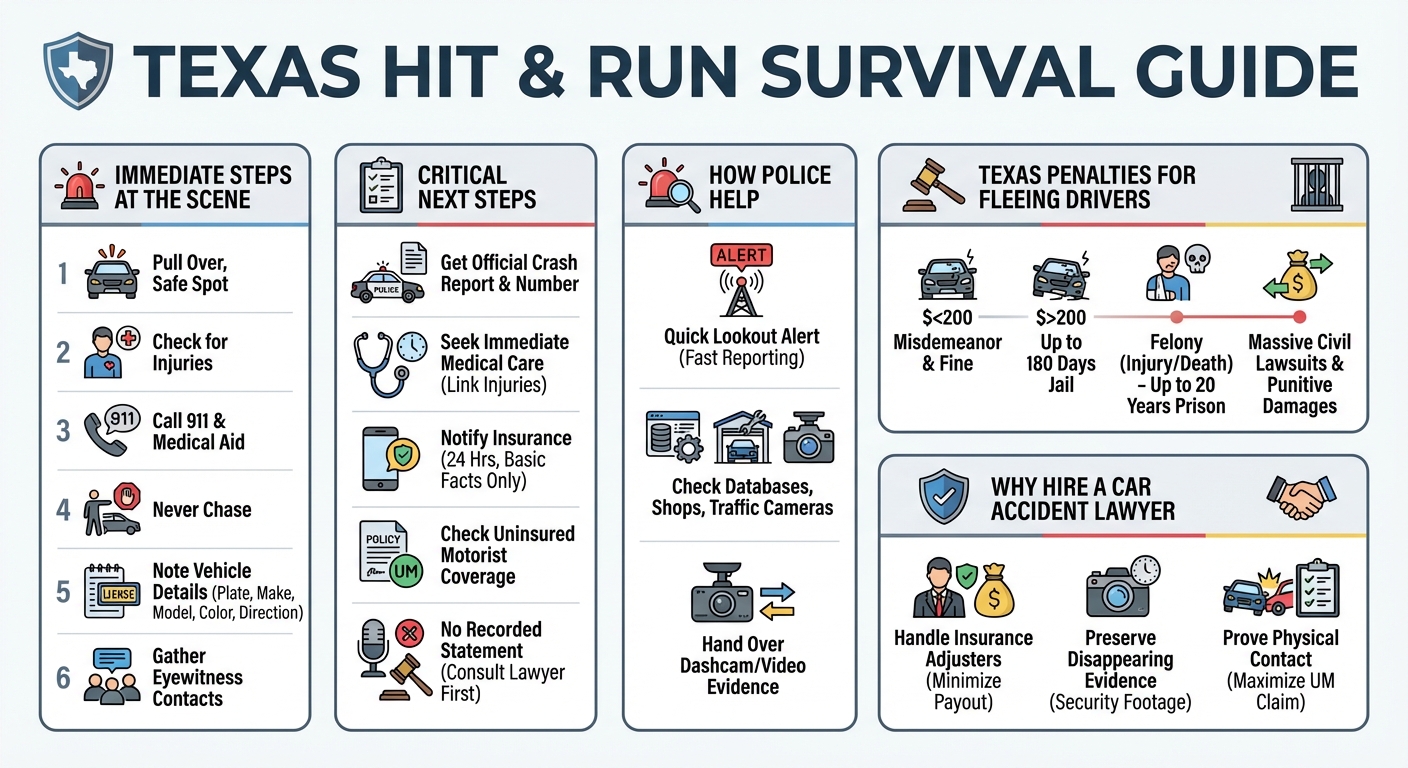
If you are in a hit-and-run accident in Texas, immediately pull over and check for injuries. Call 911 to file an official police report. Document the fleeing vehicle’s details, gather witness information, seek medical attention, and notify your insurance company.
What should I do immediately after a hit-and-run?
Immediately after a hit-and-run, pull your vehicle to a safe location and check everyone for injuries. Call 911 to report the collision. Never chase the fleeing driver. Instead, write down everything you remember about their vehicle, including the license plate, make, model, and color.
1. Prioritize Safety and Check for Injuries
Your physical well-being is the top priority. Move your vehicle to the shoulder or a nearby parking lot if it is safe and operational. Turn on your hazard lights. Check yourself and your passengers for injuries. If anyone is hurt, request an ambulance immediately when you call emergency services.
2. Call 911 (Do Not Chase the Fleeing Driver)
Adrenaline may tempt you to pursue the driver who hit you, but doing so is incredibly dangerous and can lead to further accidents or violent confrontations. Stay at the scene and call 911. Texas law requires police intervention for accidents involving injury, death, or significant property damage.
3. Document the Fleeing Vehicle (Make, Model, License Plate)
While the memory is fresh, record every detail you can about the fleeing car. Use your phone’s voice memo or notes app to jot down:
- The license plate number (even a partial plate is highly valuable).
- The vehicle’s make, model, and color.
- Distinguishing features (bumper stickers, dents, custom wheels).
- The direction the vehicle fled.
4. Gather Eyewitness Contact Information
Bystanders or other drivers often see things you might have missed. Ask witnesses what they saw and request their names and phone numbers. Their independent testimonies can be crucial for both the police investigation and your subsequent insurance claim.
What to do after a hit-and-run accident in Texas?
After a hit-and-run accident in Texas, immediately call 911 to ensure a police report is filed. Seek medical attention for any injuries, even if they seem minor. Finally, notify your insurance provider and consult a personal injury attorney to explore compensation through your Uninsured Motorist coverage.
Ensure an Official Texas Crash Report (CR-3) is Filed
Insurance companies require official documentation to process a hit-and-run claim. When law enforcement arrives, they will generate a Texas Peace Officer’s Crash Report (CR-3). Be sure to get the officer’s name, badge number, and the report number before leaving the scene.
Seek Medical Attention Promptly
Some injuries, like whiplash or concussions, do not show symptoms immediately due to shock and adrenaline. Visit an urgent care clinic or emergency room as soon as possible. A prompt medical evaluation links your injuries directly to the crash, which is vital for your insurance claim.
Notify Your Auto Insurance Company
Report the accident to your insurance carrier within 24 hours. Stick to the facts: state that you were the victim of a hit-and-run, provide the police report number, and confirm you are seeking medical treatment. Do not provide a recorded statement without consulting a lawyer first.
Check Your Policy for Uninsured Motorist (UM) Coverage
In Texas, Uninsured/Underinsured Motorist (UM/UIM) coverage is designed specifically for situations like hit-and-runs. If the fleeing driver is never found, your UM policy steps in to cover your medical bills, lost wages, and vehicle repairs, up to your policy limits.
Do cops do anything for a hit-and-run?
Yes, police actively investigate hit-and-run accidents in Texas. Officers will visit the scene, interview witnesses, collect physical evidence, and search for nearby security or traffic camera footage. Providing them with a prompt report and any vehicle details significantly increases their chances of locating the fleeing driver.
How Texas Police Investigate Fleeing Drivers
Law enforcement treats hit-and-run crashes as serious offenses. Investigators will run partial license plates through databases, check local body shops for vehicles matching the damage profile, and cross-reference witness descriptions with registered vehicles in the area.
The Role of Traffic Cameras and Dashcams
Video evidence is the most effective tool for catching a fleeing driver. Police will look for municipal traffic cameras, toll booth cameras, and surveillance footage from nearby businesses. If you or a witness had an active dashcam, provide that footage to the investigating officer immediately.
Why Your Prompt Reporting Matters to the Investigation
Time is the enemy of a hit-and-run investigation. The faster you report the collision, the quicker police can issue a BOLO (Be On the Lookout) alert for the suspect’s vehicle. Delaying your report allows the driver to hide the vehicle or repair the damage.
What happens if you do a hit-and-run in Texas?
If you do a hit-and-run in Texas, you face severe criminal penalties under Texas Transportation Code §550. Leaving the scene of an accident can result in misdemeanor or felony charges, leading to heavy fines, license suspension, and significant prison time, especially if injuries or death occurred.
Criminal Penalties Under Texas Transportation Code §550
Texas law strictly mandates that drivers involved in a collision must stop, provide identification, and render aid. Failing to do so triggers escalating criminal penalties based on the severity of the crash.
| Accident Severity | Charge Level | Potential Penalties |
|---|---|---|
| Property Damage < $200 | Class C Misdemeanor | Fine up to $500 |
| Property Damage > $200 | Class B Misdemeanor | Up to 180 days in jail; Fine up to $2,000 |
| Non-Serious Injury | Felony (County Jail) | Up to 1 year in jail; Fine up to $5,000 |
| Serious Bodily Injury or Death | 3rd or 2nd Degree Felony | 2 to 20 years in prison; Fine up to $10,000 |
Misdemeanor vs. Felony Hit-and-Run Charges
A hit-and-run is generally classified as a misdemeanor if it only involves property damage. However, the moment an injury is involved, the offense elevates to a felony. In cases of severe injury or death, the fleeing driver faces decades in state prison.
Civil Liability and Punitive Damages
Beyond criminal charges, a fleeing driver faces massive civil liability. If caught, they can be sued for medical expenses, lost wages, and pain and suffering. Furthermore, Texas courts frequently award punitive damages in hit-and-run cases to punish the driver’s gross negligence and intentional flight.
How a Texas Car Accident Lawyer Can Help You Recover Compensation
Navigating the aftermath of a hit-and-run is legally complex, especially when dealing with your own insurance company. A skilled Texas car accident attorney protects your rights and ensures you are not left paying out of pocket for someone else’s recklessness.
Dealing with Insurance Adjusters When the Driver Isn’t Found
Even though you are filing a claim with your own insurance company, the adjuster’s goal is to minimize the payout. They may argue your injuries are pre-existing or that you were partially at fault. An attorney will handle all communications, ensuring your claim is treated fairly and backed by solid evidence.
Maximizing Your Uninsured Motorist (UM) Claim
To successfully claim UM benefits, you must prove that physical contact occurred between your vehicle and the fleeing driver’s vehicle. A lawyer will gather the police report, medical records, and expert testimony to build a watertight case that forces the insurance company to honor your policy limits.
When to Contact a Personal Injury Attorney
You should contact a personal injury attorney immediately after receiving medical care. Early legal intervention allows your lawyer to preserve crucial evidence, such as disappearing surveillance footage, and ensures all filing deadlines are met so you can focus entirely on your physical recovery.