

Table of contents
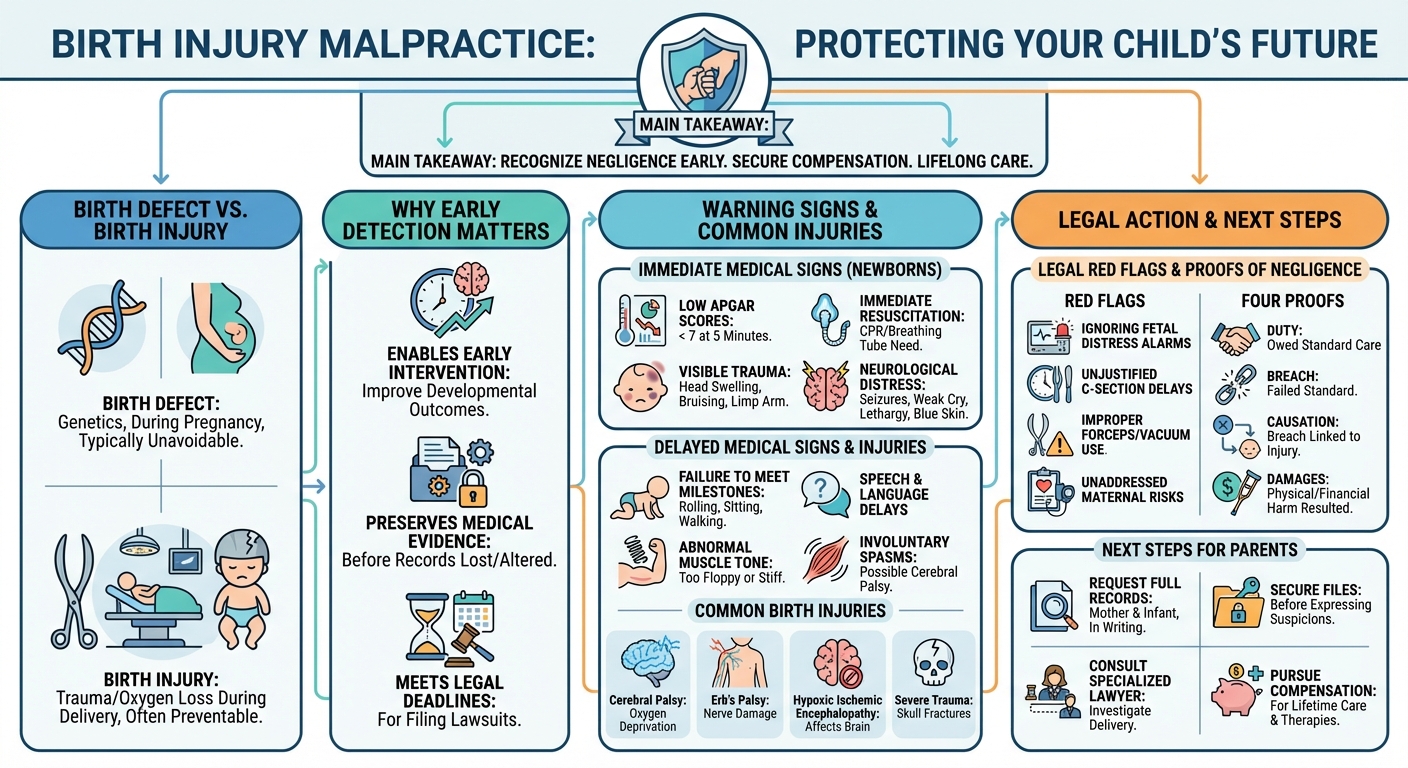
Common birth injury malpractice signs include physical symptoms in the baby, such as seizures, a weak cry, or missed developmental milestones. Legal signs of negligence include doctors ignoring fetal distress alarms, delaying necessary emergency C-sections, or improperly using delivery tools like forceps and vacuum extractors.
Birth Injury Malpractice Signs: How to Know if You Have a Case
Discovering that your newborn has suffered an injury during delivery is a devastating experience. For many parents, the immediate aftermath is a blur of NICU visits, specialist consultations, and overwhelming anxiety. Amidst this chaos, a critical question often arises: Was this a tragic accident, or was it preventable medical negligence? Recognizing birth injury malpractice signs early is essential for protecting your child’s future and holding negligent medical providers accountable.
Understanding the Difference Between a Birth Defect and a Birth Injury
Before pursuing a legal claim, it is important to understand the medical and legal distinction between a birth defect and a birth injury.
| Characteristic | Birth Defect | Birth Injury |
|---|---|---|
| Cause | Genetics, chromosomal abnormalities, or unavoidable maternal health conditions. | Physical trauma or oxygen deprivation during the labor and delivery process. |
| Timing | Develops during pregnancy (often in the first trimester). | Occurs during labor, delivery, or immediately after birth. |
| Preventability | Typically unavoidable. | Often preventable with proper medical care and timely intervention. |
Why Recognizing the Signs Early Matters for Your Child’s Future
Identifying the signs of medical malpractice quickly serves three vital purposes. First, it allows you to secure early intervention therapies that can significantly improve your child’s developmental trajectory. Second, it helps preserve crucial medical evidence before records are lost or altered. Finally, every state has a strict statute of limitations for filing a medical malpractice lawsuit; missing this deadline means losing your right to seek compensation forever.
Medical Signs: Physical Symptoms of a Birth Injury in Your Baby
Birth injuries manifest in various ways. Some are immediately apparent in the delivery room, while others may not become obvious until months or even years later.
Immediate Signs After Delivery (Seizures, Bruising, Weak Cry)
If your baby experienced trauma or a lack of oxygen during birth, you might notice immediate physical distress. Common immediate red flags include:
- Low Apgar Scores: A score below 7 at the 5-minute mark indicates the baby needs medical intervention.
- Need for Resuscitation: Requiring CPR or a breathing tube immediately after delivery.
- Physical Trauma: Excessive bruising, swelling on the head (cephalohematoma), or a limp arm.
- Neurological Symptoms: Infant seizures, a weak or high-pitched cry, extreme lethargy, or a bluish skin tone.
Delayed Signs: Missed Milestones and Cognitive Delays
Brain injuries, such as Hypoxic-Ischemic Encephalopathy (HIE), often reveal themselves gradually as the child grows. Delayed signs of a birth injury include:
- Failure to meet developmental milestones (rolling over, sitting up, crawling, walking).
- Speech and language delays.
- Abnormal muscle tone (either too stiff or too floppy).
- Involuntary muscle spasms or lack of coordination, which are strong indicators of Cerebral Palsy.
What are the 4 birth injuries?
The four most common types of birth injuries include Cerebral Palsy (often caused by oxygen deprivation), Erb’s Palsy (brachial plexus nerve damage), Hypoxic-Ischemic Encephalopathy (HIE), and severe physical trauma like infant skull fractures or cephalohematomas. These conditions frequently require lifelong medical care.
Legal Signs: Delivery Room Red Flags for Medical Negligence
Not all birth injuries are caused by malpractice. However, certain actions—or inactions—by the medical team strongly suggest negligence. If you recall any of the following events occurring in the delivery room, you may have a valid claim.
Ignoring or Failing to Monitor Fetal Distress Alarms
Fetal heart monitors are designed to alert doctors when a baby is experiencing oxygen deprivation. If alarms were sounding, or if the baby’s heart rate dropped significantly, and the medical staff ignored these warnings or failed to act promptly, it is a clear sign of negligence.
Unjustified Delays in Performing an Emergency C-Section
When a baby is stuck in the birth canal or showing signs of severe distress, an emergency Cesarean section is often the only safe option. Unjustified delays in ordering or executing a C-section can lead to permanent brain damage or fatal consequences.
Improper Use of Forceps or Vacuum Extractors
Delivery assistance tools require a high level of skill. If a doctor uses excessive force, applies the tools incorrectly, or attempts too many pulls, it can cause severe skull fractures, brain bleeds, or nerve damage to the baby’s neck and shoulders.
Failure to Address Maternal Risk Factors (Preeclampsia, Gestational Diabetes)
Medical malpractice can begin before labor even starts. Obstetricians must monitor and manage maternal conditions like high blood pressure (preeclampsia), gestational diabetes, or a baby that is growing too large for a safe vaginal delivery (macrosomia). Failing to adjust the birth plan for these risks is a breach of the standard of care.
Proving Your Case: The Legal Framework of Malpractice
Building a successful birth injury lawsuit requires more than just showing that an injury occurred. You must legally prove that the healthcare provider’s actions fell below the accepted medical standard.
What are the 4 proofs of negligence?
To win a medical malpractice claim, you must establish the four proofs of negligence: Duty (the doctor owed you care), Breach (the doctor failed to meet the standard of care), Causation (this specific breach caused the injury), and Damages (resulting in actual harm or financial loss).
What are the 4 C’s of medical malpractice?
The 4 C’s of medical malpractice are Compassion, Communication, Competence, and Charting. While these are risk management principles for doctors to avoid lawsuits, a breakdown in any of these areas—especially poor communication or inaccurate charting—often serves as a major red flag for medical negligence.
Compensation and Next Steps for Your Family
Raising a child with a severe birth injury can cost millions of dollars over their lifetime. Pursuing a legal claim is often the only way families can afford the specialized care their child needs.
What is the average settlement for a birth injury?
There is no single average settlement for a birth injury, as cases vary widely based on severity. However, settlements often range from hundreds of thousands to several million dollars. Compensation typically covers lifetime medical care, specialized therapy, lost future earning capacity, and pain and suffering.
How to Secure Your Medical Records
If you suspect malpractice, request complete copies of both the mother’s prenatal/delivery records and the infant’s medical records immediately. Do this in writing before expressing your suspicions to the hospital, as this prevents records from being “lost” or altered.
When to Consult a Houston Birth Injury Lawyer
Birth injury cases are incredibly complex, requiring expert medical testimony and aggressive legal strategy. If you noticed any of the medical or legal signs discussed above, do not wait. Contact a dedicated Houston birth injury lawyer to review your records, investigate the delivery room timeline, and fight for the compensation your child deserves.