

Table of contents
Common traumatic brain injury (TBI) symptoms after an accident include persistent headaches, dizziness, vertigo, and confusion. Victims may also experience delayed signs like memory loss, extreme fatigue, sensitivity to light, and sudden mood changes. Seek immediate medical attention if these symptoms appear following a crash.
Recognizing TBI Symptoms After an Accident: A Complete Guide
A traumatic brain injury (TBI) is one of the most serious consequences of a motor vehicle collision. Unlike broken bones or lacerations, a brain injury is often “invisible” to the naked eye. Because the brain controls every physical, cognitive, and emotional function, recognizing TBI symptoms after an accident is critical for your health and your potential legal claim.
Immediate vs. Delayed TBI Symptoms After a Crash
Brain injury symptoms do not always follow a predictable pattern. The force of an impact can cause the brain to strike the inside of the skull, leading to chemical changes, bruising, or bleeding that evolves over time.
Immediate Physical and Cognitive Signs at the Scene
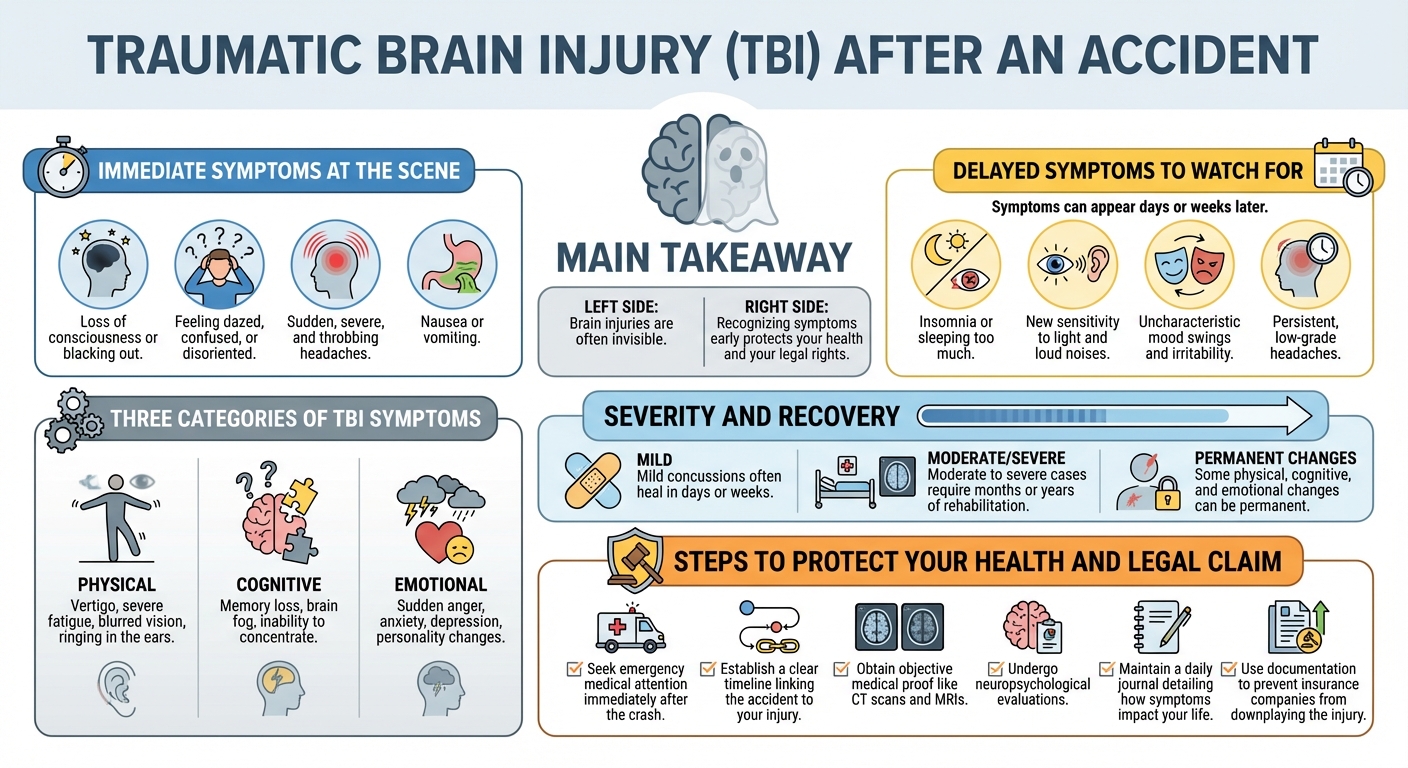
Some signs of a TBI are apparent the moment the accident occurs. If you or a passenger experience any of the following immediately after a crash, emergency medical intervention is required:
- Loss of consciousness: Even a few seconds of blacking out is a major red flag.
- Disorientation: Feeling dazed, confused, or unable to answer simple questions.
- Severe headache: A sudden, intense throbbing in the head.
- Nausea or vomiting: Often a direct result of rising intracranial pressure.
Delayed Symptoms You Should Never Ignore
Adrenaline and shock can mask the severity of a head injury. It is incredibly common for TBI symptoms to emerge days or even weeks after the initial trauma. Watch closely for:
- Sleep disturbances (sleeping too much or insomnia)
- Sudden sensitivity to light and loud noises
- Uncharacteristic mood swings or irritability
- Persistent, low-grade headaches that do not respond to medication
Categorizing Brain Injury Symptoms
To properly identify and treat a TBI, medical professionals categorize symptoms into three main groups: physical, cognitive, and emotional.
Physical Symptoms: Headaches, Vertigo, and Fatigue
The physical toll of a brain injury can be debilitating. Vertigo—a sensation that you or your surroundings are spinning—is highly common after a TBI and can severely impact your balance. Victims also frequently report chronic headaches, profound physical fatigue, blurred vision, and a ringing in the ears (tinnitus).
Cognitive Symptoms: Memory Loss, Confusion, and Brain Fog
Cognitive impairments disrupt your ability to process information. You might experience short-term memory loss, forgetting conversations you just had or details of the crash. “Brain fog,” a general lack of mental clarity, makes it difficult to concentrate at work, follow instructions, or multitask.
Emotional and Behavioral Changes: Irritability and Anxiety
Often the most overlooked aspect of a TBI, emotional changes can be the hardest on families. The brain’s frontal lobe regulates personality and impulse control. Damage here can lead to sudden outbursts of anger, severe anxiety, depression, and symptoms that heavily overlap with Post-Traumatic Stress Disorder (PTSD).
What is considered a severe TBI?
A severe TBI involves an extended loss of consciousness lasting more than 24 hours, prolonged amnesia, or structural brain damage visible on neuroimaging. Symptoms include profound confusion, continuous seizures, worsening headaches, and significant neurological deficits requiring intensive emergency medical intervention and long-term care.
What is the timeline for a TBI?
The timeline for a TBI varies widely based on severity. Mild TBIs or concussions often improve within days to weeks. Moderate to severe TBIs may require months or years of rehabilitation. While initial acute symptoms stabilize after a few weeks, cognitive and emotional recovery can be a lifelong process.
What are the long-term effects of traumatic brain injury in adults?
Long-term effects of a traumatic brain injury in adults can include chronic headaches, persistent vertigo, memory impairment, and cognitive decline. Many adults also experience lasting emotional changes, such as depression, anxiety, or personality shifts, which can permanently impact their careers, independence, and personal relationships.
Can people fully recover from TBI?
Yes, many people fully recover from a mild TBI or concussion within a few weeks to months. However, moderate to severe TBIs often result in permanent changes. While targeted rehabilitation helps maximize function and independence, some individuals may experience lifelong physical, cognitive, or emotional challenges.
Why Documenting TBI Symptoms is Crucial for Your Accident Claim
If your brain injury was caused by another driver’s negligence, recovering fair compensation requires meticulous documentation. Insurance companies are notoriously skeptical of injuries they cannot easily see on a standard X-ray.
The Importance of Immediate Medical Attention
Going to the emergency room immediately after an accident establishes a direct timeline between the crash and your head injury. Delaying treatment gives insurance adjusters an opening to argue that your TBI was caused by a separate, unrelated event.
How Insurance Companies View Brain Injuries
Insurance companies often try to downplay mild to moderate TBIs as simple “headaches” or temporary stress. To fight back, you need objective medical evidence. This includes CT scans, MRIs, neuropsychological evaluations, and a daily symptom journal documenting how the injury impacts your daily life. Proper legal and medical strategy prevents insurers from devaluing your invisible injuries.