

Table of contents
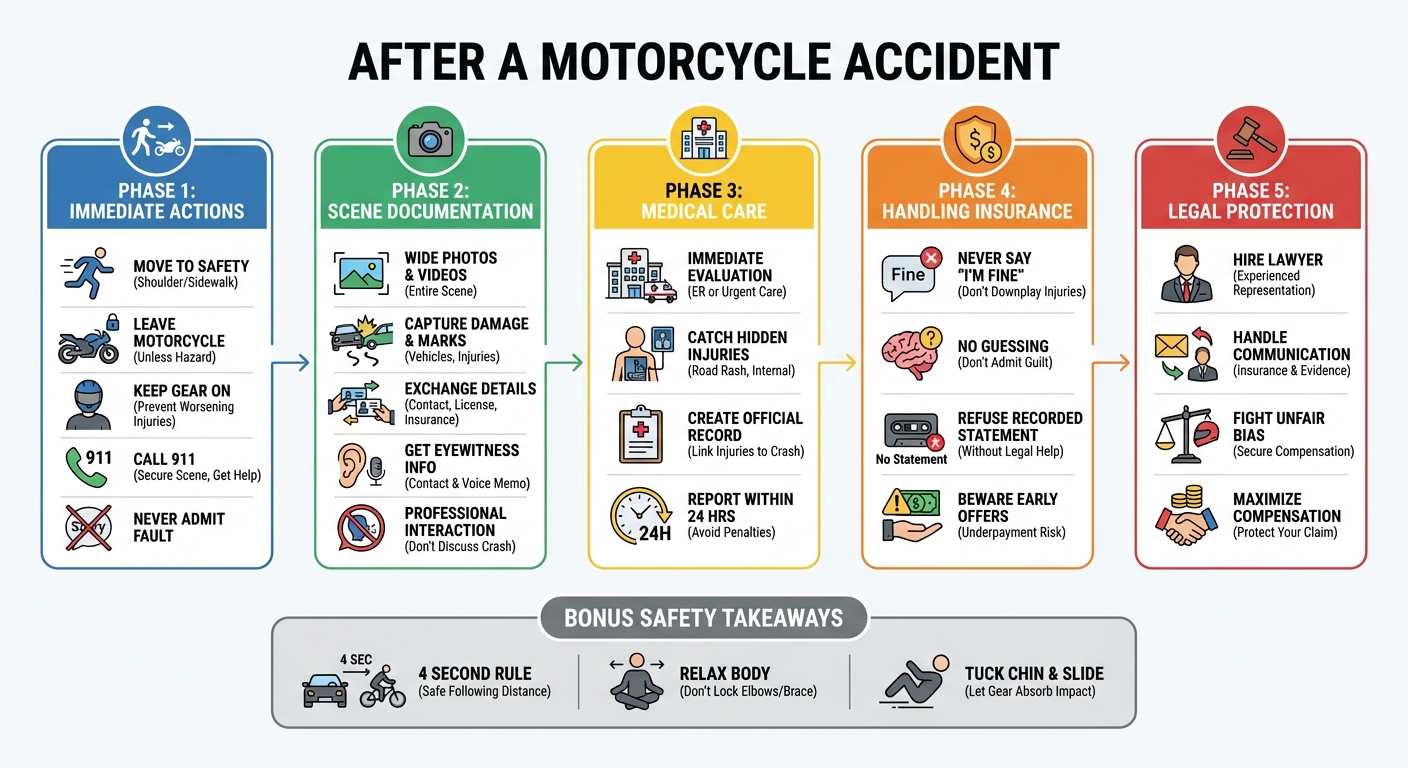
After a motorcycle accident, immediately move to a safe location and keep your helmet on to prevent spinal injuries. Call 911 to request police and medical help. Document the crash scene with photos, exchange information with the other driver, and never admit fault. Finally, seek a thorough medical evaluation.
A motorcycle crash happens in a split second, but the actions you take in the immediate aftermath can impact your health and legal rights for years. Because motorcyclists lack the structural protection of a passenger vehicle, the physical and financial stakes are incredibly high. Knowing exactly what to do after a motorcycle accident ensures you protect your physical well-being while building a strong foundation for any future insurance or personal injury claims.
What should I do immediately after a motorcycle accident?
Immediately after a motorcycle accident, move out of the roadway if possible, but keep your helmet and protective gear on to prevent worsening hidden injuries. Call 911 to dispatch police and medical personnel. Check yourself for injuries, do not admit fault, and wait for emergency responders to arrive.
Get to a Safe Location (If You Are Able)
If you are conscious and physically able to move, get yourself out of the flow of traffic. Secondary collisions are a major risk for downed motorcyclists. Move to the shoulder or sidewalk, but leave your motorcycle exactly where it is unless it poses an immediate, life-threatening hazard to other drivers.
Keep Your Helmet and Protective Gear On
Unlike a car accident, a motorcycle crash often involves severe impact to the head, neck, or spine. Adrenaline can mask the pain of a spinal cord injury. Removing your helmet or heavy riding jacket can inadvertently shift your spine or worsen internal bleeding. Wait for emergency medical technicians (EMTs) to safely remove your gear using proper stabilization techniques.
Call 911 for Police and Emergency Medical Services
Always call 911, even if you believe your injuries are minor. A police officer will secure the scene, interview witnesses, and create an official crash report. This police report is a vital piece of objective evidence that your attorney will use to prove liability later.
Do Not Admit Fault or Apologize
It is human nature to say “I’m sorry” after a collision, even just to be polite. However, insurance adjusters and defense attorneys will twist these words into an admission of guilt. Stick to the facts when speaking to the police, and never apologize to the other driver.
How to Document the Motorcycle Crash Scene
Evidence disappears quickly. Skid marks wash away, debris is cleared, and witnesses leave. If you are physically able, documenting the scene is one of the most important steps you can take.
Take Comprehensive Photos and Videos of the Scene
Use your smartphone to capture the entire scene. Take wide-angle shots showing the positions of the vehicles, traffic signs, and weather conditions. Zoom in on the damage to your motorcycle, the other driver’s vehicle, skid marks, road defects, and your visible injuries. Video footage panning across the intersection or roadway is also highly effective.
Exchange Information with the Other Driver
Keep interactions with the at-fault driver brief and professional. Collect their full name, contact information, driver’s license number, license plate number, and insurance policy details. Do not discuss how the crash happened or who is to blame.
Identify and Speak to Eyewitnesses
Bystanders who saw the crash are crucial, as drivers often change their stories later. Ask witnesses for their names and phone numbers. If they are willing, record a short voice memo on your phone of them describing what they saw before they leave the scene.
Medical Care and Legal Reporting Requirements
Your physical recovery must be your top priority. Delaying medical care not only jeopardizes your health but also gives insurance companies an excuse to devalue your claim.
Seek Immediate Medical Attention
Go to the emergency room or an urgent care clinic immediately after leaving the crash scene. Common motorcycle injuries like road rash, concussions, and internal organ damage may not show severe symptoms until hours or days later. A prompt medical evaluation creates an official medical record linking your injuries directly to the crash.
What happens if an accident is not reported within 24 hours?
If a motorcycle accident is not reported within 24 hours, you may face legal penalties, including fines or a suspended driver’s license, depending on your state’s laws. Additionally, failing to promptly report the crash to police and your insurer can give insurance companies grounds to deny your injury or damage claim.
Dealing with Insurance Adjusters After a Crash
Insurance companies are for-profit businesses. Their primary goal is to minimize the amount of money they pay out to accident victims. You must be incredibly careful when communicating with them.
What not to say to your insurance company after an accident?
When speaking to your insurance company, never say “I am fine” or “I am not injured,” as adrenaline often masks pain. Do not admit fault, apologize, or guess about how the crash occurred. Finally, never agree to provide a recorded statement before consulting with a personal injury attorney.
Beware of Early Settlement Offers and Recorded Statements
Adjusters often call within days of a crash offering a quick settlement check. This is a trap designed to make you sign away your rights before you know the full extent of your medical bills. Never accept an early offer or give a recorded statement without legal representation.
Motorcycle Safety, Prevention, and Crash Dynamics
Understanding how crashes happen and how to react can save your life. Defensive riding and proper crash techniques are essential for every motorcyclist.
What is the 4 second rule on a motorcycle?
The 4-second rule on a motorcycle is a safe following distance guideline. To use it, pick a stationary object ahead. When the vehicle in front of you passes it, count four seconds. If you pass the object before finishing your count, you are following too closely and should back off.
How to Minimize Injury During a Motorcycle Crash (Bracing vs. Relaxing)
If a crash is inevitable, your instinct will be to lock your elbows and brace for impact. However, bracing often leads to shattered wrists, arms, and collarbones. Instead, try to relax your body, aim for a softer landing area if possible, and let your protective gear absorb the slide. Tuck your chin to your chest to protect your neck.
When to Contact a Motorcycle Accident Lawyer
Motorcyclists often face an unfair “biker bias” from police, juries, and insurance adjusters who assume the rider was acting recklessly. If you suffered injuries, missed work, or sustained significant property damage, you need an experienced personal injury lawyer. An attorney will handle all communication with the insurance company, gather critical evidence, and fight to secure the maximum compensation you deserve while you focus on healing.