

Table of contents
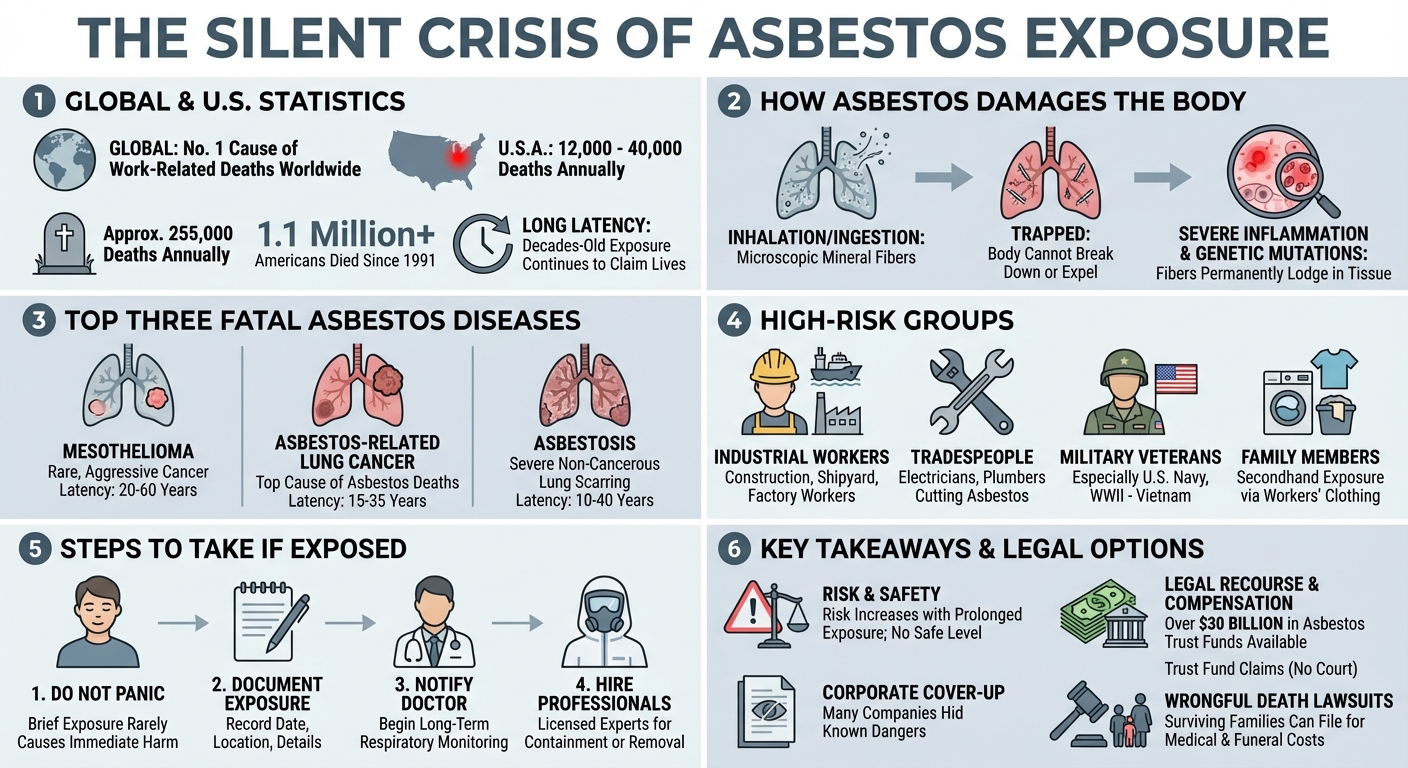
Approximately 255,000 people die globally each year from asbestos-related diseases, making it the leading cause of work-related deaths worldwide. In the United States, estimates show that between 12,000 and 40,000 Americans lose their lives annually due to illnesses like mesothelioma, asbestos-related lung cancer, and asbestosis caused by historic exposure.
How Many People Die From Asbestos Each Year?
Asbestos exposure is a silent but devastating global health crisis. Despite strict regulations in many countries, the long latency period of asbestos-related diseases means that decades-old exposure continues to claim lives today.
Global Asbestos Death Statistics
According to the World Health Organization and recent medical studies, approximately 255,000 people die from asbestos-related diseases globally each year. This staggering figure makes asbestos exposure the number one cause of work-related deaths in the world. The majority of these fatalities stem from occupational exposure in industries that heavily utilized the toxic mineral before its dangers were widely acknowledged.
U.S. Asbestos Mortality Rates
In the United States, the death toll remains tragically high. Data from the Institute for Health Metrics and Evaluation (IHME) and the Environmental Working Group indicates that between 12,000 and 40,000 Americans die annually from asbestos exposure. Since 1991, over 1.1 million Americans have passed away from complications related to inhaling or ingesting asbestos fibers.
Leading Causes of Asbestos-Related Deaths
When microscopic asbestos fibers are inhaled, they become trapped in the body, leading to severe inflammation and genetic mutations over time. The fatalities are primarily driven by three main conditions.
| Disease | Description | Typical Latency Period |
|---|---|---|
| Mesothelioma | A rare, aggressive cancer affecting the lining of the lungs, abdomen, or heart. | 20 to 60 years |
| Asbestos-Related Lung Cancer | Malignant tumors forming inside the lung tissue; the most common cause of asbestos deaths. | 15 to 35 years |
| Asbestosis | Severe, non-cancerous scarring of the lung tissue that restricts breathing. | 10 to 40 years |
Mesothelioma
Mesothelioma is almost exclusively caused by asbestos exposure. While it is less common than lung cancer, it is exceptionally lethal. Patients are often diagnosed in the later stages due to the disease’s long latency period, making treatment difficult and survival rates low.
Asbestos-Related Lung Cancer
Lung cancer accounts for the largest share of asbestos-related fatalities. Workers who were exposed to asbestos and also smoked cigarettes face a dramatically multiplied risk of developing fatal lung cancer compared to non-smokers.
Asbestosis and Other Respiratory Conditions
Asbestosis is a chronic respiratory disease characterized by heavy scarring of the lungs. While not a cancer, severe asbestosis can be fatal on its own by causing respiratory failure or heart failure due to the immense strain placed on the cardiovascular system.
Who is Most at Risk for Fatal Asbestos Exposure?
Because asbestos was prized for its heat resistance and durability, it was used in thousands of commercial and industrial products throughout the 20th century. This widespread use put specific groups at a much higher risk of fatal exposure.
High-Risk Occupations (Construction, Shipyards, Manufacturing)
Industrial workers bear the brunt of asbestos mortality. Those at the highest risk include construction workers, shipyard workers, electricians, plumbers, and factory workers. These individuals frequently handled raw asbestos or cut through asbestos-containing materials, releasing massive amounts of toxic dust into the air.
Military Veterans
Military veterans, particularly those who served in the U.S. Navy between World War II and the Vietnam War, represent a significant portion of asbestos-related deaths. Asbestos was heavily used in naval ships for insulation and fireproofing, exposing thousands of sailors in confined, poorly ventilated spaces.
Secondary (Take-Home) Exposure Risks
Tragically, you did not have to work directly with asbestos to suffer fatal consequences. Secondary exposure occurred when workers unknowingly brought asbestos dust home on their clothing, skin, or hair. Family members who washed these clothes or greeted the workers often inhaled the fibers, leading to fatal illnesses decades later.
Frequently Asked Questions About Asbestos Exposure
What are the odds of dying from asbestos?
The odds of dying from asbestos depend heavily on the duration and intensity of your exposure. While casual, low-level exposure carries a very low risk, individuals who worked directly with asbestos materials for years face a significantly higher probability of developing fatal diseases like mesothelioma or lung cancer.
What to do if I breathed in asbestos?
If you suspect you breathed in asbestos, do not panic. A single, brief exposure rarely causes immediate harm. Document the incident, notify your doctor so they can monitor your respiratory health over time, and ensure the asbestos source is professionally contained or removed to prevent any future inhalation.
Can a one-time exposure to asbestos be harmful?
While a one-time exposure to asbestos is generally unlikely to cause fatal diseases, no amount of asbestos exposure is considered completely safe. The risk of developing mesothelioma or asbestosis increases significantly with prolonged, repeated inhalation of asbestos fibers over months or years, rather than a single isolated event.
Does asbestos stay in your lungs?
Yes, asbestos stays in your lungs. When microscopic asbestos fibers are inhaled, they can become permanently trapped deep within the lung tissue. Because the human body cannot break down or easily expel these durable mineral fibers, they remain in the body, causing chronic inflammation and scarring over decades.
Legal Options for Asbestos Victims and Their Families
If you or a loved one has been diagnosed with a fatal asbestos-related disease, you have legal rights. Many companies knew about the dangers of asbestos but hid the risks from their workers.
Filing an Asbestos Trust Fund Claim
When many asbestos manufacturers filed for bankruptcy, courts forced them to establish asbestos trust funds to compensate future victims. Today, there is over $30 billion set aside in these trusts. Victims and their families can file claims against these funds to receive financial compensation without ever going to court.
Wrongful Death Lawsuits for Asbestos Exposure
If a loved one has passed away from mesothelioma or another asbestos-related disease, surviving family members can file a wrongful death lawsuit. These lawsuits aim to hold negligent companies accountable, securing compensation for medical bills, funeral expenses, and the loss of income and companionship.