

Table of contents
Lyft is currently settling multiple major lawsuits. Driver wage and misclassification settlements include a $38 million fund in New York and a $140 million joint settlement in Massachusetts. Additionally, Lyft faces ongoing lawsuits regarding FTC deceptive earnings claims and passenger safety violations. Payouts depend on your specific claim and state.
Lyft Lawsuit Settlements: 2026 Updates, Payouts, and Eligibility
Lyft is currently navigating a complex web of legal challenges, resulting in multi-million dollar settlements across several states. For drivers and passengers alike, understanding the status of these lawsuits is critical to knowing if you are eligible for financial compensation.
Why Lyft is Facing Multiple Lawsuits
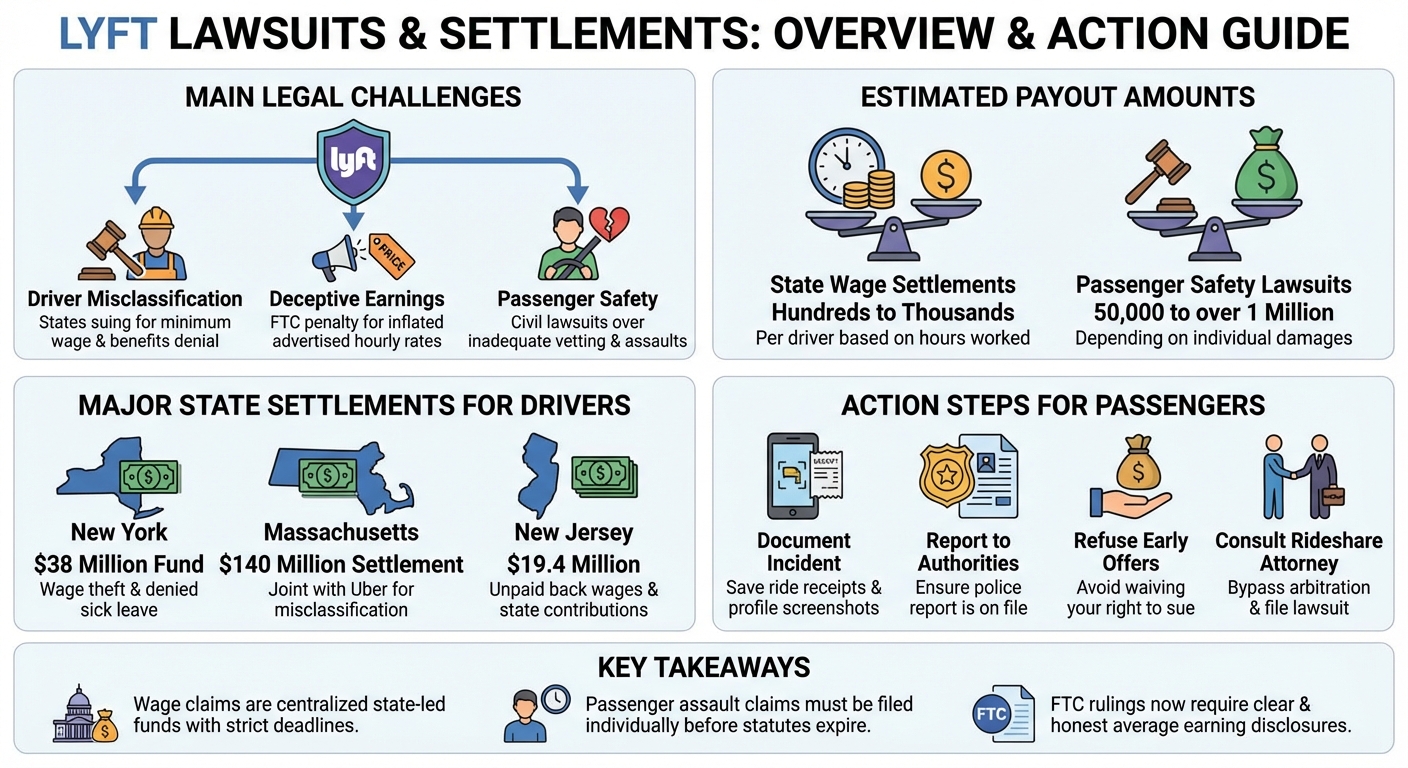
The rideshare giant is facing legal action on three primary fronts:
- Driver Misclassification: State attorneys general are suing Lyft for classifying drivers as independent contractors rather than employees, denying them minimum wage and benefits.
- Deceptive Earnings Claims: The Federal Trade Commission (FTC) has taken action against Lyft for misleading prospective drivers about potential hourly earnings.
- Passenger Safety: Numerous civil lawsuits allege Lyft failed to adequately vet drivers, leading to passenger assaults.
The Difference Between Driver Wage Claims and Passenger Safety Lawsuits
It is important to distinguish between the types of Lyft lawsuits. Wage and misclassification claims are typically class actions or state-led lawsuits aimed at recovering unpaid wages, sick leave, and expenses for drivers. Passenger safety lawsuits are individual personal injury claims filed by users who suffered physical or sexual assault due to alleged corporate negligence. The eligibility criteria and payout structures for these two categories are entirely different.
Major State Settlements for Lyft Drivers (Misclassification & Wage Theft)
Several states have successfully sued Lyft for labor law violations, resulting in massive settlement funds designed to compensate active and former drivers.
| State | Settlement Amount | Primary Legal Issue |
|---|---|---|
| New York | $38 Million | Wage theft, denied sick leave |
| Massachusetts | $140 Million (Joint w/ Uber) | Driver misclassification |
| New Jersey | $19.4 Million | Unpaid back wages and penalties |
New York Attorney General Settlement ($38 Million Fund)
The New York State Attorney General secured a historic $38 million settlement from Lyft (alongside a larger settlement from Uber). This fund compensates drivers who had their earnings improperly deducted and were denied paid sick leave. Eligible NY drivers can claim back pay and will now receive guaranteed minimum earnings and paid sick time moving forward.
Massachusetts Uber & Lyft Joint Settlement ($140 Million)
In a landmark agreement, Lyft and Uber agreed to pay a combined $140 million to settle claims brought by the Massachusetts Attorney General. The lawsuit centered on the misclassification of drivers as independent contractors. The settlement provides substantial back pay to drivers who completed trips in Massachusetts over the past several years, alongside new minimum pay guarantees.
New Jersey Driver Misclassification Case ($19.4 Million)
The New Jersey Department of Labor and the Office of the Attorney General announced that Lyft paid $19.4 million to resolve a driver misclassification case. This payment covers back wages, unemployment insurance, and disability contributions that Lyft previously failed to pay for its workforce.
California Labor Commissioner Actions
In California, the Labor Commissioner’s Office continues to pursue actions against Lyft to recover unpaid wages and civil penalties. While Proposition 22 altered the landscape of gig work in the state, ongoing legal battles seek restitution for drivers who were misclassified prior to the law’s enactment.
FTC Action: Deceptive Earnings Claims Against Lyft
Beyond state labor disputes, Lyft has faced federal scrutiny regarding how it recruits drivers.
Allegations of False Hourly Wage Guarantees
The Federal Trade Commission (FTC) recently took action against Lyft, alleging the company made false and misleading statements about how much drivers could earn. The FTC claimed Lyft inflated advertised hourly rates by including tips in their calculations and failing to account for the substantial out-of-pocket expenses drivers incur, such as gas and vehicle maintenance.
What the FTC Ruling Means for Current and Former Drivers
The FTC’s intervention requires Lyft to pay civil penalties and fundamentally change its marketing practices. Drivers must now receive clear, transparent disclosures about average earnings in their specific geographic area. While this action focuses heavily on corporate penalties, it establishes a legal precedent that could support future driver-led class action lawsuits regarding deceptive practices.
Lyft Passenger Safety and Sexual Assault Lawsuits
While drivers fight for fair wages, passengers are holding Lyft accountable for severe safety failures.
Allegations of Inadequate Driver Vetting
A growing number of lawsuits accuse Lyft of failing to properly screen its drivers, resulting in sexual assaults and physical violence against passengers. Plaintiffs argue that Lyft’s background check processes are dangerously inadequate and that the company failed to implement necessary safety features, prioritizing rapid driver onboarding over passenger security.
How Lyft Assault Cases Compare to Uber Lawsuits
Both Lyft and Uber face massive, centralized litigation (often structured as Multi-District Litigation or MDLs) regarding passenger assaults. While the legal arguments are nearly identical—focusing on corporate negligence and failure to warn—the cases are handled separately. If you are pursuing a claim, your attorney will file specifically against the platform you were using at the time of the incident.
Frequently Asked Questions About Lyft Settlements
How much will I get from the Lyft settlement?
Payouts depend entirely on the specific lawsuit. For state wage settlements (like NY or MA), drivers might receive anywhere from a few hundred to several thousand dollars based on their total hours driven. For passenger safety and assault lawsuits, individual settlements can range from $50,000 to over $1 million depending on the severity of the trauma and damages.
Did Dank lose a case against Lyft?
There is no widely publicized, definitive class-action loss under the name “Dank v. Lyft.” However, Lyft has successfully defended against or forced into arbitration numerous individual lawsuits. Outcomes in individual cases vary wildly based on the specific evidence, local state laws, and whether the user agreed to binding arbitration clauses in the app’s terms of service.
Can I still join the class action lawsuit?
Yes, but eligibility depends on strict deadlines. For the New York and Massachusetts wage settlements, eligible drivers are being notified by mail or email with instructions on how to submit a claim. For passenger assault cases, there is no single “class action” to join; instead, you must file an individual lawsuit before your state’s statute of limitations expires.
Is the Uber Lyft settlement real?
Yes, the recent Uber and Lyft settlements are entirely real. The New York Attorney General secured a $38 million fund from Lyft (and $290 million from Uber), while Massachusetts finalized a $140 million joint settlement. If you receive an official notice from a state Attorney General or a court-appointed settlement administrator, it is a legitimate opportunity to claim compensation.
How to Check Your Eligibility and File a Claim
Steps for Drivers Claiming Unpaid Wages or Misclassification
- Check Your Email/Mail: Settlement administrators use the contact info linked to your Lyft driver account.
- Visit State AG Websites: If you drove in NY, MA, or NJ, check the official state Attorney General websites for dedicated settlement portals.
- Submit Before the Deadline: Wage settlements have strict cutoff dates. Missing the deadline means forfeiting your payout.
Steps for Passengers Filing Safety or Assault Claims
- Document the Incident: Save all ride receipts, screenshots of the driver profile, and communications with Lyft support.
- Report to Authorities: Ensure there is a police report on file regarding the incident.
- Do Not Accept Early Offers: Lyft may offer a small refund or payout; accepting this can waive your right to sue.
Why Consulting a Rideshare Lawsuit Attorney is Crucial
Whether you are a driver fighting for years of unpaid wages or a passenger seeking justice for an assault, rideshare companies have powerful legal teams. Consulting an attorney ensures your claim is filed correctly, helps you bypass restrictive arbitration clauses, and maximizes the compensation you ultimately receive.