

Table of contents
Motorcycle injury compensation typically covers medical bills, lost wages, property damage, and pain and suffering. While average settlements range from $10,000 to $100,000, payouts depend heavily on injury severity and insurance policy limits. Severe cases involving long-term care or permanent disability frequently result in significantly higher compensation.
Understanding Motorcycle Injury Compensation: What to Expect
Motorcycle accidents often result in devastating physical injuries and overwhelming financial burdens. Because riders lack the protective shell of a passenger vehicle, the stakes in a motorcycle injury claim are exceptionally high. Understanding how compensation is calculated is the first step toward protecting your financial future.
How much compensation for a motorcycle accident?
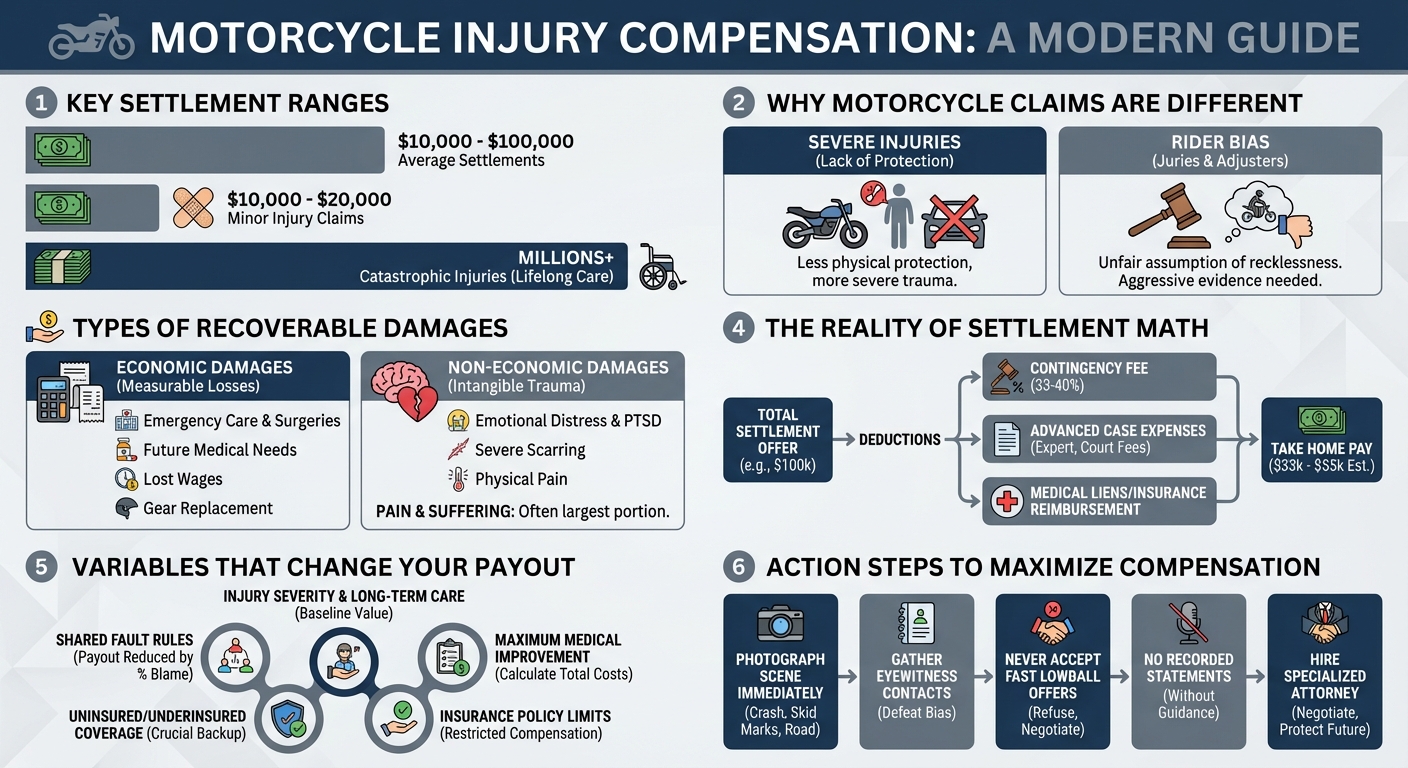
Compensation for a motorcycle accident varies widely based on injury severity, but victims can typically recover economic damages for medical bills and lost wages, plus non-economic damages for pain and suffering. While minor claims might settle for $10,000 to $20,000, severe injury cases frequently exceed $100,000 to cover long-term care.
How much are most motorcycle accident settlements?
Most motorcycle accident settlements fall between $10,000 and $100,000, depending heavily on the available insurance policy limits and the extent of the rider’s injuries. Cases involving catastrophic injuries, such as traumatic brain injuries or spinal cord damage, often result in much higher payouts, sometimes reaching into the millions.
Why Motorcycle Claims Differ from Standard Car Accidents
Motorcycle claims are inherently more complex than standard auto accidents. First, the injuries are usually more severe, meaning the medical evidence required to prove long-term damages is more extensive. Second, riders frequently face “rider bias”—an unfair assumption by insurance adjusters and juries that motorcyclists are inherently reckless. Overcoming this bias requires aggressive evidence gathering and a strategic legal approach.
Types of Damages You Can Recover After a Crash
When you file a motorcycle injury claim, you are seeking compensation for specific categories of loss, known legally as “damages.”
Economic Damages: Medical Bills, Lost Wages, and Property Damage
Economic damages reimburse you for out-of-pocket financial losses. These are highly quantifiable and include:
- Medical Expenses: Emergency room visits, surgeries, physical therapy, and future medical care.
- Lost Wages: Income lost while you recover, as well as loss of future earning capacity if you cannot return to your previous job.
- Property Damage: The cost to repair or replace your motorcycle and damaged gear (helmets, leathers, etc.).
Non-Economic Damages: Emotional Distress and PTSD
Non-economic damages compensate you for the intangible impacts of the crash. For motorcyclists, this often involves severe road rash scarring, loss of a limb, or the psychological trauma (PTSD) of getting back on a bike. These damages are subjective but often make up the largest portion of a severe injury settlement.
Is it worth suing for pain and suffering?
Yes, it is absolutely worth suing for pain and suffering after a motorcycle crash. Because riders often endure severe trauma, extensive road rash, and prolonged rehabilitation, non-economic damages frequently make up the largest portion of a settlement. This compensation is crucial for addressing the lasting physical and emotional toll.
The Settlement Math: Calculating Your Take-Home Pay
A high settlement offer does not mean that entire amount goes into your bank account. Understanding the deductions is vital for setting realistic expectations.
How much of a $100K settlement will I get?
If you receive a $100,000 settlement, you will typically take home between $33,000 and $55,000. After deducting standard attorney contingency fees (usually 33% to 40%), case expenses, and reimbursing any outstanding medical liens or health insurance subrogation claims, the remaining balance goes directly into your pocket.
Understanding Contingency Fees and Case Expenses
Personal injury lawyers work on a contingency fee basis, meaning they only get paid if you win. The fee is a percentage of the gross settlement. Additionally, your lawyer will advance case expenses—such as costs for accident reconstruction experts, obtaining medical records, and court filing fees—which are reimbursed from the settlement.
Navigating Medical Liens and Subrogation
If your health insurance, Medicare, or a hospital paid for your crash-related medical care, they have a legal right to be reimbursed from your settlement. This is known as a lien or subrogation claim. A skilled attorney will negotiate these liens down, maximizing the final amount you take home.
Key Factors That Impact Your Motorcycle Settlement Value
No two motorcycle accidents are exactly alike. Several critical variables will dictate the final value of your compensation.
Severity of Injuries and Long-Term Care Needs
The single biggest driver of settlement value is the severity of your injuries. A broken arm that heals in six weeks will yield a lower settlement than a traumatic brain injury requiring lifelong cognitive therapy. Documenting maximum medical improvement (MMI) is essential before agreeing to any payout.
Insurance Policy Limits (Yours and the At-Fault Driver’s)
You can generally only recover up to the limits of the available insurance policies. If the at-fault driver carries a minimum liability policy (e.g., $30,000), that may be all you can get from them, regardless of how high your medical bills are. This is why carrying robust Uninsured/Underinsured Motorist (UM/UIM) coverage on your own motorcycle policy is critical.
Overcoming ‘Rider Bias’ and Shared Fault Rules
Insurance companies love to argue that the motorcyclist was speeding, lane-splitting, or otherwise at fault. Depending on your state’s comparative negligence laws, if you are found partially at fault, your compensation will be reduced by your percentage of blame. Defeating these allegations with hard evidence is paramount.
Steps to Maximize Your Motorcycle Accident Payout
Taking the right steps immediately after a crash can make or break your claim.
Preserving Evidence at the Crash Scene
If you are physically able, take photos of the vehicles, skid marks, and road conditions. Collect contact information from eyewitnesses. Eyewitness testimony is often the best defense against an adjuster trying to blame you for the crash.
Avoiding Early Settlement Traps from Insurance Adjusters
Insurance adjusters often call within days of a crash offering a fast, lowball settlement. They want you to sign a release before you realize the full extent of your injuries. Never accept an early offer or give a recorded statement without consulting a lawyer.
Why You Need a Specialized Motorcycle Injury Lawyer
Motorcycle accident claims require specialized knowledge. You need an attorney who understands motorcycle dynamics, knows how to combat anti-rider bias, and has a track record of accurately valuing catastrophic injuries. A dedicated lawyer will handle the aggressive tactics of the insurance company so you can focus entirely on your physical recovery.