

Table of contents
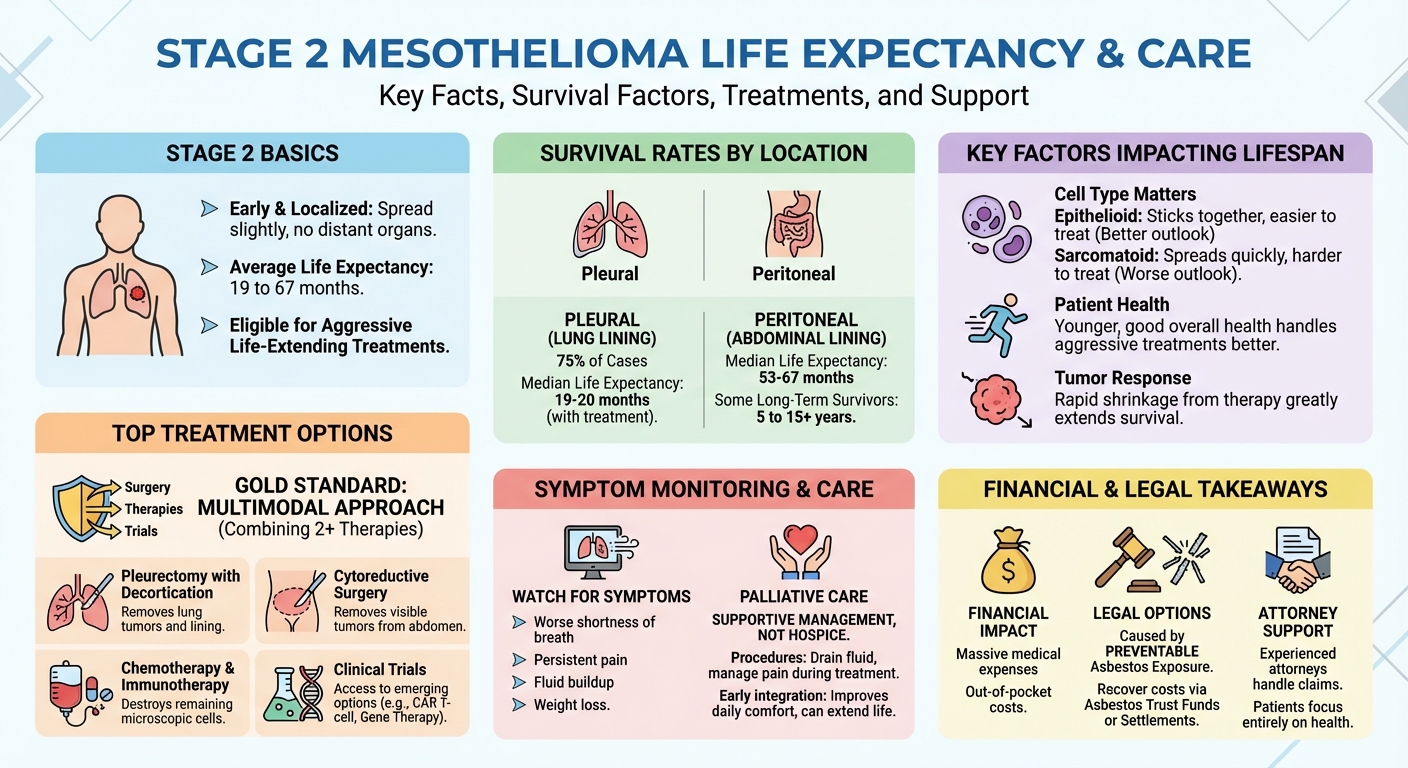
Stage 2 mesothelioma patients have an average life expectancy of 19 to 67 months. Because the cancer is still in an early, localized stage, many patients qualify for aggressive, life-extending treatments like surgery and chemotherapy. Peritoneal mesothelioma patients generally experience longer survival times than those with pleural mesothelioma.
Understanding Stage 2 Mesothelioma Life Expectancy
Receiving a mesothelioma diagnosis is overwhelming, but a Stage 2 diagnosis offers more hope and treatment options than advanced stages. At this point, the cancer has spread slightly beyond its origin but remains localized, making aggressive, life-extending treatments highly viable.
Average Life Expectancy (19 to 67 Months)
The average life expectancy for Stage 2 mesothelioma ranges broadly from 19 to 67 months. This wide range exists because survival depends heavily on where the cancer originated. Patients with Stage 2 pleural mesothelioma (in the lung lining) typically live around 19 to 20 months with treatment. Conversely, those with Stage 2 peritoneal mesothelioma (in the abdominal lining) often see survival times extending from 53 to 67 months, largely due to highly effective localized therapies.
Why Stage 2 is Considered ‘Early Stage’
Stage 2 is still classified as an early stage of mesothelioma. While the tumors have begun to spread from the primary mesothelial lining into adjacent tissues or nearby lymph nodes, they have not metastasized to distant organs. Because the cancer is contained to a single region of the body, doctors can often safely remove the visible tumors through surgery, which is the most effective way to extend a patient’s life span.
What is the prognosis for Stage 2 mesothelioma?
The prognosis for Stage 2 mesothelioma is generally favorable compared to later stages, with an average life expectancy of 19 to 67 months. Because the cancer remains localized, many patients qualify for life-extending, curative-intent surgeries and multimodal treatments, significantly improving their overall survival rates and long-term outlook.
Pleural vs. Peritoneal: Stage 2 Survival Rates
The location of the tumors plays a massive role in determining a patient’s life expectancy. The two most common types of mesothelioma respond very differently to treatment.
Stage 2 Pleural Mesothelioma Survival (Lungs)
Pleural mesothelioma accounts for about 75% of all cases. In Stage 2, tumors have spread from the pleura (lung lining) into the lung tissue itself, the diaphragm, or nearby lymph nodes on the same side of the chest. With a combination of surgery, chemotherapy, and radiation, the median life expectancy is approximately 19 to 20 months. About 38% of Stage 2 pleural patients survive for at least two years.
Stage 2 Peritoneal Mesothelioma Survival (Abdomen)
Peritoneal mesothelioma develops in the lining of the abdomen. In Stage 2, the cancer is still confined to the abdominal cavity. Because this area is highly receptive to specialized surgical procedures combined with heated chemotherapy, the prognosis is exceptionally strong. Patients often achieve a median life expectancy of 53 to 67 months, with many becoming long-term survivors.
Key Factors That Impact Your Life Span
Beyond the stage and location of the cancer, several individual factors will influence your specific prognosis.
Cell Type (Epithelioid vs. Sarcomatoid)
- Epithelioid Cells: The most common and least aggressive cell type. They stick together, making them easier to remove surgically and more responsive to chemotherapy.
- Sarcomatoid Cells: Highly aggressive and prone to spreading quickly. They are harder to treat, generally resulting in a shorter life expectancy.
- Biphasic Cells: A combination of both. Prognosis depends on which cell type is dominant.
Patient Age and Overall Health
Younger patients and those in excellent physical health are better equipped to withstand the physical toll of aggressive surgeries and chemotherapy. A strong immune system and lack of pre-existing conditions (like heart disease or severe COPD) significantly improve survival odds.
Response to Treatment
Every patient’s body reacts differently to cancer therapies. Those whose tumors shrink rapidly in response to chemotherapy or immunotherapy tend to experience longer survival times and a better quality of life.
Top Treatments to Extend Stage 2 Life Expectancy
Because Stage 2 mesothelioma is localized, a multimodal treatment approach—combining two or more therapies—is the gold standard for extending life.
Curative Surgeries (Pleurectomy/Decortication & Cytoreduction)
Surgery is the most effective way to improve Stage 2 life expectancy.
- Pleurectomy with Decortication (P/D): For pleural mesothelioma, this lung-sparing surgery removes the lung lining and visible tumors.
- Cytoreductive Surgery: For peritoneal mesothelioma, surgeons remove all visible tumors from the abdominal cavity.
Chemotherapy and Immunotherapy Options
Systemic treatments are used to kill microscopic cancer cells left behind after surgery. Chemotherapy (typically Alimta and cisplatin) is standard. Additionally, immunotherapy drugs like Opdivo and Yervoy have been FDA-approved for pleural mesothelioma, helping the patient’s own immune system identify and destroy cancer cells.
Clinical Trials and Emerging Therapies
Stage 2 patients are often excellent candidates for clinical trials. These trials provide access to cutting-edge treatments like CAR T-cell therapy, gene therapy, and personalized cancer vaccines before they are widely available.
What’s the longest you can live with mesothelioma?
The longest you can live with mesothelioma depends heavily on the stage and tumor location. While the average survival is 12 to 21 months, some exceptional patients—particularly those with peritoneal mesothelioma who undergo cytoreductive surgery with HIPEC—have become long-term survivors, living 5, 10, or even 15 years post-diagnosis.
Recognizing Disease Progression
Even with successful Stage 2 treatment, mesothelioma can eventually progress. Monitoring your body for changes is vital for adjusting your treatment plan promptly.
What are the signs that mesothelioma is getting worse?
Signs that mesothelioma is getting worse include increased shortness of breath, persistent chest or abdominal pain, unexplained weight loss, chronic fatigue, and fluid buildup. If the cancer spreads, patients may also experience difficulty swallowing, night sweats, or a worsening cough, signaling the need to adjust medical treatment plans.
Palliative Care and Comfort
Palliative care is not hospice care; it is supportive care designed to relieve symptoms and improve your quality of life while you are actively receiving cancer treatment.
Is dying of mesothelioma painful?
Dying of mesothelioma can involve pain due to tumors pressing on nerves, organs, or the chest wall, but it does not have to be agonizing. With early intervention, specialized palliative care teams can effectively manage pain, ease breathing difficulties, and ensure the patient remains as comfortable and peaceful as possible.
How Palliative Care Improves Quality of Life
Palliative specialists focus on symptom management. This includes performing minor procedures like a thoracentesis to drain fluid from the lungs, prescribing targeted pain medications, and offering nutritional and emotional support. Integrating palliative care early in a Stage 2 diagnosis has been shown to not only improve daily comfort but also extend life expectancy.
Next Steps: Affording Life-Extending Treatment
While a Stage 2 diagnosis brings viable treatment options, accessing top-tier medical care requires significant financial resources.
The High Cost of Stage 2 Cancer Care
Curative surgeries, extended hospital stays, and ongoing immunotherapy can cost hundreds of thousands of dollars. Even with premium health insurance, out-of-pocket costs, travel to specialized cancer centers, and lost wages can devastate a family’s finances.
Accessing Mesothelioma Compensation
Because mesothelioma is almost entirely caused by preventable asbestos exposure, patients have legal avenues to recover costs. You may be entitled to funds from asbestos trust funds or settlements. Learn more about Mesothelioma Compensation: How Much Can You Receive? to understand your financial options.
Protecting Your Family’s Future
Taking legal action does not mean you have to spend time in a courtroom. An experienced attorney can handle the heavy lifting while you focus on your health. Discover the steps involved in our guide to the Mesothelioma Lawsuit: How to File a Claim and What to Expect, ensuring your family’s future is financially secure.