

Table of contents
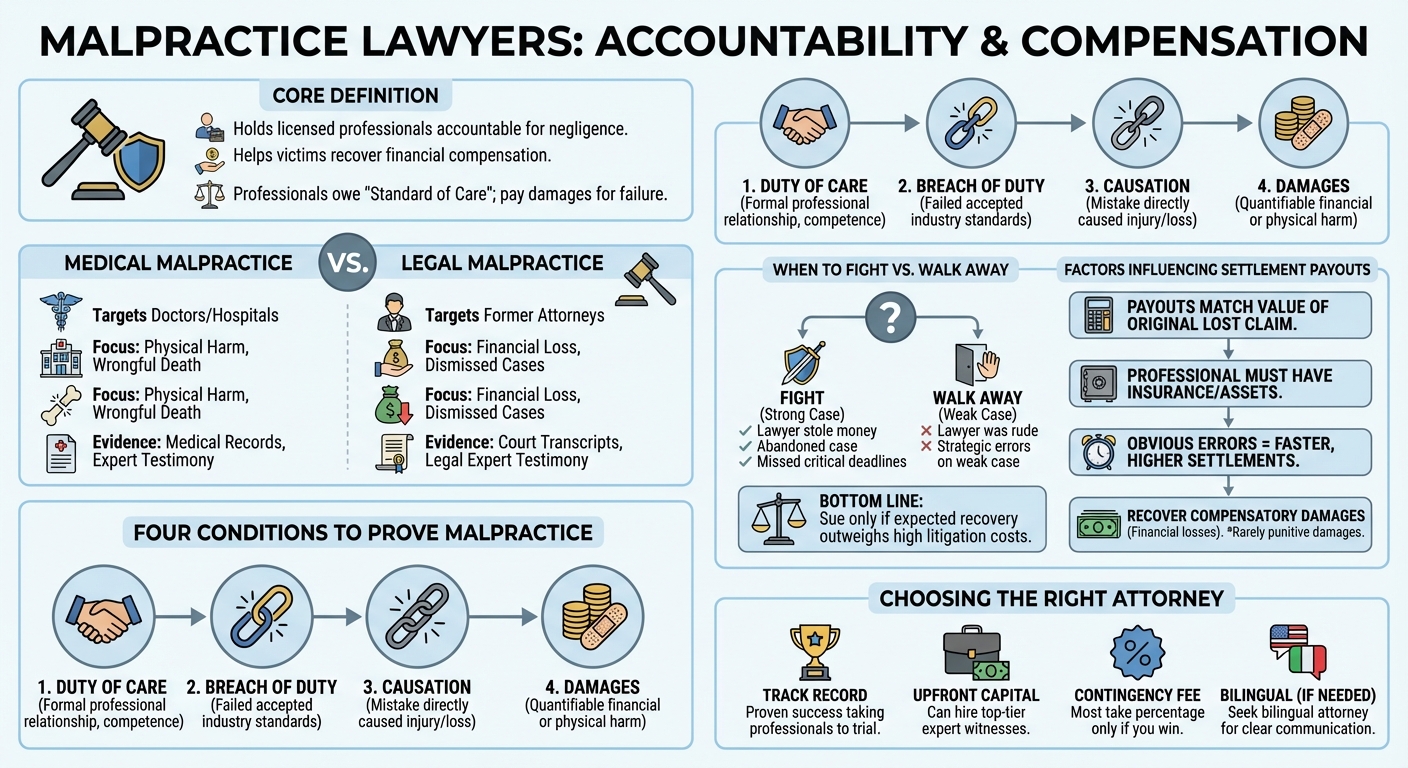
An “abogado malpractice” is a lawyer who specializes in holding professionals accountable when their negligence causes harm. These attorneys typically handle either medical malpractice (errors by healthcare providers) or legal malpractice (incompetence by a former attorney), helping victims recover financial compensation for their losses.
What is a Malpractice Lawyer (Abogado)?
An abogado (lawyer) specializing in malpractice represents individuals who have been harmed by the negligence or incompetence of a licensed professional. When you hire a professional, they owe you a specific standard of care. When they fail to meet that standard, a malpractice attorney helps you seek compensation for the resulting damages.
Medical Malpractice vs. Legal Malpractice
Malpractice generally falls into two distinct categories. While both involve professional negligence, the evidence, damages, and legal strategies differ significantly.
| Feature | Medical Malpractice | Legal Malpractice |
|---|---|---|
| The Defendant | Doctors, nurses, hospitals, or dentists. | Former attorneys or law firms. |
| The Harm | Physical injury, worsened condition, or wrongful death. | Financial loss, dismissed cases, or lost legal rights. |
| The Evidence | Medical records and expert physician testimony. | Court transcripts, case files, and legal expert testimony. |
Why You Need a Specialized Attorney
Malpractice cases are notoriously difficult to win. Professionals are backed by aggressive insurance companies and well-funded defense teams. You need a specialized attorney because these cases require upfront capital to hire expert witnesses, a deep understanding of complex procedural rules, and the ability to objectively evaluate whether a professional standard was actually breached.
What are the 4 conditions of malpractice?
To win a malpractice lawsuit, you must prove four specific legal elements. The 4 conditions of malpractice are: a professional duty of care owed to the client, a breach of that duty, direct causation linking the breach to the injury, and actual financial or physical damages.
- 1. Duty of Care: A formal relationship existed (e.g., doctor-patient or attorney-client), meaning the professional was legally obligated to act competently.
- 2. Breach of Duty: The professional failed to meet the accepted standard of care that a reasonable peer would have provided under similar circumstances.
- 3. Causation: The professional’s specific mistake directly caused your injury or loss. It is not enough that they made an error; that error must be the direct cause of the harm.
- 4. Damages: You suffered quantifiable harm, such as additional medical bills, lost wages, or a lost legal settlement.
Understanding Legal Malpractice: When Your Lawyer Fails You
Losing a case does not automatically mean your lawyer committed malpractice. The law recognizes that attorneys cannot guarantee outcomes. However, if your lawyer’s incompetence actively destroyed your case, you may have grounds for a lawsuit.
What is an example of attorney malpractice?
An example of attorney malpractice is missing the statute of limitations to file a lawsuit, causing the client’s case to be permanently dismissed. Other examples include stealing client funds, settling a case without the client’s permission, or failing to disclose severe conflicts of interest.
The ‘Case Within a Case’ Requirement
Legal malpractice claims are uniquely challenging because they require you to prove a “case within a case.” You must prove two things: first, that your lawyer was negligent, and second, that if your lawyer had been competent, you would have won the original case. If your original case was weak and you likely would have lost anyway, you cannot recover damages for legal malpractice.
Is it worth suing for legal malpractice?
It is worth suing for legal malpractice only if your financial losses significantly outweigh the costs of litigation. Because these lawsuits require proving a ‘case within a case,’ they are expensive and complex. You should pursue a claim if you lost substantial, provable compensation due to obvious negligence.
Evaluating Financial Losses vs. Legal Costs
Before filing a lawsuit, a malpractice attorney will evaluate the economics of your claim. Expert witnesses, court fees, and investigation costs add up quickly. If your former lawyer’s mistake cost you $10,000, but the malpractice suit will cost $15,000 to litigate, it is not financially viable.
When to Walk Away vs. When to Fight
- Walk Away: If your lawyer was rude, unresponsive, or made a strategic error during a trial that ultimately didn’t change the inevitable outcome of a weak case.
- Fight: If your lawyer stole your settlement money, abandoned your case entirely, or missed a critical filing deadline on a highly valuable, easily provable claim.
What is the average payout for legal malpractice?
There is no single average payout for legal malpractice, as settlements depend entirely on the value of the underlying case you lost. Payouts can range from a few thousand dollars to multi-million dollar verdicts, compensating you for the exact financial damages your former attorney’s negligence cost you.
Factors That Influence Settlement Amounts
Several variables dictate how much you might recover:
- The Value of the Original Claim: You can only recover what you would have won in the original case.
- Collectability: Does the negligent attorney have malpractice insurance? If they are uninsured and bankrupt, collecting a judgment will be difficult.
- Clarity of Negligence: Cases with obvious errors (like missed deadlines) settle faster and often for higher amounts than cases requiring subjective debates over trial strategy.
Types of Damages You Can Recover
In a successful claim, you can typically recover Compensatory Damages, which reimburse you for the actual financial loss caused by the attorney. In rare cases involving intentional fraud or extreme malice, a judge may award Punitive Damages to punish the attorney and deter future misconduct.
How to Find the Right Malpractice Abogado
Choosing the right attorney is the most critical step in recovering your losses. You need someone who is not afraid to sue other professionals and has a track record of taking cases to trial.
Questions to Ask During a Free Consultation
- How much of your practice is dedicated specifically to malpractice law?
- Have you handled cases involving my specific type of injury or legal loss?
- Do you have the financial resources to hire top-tier expert witnesses?
- Will you be the primary attorney handling my case, or will it be passed to a junior associate?
Contingency Fees Explained
Most malpractice attorneys work on a contingency fee basis. This means you pay no upfront costs. The lawyer fronts the expenses for investigations and experts, and they only get paid if they win your case—typically taking 33% to 40% of the final settlement or verdict.
Finding a Spanish-Speaking Malpractice Lawyer
If Spanish is your primary language, finding a bilingual abogado is crucial. Legal and medical terminology is complex, and nothing should be lost in translation. Look for law firms that explicitly advertise bilingual staff and attorneys, ensuring you fully understand every step of your “case within a case.”