

Table of contents
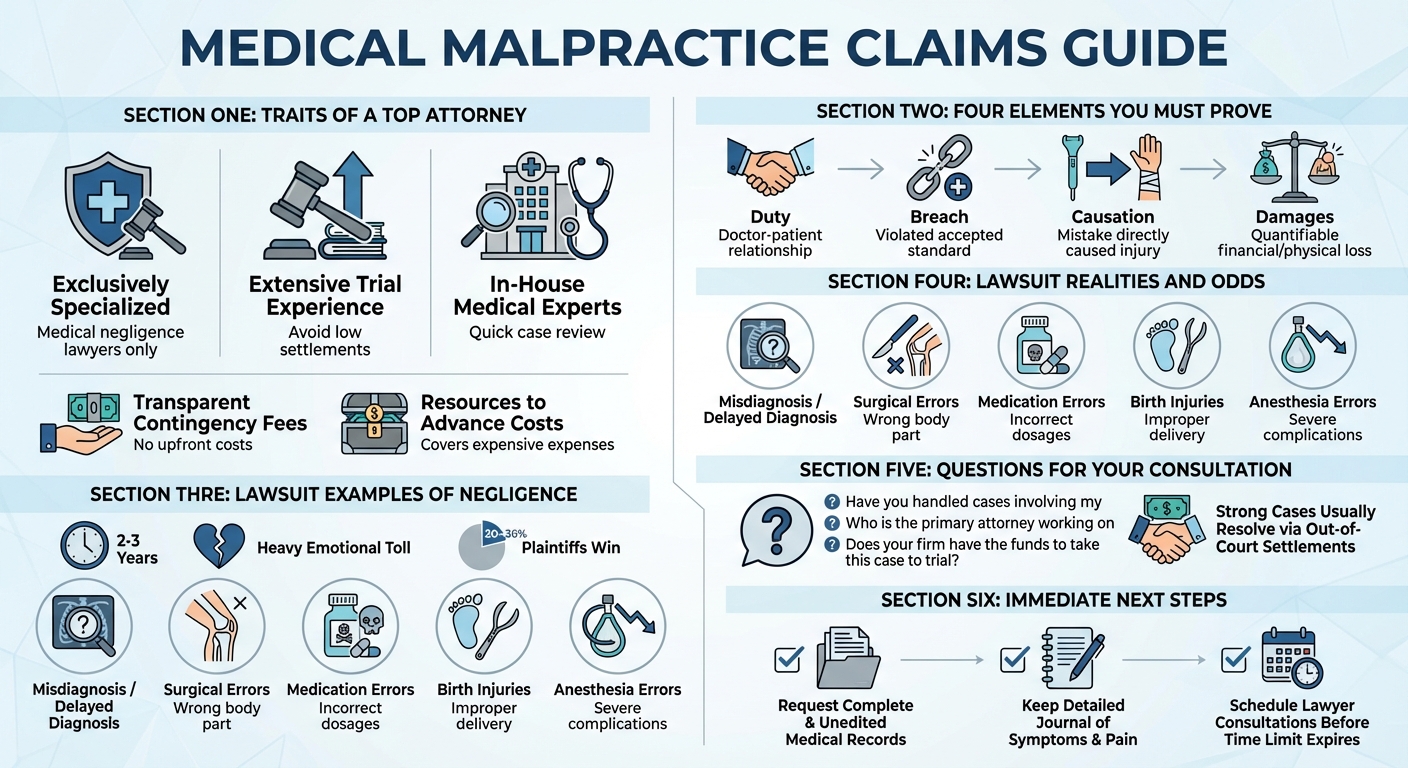
Good medical malpractice attorneys possess extensive trial experience, access to top-tier medical experts, and the financial resources to litigate complex cases. When searching for representation, look for a lawyer who specializes exclusively in medical negligence rather than general personal injury, and who operates on a transparent contingency fee basis.
How to Find Good Medical Malpractice Attorneys: A Complete Guide
Medical malpractice cases are notoriously complex, expensive, and difficult to win. Hospitals and their insurance companies have deep pockets and aggressive defense teams. To level the playing field, you need representation that understands both the law and the medicine. This guide breaks down exactly how to identify good medical malpractice attorneys who can successfully navigate your claim.
Key Traits of the Best Medical Malpractice Lawyers
Not all personal injury lawyers are equipped to handle medical negligence. When evaluating potential attorneys, look for these three non-negotiable traits.
Extensive Trial Experience vs. Settlement Mills
Medical malpractice insurers know exactly which lawyers are willing to take a case to trial and which ones will accept a lowball settlement just to close the file. You want a trial lawyer. Attorneys with a proven track record of courtroom verdicts command higher settlement offers because the defense knows they aren’t afraid to present the case to a jury.
Access to In-House Medical Experts
Winning a malpractice claim requires testimony from top-tier medical experts who can establish the standard of care. Good medical malpractice attorneys often have medical professionals, such as registered nurses or doctors, on staff to quickly review your medical records and determine if you have a viable case before you spend months in litigation.
Transparent Contingency Fee Structures
Reputable malpractice lawyers work on a contingency fee basis, meaning you pay nothing upfront and they only get paid if you win. Furthermore, they should have the financial resources to advance all case costs—which can easily exceed $50,000 for expert witnesses and depositions—without asking you to open your wallet.
What are the four things that must be proven to win a medical malpractice suit?
To win a medical malpractice suit, you must prove four specific elements: duty, breach, causation, and damages. First, a doctor-patient relationship must exist. Second, the provider must violate the accepted standard of care. Third, that breach must directly cause your injury. Finally, the injury must result in quantifiable financial or physical damages.
1. A Professional Duty Owed to the Patient
You must establish that a formal doctor-patient relationship existed. This means you hired the doctor, and the doctor agreed to treat you, thereby creating a legal duty to provide competent care.
2. Breach of the Standard of Care
You must prove the medical professional made a mistake that another reasonably prudent healthcare provider in the same specialty would not have made under similar circumstances.
3. Direct Causation
It is not enough that the doctor made a mistake; you must prove that this specific mistake directly caused your injury or worsened your condition, rather than an underlying illness.
4. Quantifiable Damages
You must show that the injury resulted in specific damages, such as additional medical bills, lost earning capacity, permanent disability, or severe pain and suffering.
What are 5 examples of medical negligence?
Five common examples of medical negligence include: 1) Misdiagnosis or delayed diagnosis of a severe illness, 2) Surgical errors such as operating on the wrong body part, 3) Medication errors like prescribing the wrong dosage, 4) Birth injuries caused by improper delivery techniques, and 5) Anesthesia errors leading to complications.
Is it worth suing a doctor for malpractice?
Suing a doctor for malpractice is generally worth it if you have suffered severe, permanent injuries that result in significant financial losses, such as ongoing medical bills or lost earning capacity. Because malpractice lawsuits are highly expensive and time-consuming, minor injuries with full recoveries rarely justify the extensive legal costs.
Weighing the Severity of Your Injuries
If a doctor’s mistake caused a temporary issue that healed quickly, a lawsuit may cost more than the potential compensation. However, if the negligence resulted in lifelong disability, loss of a loved one, or millions in future medical care, pursuing a claim is absolutely necessary to protect your family’s financial future.
Understanding the Time, Cost, and Emotional Toll
Malpractice cases often take two to three years to resolve. You will need to undergo independent medical examinations, give depositions, and relive the trauma of your injury. A good attorney will help you weigh this emotional toll against the potential financial recovery.
What are the odds of winning a medical malpractice suit?
The odds of winning a medical malpractice suit at trial are historically low, with plaintiffs winning only about 20% to 30% of jury trials. However, these statistics can be misleading, as the vast majority of successful medical malpractice claims are resolved through out-of-court settlements long before reaching a courtroom.
Out-of-Court Settlements vs. Trial Verdicts
Because trials are unpredictable and expensive, both sides usually prefer to settle if the evidence of negligence is strong. A skilled attorney will build a case so compelling that the hospital’s insurance company chooses to offer a fair settlement rather than risk a massive jury verdict.
Crucial Questions to Ask During Your Free Consultation
When you sit down with a prospective lawyer, treat it like a job interview. Ask these specific questions to ensure they are the right fit for your case:
Have you handled cases involving my specific injury?
Medical malpractice is a broad field. An attorney who specializes in birth injuries might not be the best fit for a missed cancer diagnosis. Look for highly relevant case experience.
Who will be the primary attorney working on my file?
At some large firms, you might meet with a senior partner but have your case handed off to a junior associate. Ensure you know exactly who will be managing your litigation and taking your calls.
Do you have the financial resources to take this to trial?
Malpractice cases require immense capital to fund expert witnesses. Ask the attorney directly if their firm has the financial backing to go the distance without pressuring you into an early, low settlement.
Next Steps: Why Your Medical Records Are Your Case
Before any attorney can tell you if you have a viable claim, they need to see the evidence. In medical negligence, your medical records are your case. Building documentation that wins under the law starts with securing your complete, unedited medical history. Request your records immediately, keep a detailed journal of your symptoms, and schedule consultations with qualified attorneys to protect your rights before the statute of limitations expires.