

Table of contents
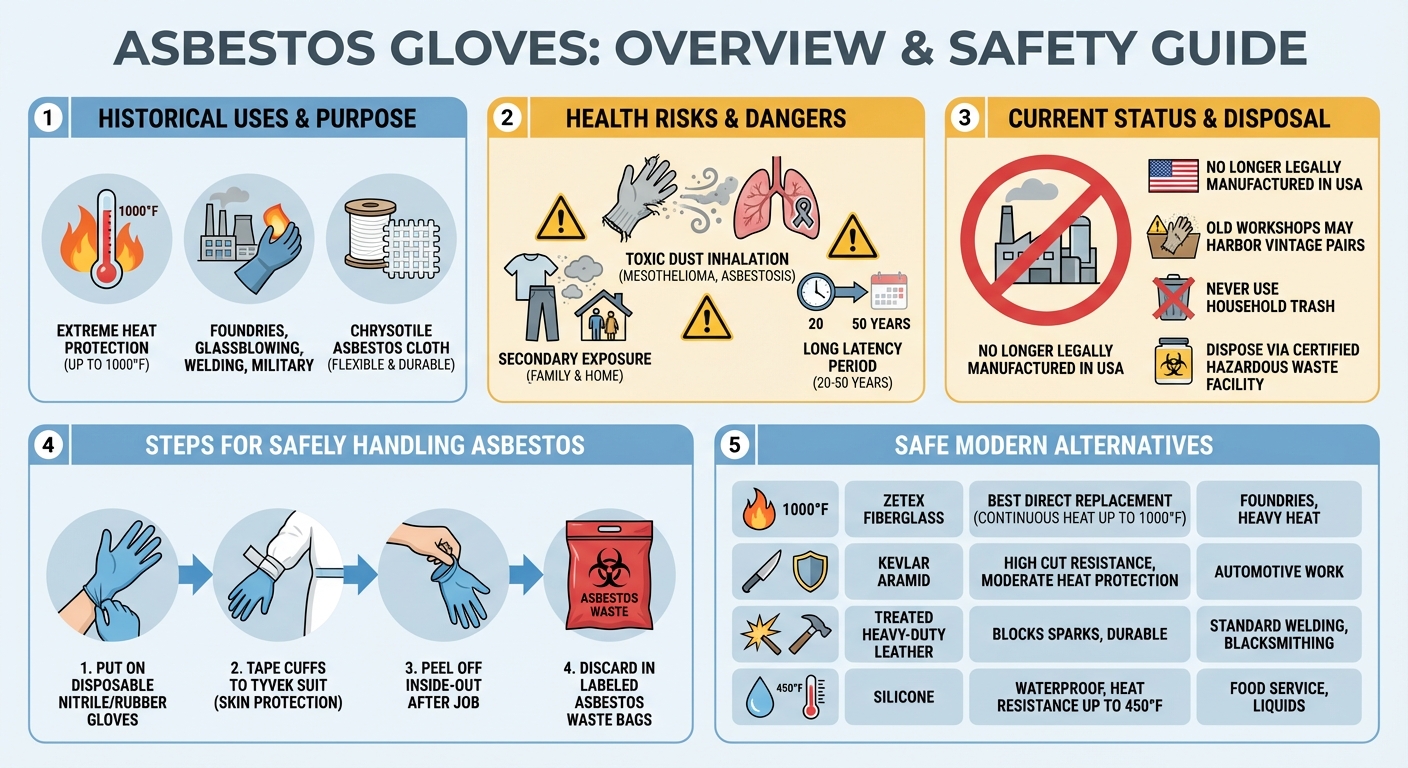
Asbestos gloves are highly heat-resistant protective garments historically used in welding, foundries, and glassblowing. Because asbestos fibers cause severe respiratory diseases like mesothelioma, these gloves are no longer manufactured in the United States. Today, safer alternatives like Zetex fiberglass, Kevlar, and treated leather have replaced them.
The Complete Guide to Asbestos Gloves: History, Risks, and Alternatives
For decades, asbestos was hailed as a miracle material due to its unparalleled resistance to heat, fire, and chemical damage. In industrial settings, this led to the widespread manufacturing of asbestos gloves to protect workers from severe burns.
Today, the legacy of these protective garments is a cautionary tale. While they offered incredible thermal protection, the microscopic fibers they released proved to be deadly. This guide covers the history of asbestos gloves, the severe health risks they pose, and the modern safety standards that have replaced them.
What are asbestos gloves used for?
Historically, asbestos gloves were used for extreme high-heat industrial applications to protect workers’ hands from severe burns. Their primary uses included heavy-duty welding, foundry work, glassblowing, and operating induction forges where temperatures easily exceeded standard safety thresholds and required maximum thermal protection.
Industrial and Military Applications
- Foundries and Glassblowing: Workers handling molten metals and liquid glass relied on thick asbestos mitts to prevent third-degree burns.
- Military and Automotive: Mechanics and soldiers used them for changing hot weapon barrels, repairing heavy machinery, and handling overheated automotive parts.
- The Role of Chrysotile: Chrysotile, or white asbestos, was the material of choice. It could be spun and woven into flexible, highly durable cloth that withstood temperatures up to 1,000 degrees Fahrenheit.
Are asbestos gloves still used?
No, asbestos gloves are rarely used today and are no longer legally manufactured in the United States due to severe health risks. However, vintage asbestos gloves can still occasionally be found in older workshops, military surplus stores, or legacy industrial facilities.
The Hidden Danger of Vintage Gloves
While modern industries have transitioned to safer materials, older homes and legacy workshops may still harbor old asbestos mitts. Because these gloves are decades old, the fabric is often degrading. You should immediately retire and dispose of any legacy asbestos gloves through a certified hazardous waste facility. Never throw them in standard household trash.
Health Risks of Wearing Asbestos Gloves
The primary danger of asbestos gloves lies in their friability—the tendency of the material to break down into microscopic dust.
- Wear and Tear: As workers gripped hot metals, the abrasion caused the woven asbestos cloth to fray. This released millions of invisible, friable asbestos fibers directly into the worker’s breathing zone.
- Severe Diseases: Inhaling these fibers is directly linked to Mesothelioma (a rare cancer of the lung lining), Asbestosis (severe lung scarring), and lung cancer.
- Secondary Exposure: The danger was not limited to the worker. Fibers clung to work clothes, putting family members at risk of secondary exposure when doing laundry or hugging the worker after a shift.
Will I be ok if I breathed in asbestos?
If you breathed in asbestos once for a short period, your risk of developing a disease is generally very low. Asbestos-related illnesses typically result from chronic, long-term occupational exposure. However, because no amount of asbestos is entirely safe, you should always consult a doctor if respiratory symptoms arise.
Understanding the Latency Period
Asbestos-related diseases are notorious for their long latency periods. It can take anywhere from 20 to 50 years after the initial exposure for symptoms of mesothelioma or asbestosis to appear. If you know you were exposed to degrading asbestos gloves in the past, inform your primary care physician so they can monitor your lung health during routine check-ups.
Do I need gloves for asbestos?
Yes, you absolutely need gloves if you are handling or removing asbestos-containing materials. However, you should never use standard cloth or leather work gloves. Instead, you must use disposable nitrile or heavy-duty rubber gloves that can be safely sealed in hazardous waste bags immediately after use.
Best Practices for Asbestos PPE
When performing asbestos abatement, standard work gloves are dangerous because fibers can become trapped in the fabric and later become airborne. Follow these safety protocols:
- Use thick, disposable nitrile gloves (or rubber gloves with no fabric lining).
- Tape the cuffs of the gloves to your disposable Tyvek suit to prevent fibers from reaching your skin or inner clothing.
- Carefully peel the gloves off inside-out when finished.
- Dispose of the gloves in clearly labeled, sealed asbestos waste bags.
Modern, Safe Alternatives to Asbestos Gloves
Today, workers do not have to choose between burn protection and respiratory health. Advanced materials have completely replaced asbestos in high-heat industries.
| Material | Best Use Case | Heat Resistance |
|---|---|---|
| Zetex / Texturized Fiberglass | Foundries, industrial kilns, glassblowing | Up to 1,000 degrees Fahrenheit (continuous) |
| Kevlar / Aramid Fibers | Automotive, sheet metal handling, light welding | High cut resistance, moderate heat resistance |
| Treated Heavy-Duty Leather | Standard welding, blacksmithing, BBQ | Excellent spark and moderate heat resistance |
| Silicone | Food service, boiling liquids, light BBQ | Waterproof, heat resistant up to 450 degrees |
When choosing a heat-resistant glove, always match the material to the specific thermal demands of your job. For extreme industrial heat, Zetex 100 series gloves offer the closest modern equivalent to the thermal protection once provided by asbestos, without any of the deadly side effects.