

Table of contents
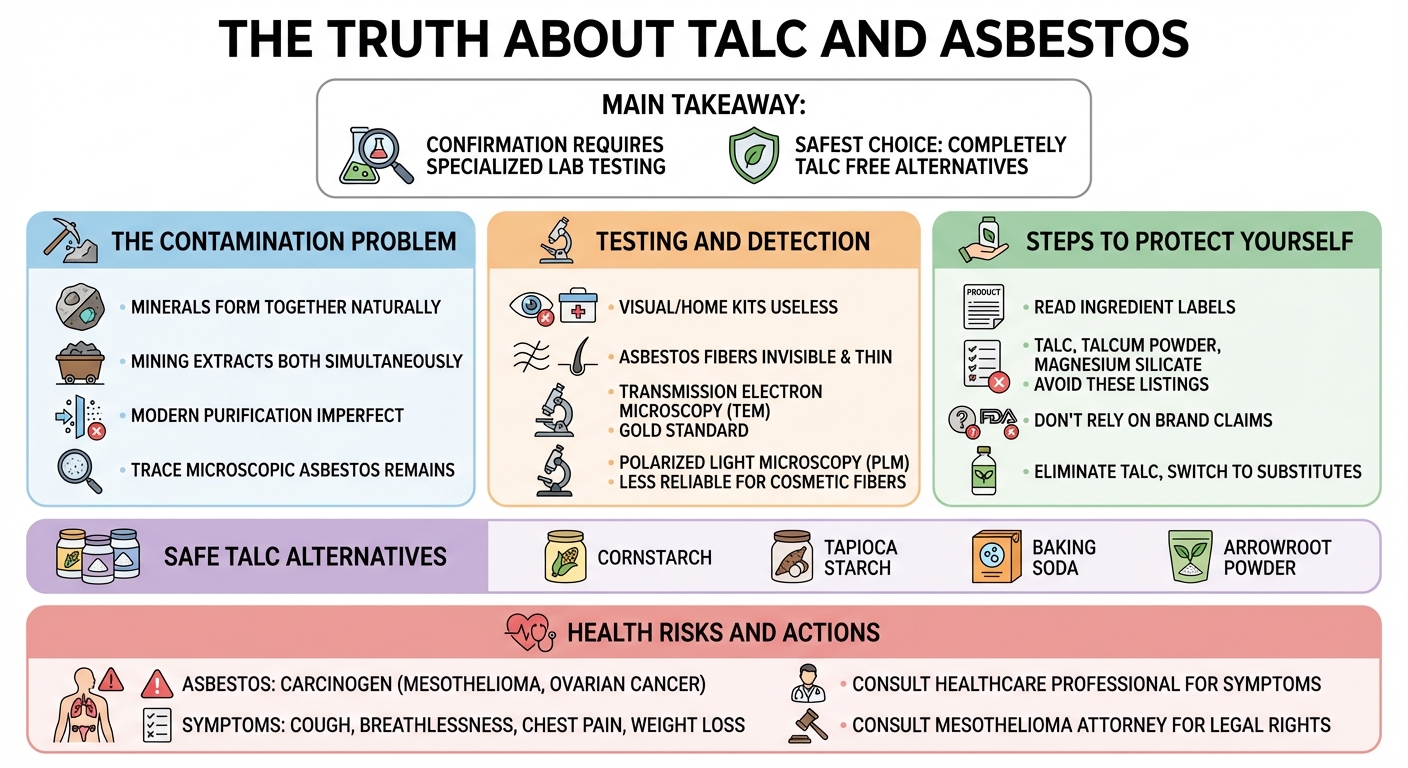
The only way to know if talc is asbestos-free is through specialized laboratory testing, such as Transmission Electron Microscopy. Because talc and asbestos form together in the earth, cross-contamination is common. You cannot detect asbestos visually. For guaranteed safety, experts recommend using talc-free alternatives like cornstarch.
How to Know if Talc is Asbestos-Free: The Short Answer
The only definitive way to know if talc is asbestos-free is through specialized laboratory testing. Because talc and asbestos are naturally occurring minerals that frequently form side-by-side in the earth, cross-contamination is incredibly common. You cannot see, smell, or feel asbestos fibers in talcum powder. For consumers, the safest and most reliable way to avoid asbestos is to read ingredient labels and switch to completely talc-free alternatives.
Why Are Talc and Asbestos Found Together?
Talc and asbestos are both silicate minerals. Geologically, they require similar conditions to form, meaning they are often found in the exact same rock deposits. When mining companies extract talc to create consumer products like baby powder or cosmetics, microscopic asbestos fibers can easily be mined alongside it.
Because the separation process is not always perfect, trace amounts of asbestos can make their way into the final commercial product. Even modern purification and milling processes struggle to remove 100% of the asbestos without destroying the talc itself.
How to detect asbestos in talc?
To detect asbestos in talc, specialized laboratory testing is required. Scientists use advanced methods like Transmission Electron Microscopy (TEM) and Polarized Light Microscopy (PLM) to identify microscopic asbestos fibers. You cannot detect asbestos in talcum powder visually or with any at-home testing kits.
Transmission Electron Microscopy (TEM)
TEM is considered the gold standard for detecting asbestos in talc. It uses a beam of electrons to magnify the sample up to 1,000,000 times. This allows scientists to see the exact crystalline structure of the minerals and identify even the smallest, most deeply embedded asbestos fibers.
Polarized Light Microscopy (PLM)
PLM uses polarized light to observe the optical properties of the minerals. While it is highly effective for identifying asbestos in building materials, it is sometimes less reliable for cosmetic talc because the asbestos fibers in talcum powder can be too small for light microscopes to detect accurately.
Why At-Home Testing is Impossible
Asbestos fibers are microscopic—often hundreds of times thinner than a human hair. They have no distinct odor or color when mixed into white talcum powder. Therefore, DIY testing kits or visual inspections are entirely useless for detecting asbestos in talc.
Is it possible to have talc without asbestos?
Yes, it is geologically possible to have talc without asbestos if the talc is mined from deposits entirely free of asbestos minerals. However, because cross-contamination is so common and testing methods vary, guaranteeing that a commercial talc product is completely asbestos-free remains extremely difficult.
How do I know if talc is safe?
The only way to know if talc is safe is if the manufacturer uses rigorous, third-party lab testing to certify it as asbestos-free. Because contamination risks remain high, many health advocates recommend avoiding talc entirely and switching to safer, talc-free alternatives like cornstarch or arrowroot powder.
Checking Ingredient Labels
To protect yourself, always check the ingredient list on cosmetics, body powders, and dry shampoos. Look for the following terms:
- Talc
- Talcum powder
- Magnesium silicate
- Cosmetic talc
If a product contains any of these, there is a potential risk of asbestos contamination unless explicitly certified otherwise.
Opting for Talc-Free Alternatives like Cornstarch
The easiest way to ensure your products are safe is to eliminate talc completely. Many major brands have reformulated their products to use safer, naturally absorbent alternatives, including:
- Cornstarch: The most common and widely available substitute.
- Tapioca starch: Highly absorbent and smooth.
- Baking soda: Often mixed with cornstarch for deodorizing body powders.
- Arrowroot powder: A lightweight, natural alternative popular in organic cosmetics.
Is Laura Geller talc asbestos-free?
Laura Geller has stated that the talc used in their cosmetics is certified asbestos-free and undergoes strict testing. However, consumer safety groups note that the FDA does not independently verify these cosmetic claims, leading some consumers to prefer entirely talc-free makeup brands for absolute peace of mind.
What to Do If You Suspect Asbestos Exposure from Talcum Powder
If you have used talc-based baby powder or cosmetics for years, you may be concerned about potential asbestos exposure. Asbestos is a known carcinogen linked to severe respiratory illnesses and cancers.
Recognizing Mesothelioma Symptoms
Mesothelioma is an aggressive cancer caused primarily by asbestos exposure. Symptoms can take decades to appear and often include:
- Persistent, dry cough
- Shortness of breath
- Chest or abdominal pain
- Unexplained weight loss
- Fluid buildup in the lungs
If you experience these symptoms and have a history of heavy talcum powder use, consult a healthcare professional immediately.
When to Consult a Mesothelioma Lawyer
If you or a loved one has been diagnosed with mesothelioma or ovarian cancer after long-term use of talcum powder, you may be entitled to compensation. Product liability laws hold manufacturers accountable for failing to warn consumers about asbestos risks. Consulting an experienced personal injury or mesothelioma attorney can help you understand your legal rights, navigate the claims process, and seek the financial recovery you deserve.