

Table of contents
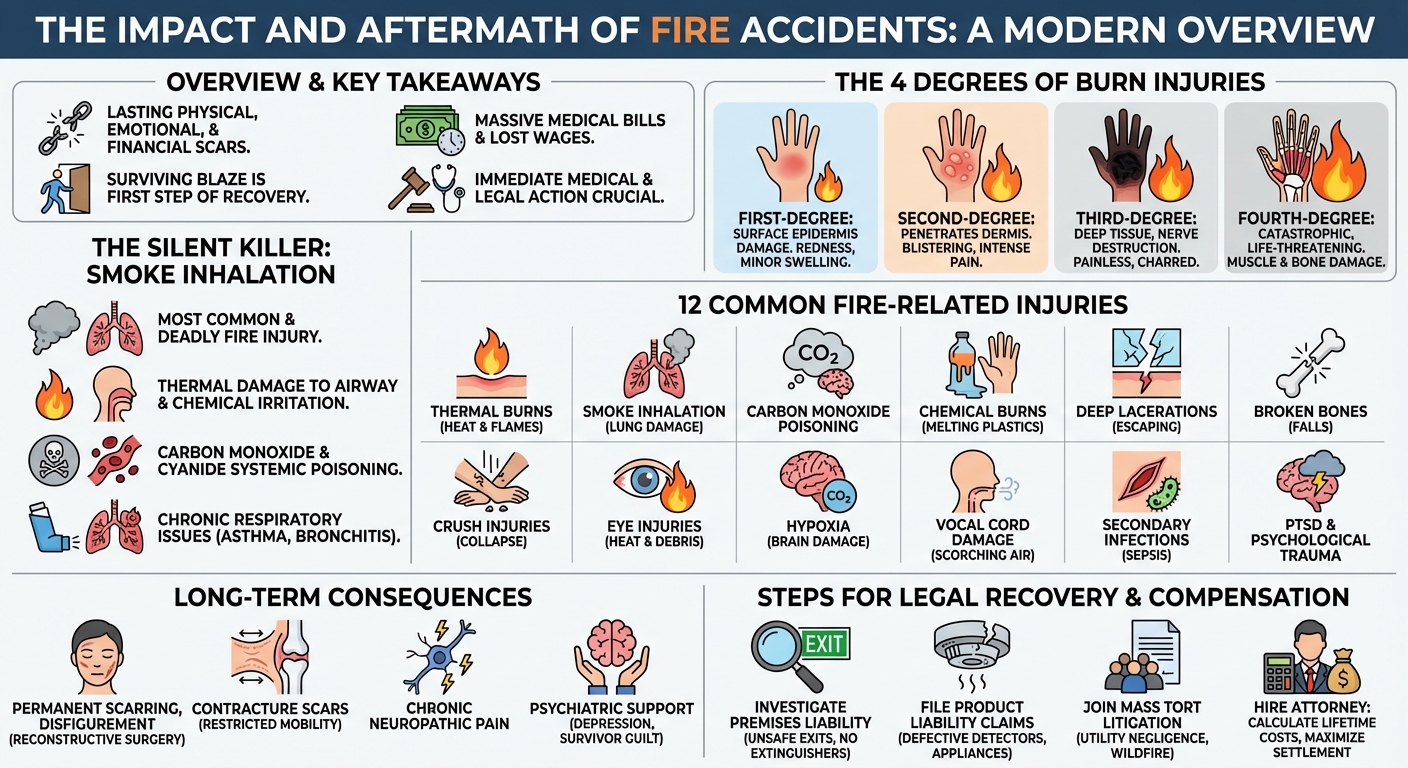
Injuries caused by fire range from severe thermal burns to life-threatening respiratory damage. The most common fire-related injuries include smoke inhalation, carbon monoxide poisoning, first to fourth-degree burns, and physical trauma sustained while escaping. Long-term consequences often involve permanent scarring, nerve damage, and psychological trauma.
Understanding the Devastating Impact of Fire Accidents
Fires are catastrophic events that leave lasting physical, emotional, and financial scars. Whether occurring in a residential home, an apartment complex, or a commercial building, the reality of a fire is terrifying. Within minutes, a small flame can engulf a structure, reaching temperatures that melt metal and producing highly toxic smoke.
For victims, surviving the initial blaze is only the first step. The injuries caused by fire are often complex, requiring specialized medical treatments like skin grafts, respiratory therapy, and long-term psychological counseling. Because these injuries can result in massive medical bills and lost wages, taking immediate medical and legal action is crucial to protect your health and secure your financial future.
What injuries can you get from fire?
You can get a wide range of injuries from a fire, including thermal burns to the skin, severe respiratory damage from inhaling toxic smoke, and physical trauma like fractures or lacerations sustained while trying to escape. Secondary complications such as infections and psychological trauma are also highly prevalent.
Direct thermal damage to skin and tissue
When the human body is exposed to open flames, superheated air, or hot surfaces, the skin and underlying tissues suffer immediate thermal damage. This can lead to severe blistering, nerve destruction, and the loss of skin elasticity, requiring painful debridement and grafting procedures.
Respiratory damage from toxic environments
Fires consume oxygen and release a deadly cocktail of toxic gases. Inhaling these chemicals causes severe inflammation and burning within the respiratory tract. This damage can lead to acute respiratory distress syndrome (ARDS) and permanent lung capacity reduction.
Physical trauma from emergency escapes
In the panic of a fire, victims often sustain blunt force trauma. Jumping from second-story windows, breaking glass to escape, or tripping in zero-visibility smoke frequently results in broken bones, deep lacerations, and concussions.
What is the most common injury during fires?
The most common injury during fires is smoke inhalation, not actual burns. Breathing in superheated air and toxic byproducts like carbon monoxide and hydrogen cyanide causes severe respiratory damage, making it the leading cause of death and serious injury in residential and commercial fires.
The silent killer: Smoke inhalation
Smoke inhalation damages the body in three ways: thermal damage to the airway, chemical irritation to the lungs, and systemic poisoning. Victims may appear unharmed on the outside but can quickly succumb to internal swelling that blocks the airway.
Carbon monoxide and cyanide poisoning
As household materials burn, they release carbon monoxide and hydrogen cyanide. Carbon monoxide binds to hemoglobin, preventing oxygen from reaching the brain and vital organs. Cyanide poisoning interferes with cellular respiration, creating a lethal combination that incapacitates victims before the flames even reach them.
Long-term respiratory complications
Survivors of severe smoke inhalation often face chronic respiratory issues. Conditions like asthma, chronic bronchitis, and a persistent cough can linger for years, requiring ongoing medical management and significantly reducing a victim’s quality of life.
What type of injury is caused by heat and fire?
Heat and fire primarily cause thermal burn injuries, which occur when the skin and underlying tissues are exposed to extreme temperatures or open flames. These injuries are classified by severity, ranging from superficial first-degree burns to catastrophic fourth-degree burns that destroy muscle and bone.
First-Degree Burns: Surface level damage
First-degree burns affect only the outer layer of the skin (epidermis). They are characterized by redness, minor swelling, and pain, similar to a severe sunburn. These typically heal within a week without scarring.
Second-Degree Burns: Blistering and severe pain
Second-degree burns penetrate the epidermis and reach the dermis. These injuries cause intense pain, deep redness, and blistering. They are highly susceptible to infection and may leave permanent changes in skin pigmentation.
Third-Degree Burns: Deep tissue and nerve damage
Third-degree burns destroy both layers of the skin and damage underlying hair follicles, sweat glands, and tissues. Because nerve endings are destroyed, the burn site itself may be painless. The skin often appears leathery, white, or charred, and surgery is almost always required.
Fourth-Degree Burns: Muscle and bone involvement
The most catastrophic type of thermal injury, fourth-degree burns extend completely through the skin and fat, severely damaging underlying muscle, tendons, and bone. These injuries are life-threatening, often requiring amputation and extensive reconstructive surgery.
What are the 12 common injuries?
The 12 most common injuries associated with fires include thermal burns, smoke inhalation, carbon monoxide poisoning, chemical burns, lacerations, broken bones, crush injuries, eye injuries, hypoxia, vocal cord damage, secondary infections, and post-traumatic stress disorder (PTSD). Victims often suffer multiple injuries simultaneously.
- 1. Thermal burns: Direct damage to the skin and tissue from heat and flames.
- 2. Smoke inhalation: Internal damage to the lungs and airway from breathing toxic smoke.
- 3. Carbon monoxide poisoning: Systemic oxygen deprivation caused by inhaling CO gas.
- 4. Chemical burns (from melting materials): Skin damage from melting plastics and toxic household chemicals.
- 5. Lacerations (from broken glass): Deep cuts sustained while breaking windows to escape.
- 6. Fractures and broken bones (from jumping/falling): Orthopedic injuries from leaping from elevated heights.
- 7. Crush injuries (from collapsing structures): Severe trauma from falling roof beams or collapsing walls.
- 8. Eye injuries and corneal burns: Damage to vision from superheated air, smoke irritation, or flying debris.
- 9. Hypoxia (oxygen deprivation): Brain and organ damage resulting from a lack of oxygen in the fire environment.
- 10. Vocal cord damage: Swelling and scarring of the vocal cords due to inhaling scorching air.
- 11. Secondary infections (sepsis): Life-threatening bacterial infections that enter the body through open burn wounds.
- 12. Post-Traumatic Stress Disorder (PTSD): Severe psychological trauma, anxiety, and nightmares following the event.
Long-Term Consequences of Severe Fire Injuries
Permanent scarring and disfigurement
Severe burns often result in hypertrophic scars and contractures, where the skin tightens and restricts movement. Disfigurement, especially on the face or hands, can lead to profound social anxiety and require years of reconstructive surgeries.
Chronic pain and loss of mobility
Nerve damage from deep burns can cause chronic, lifelong neuropathic pain. Additionally, contracture scars over joints can severely limit a victim’s range of motion, making everyday tasks like dressing or walking incredibly difficult.
The psychological toll of surviving a fire
The emotional impact of a fire is often just as devastating as the physical injuries. Survivors frequently battle PTSD, depression, and survivor’s guilt. Comprehensive recovery must include psychiatric support to help victims process the trauma of the event.
Legal Rights and Compensation for Fire Victims
Premises liability: Landlord and property owner negligence
If a fire occurs in a rented apartment or commercial building, the property owner may be held liable if their negligence contributed to the incident. Blocked fire exits, lack of fire extinguishers, or failure to maintain safe electrical wiring are common grounds for premises liability claims.
Product liability: Defective smoke alarms and appliances
Sometimes, fires are caused or worsened by defective products. If a faulty space heater sparks a blaze, or if a defective smoke detector fails to alert residents, the manufacturers of those products can be held accountable through a product liability lawsuit.
Mass torts: Wildfire litigation and corporate accountability
In cases where utility companies fail to maintain equipment, resulting in massive wildfires, victims can join mass tort litigation. These lawsuits hold large corporations accountable for the widespread destruction of property and the resulting physical injuries.
How a personal injury attorney maximizes your settlement
Insurance companies often try to minimize payouts to fire victims. A skilled personal injury attorney will thoroughly investigate the cause of the fire, calculate the lifetime costs of your medical care and lost earning capacity, and fight aggressively to secure the maximum compensation you deserve.