

Table of contents
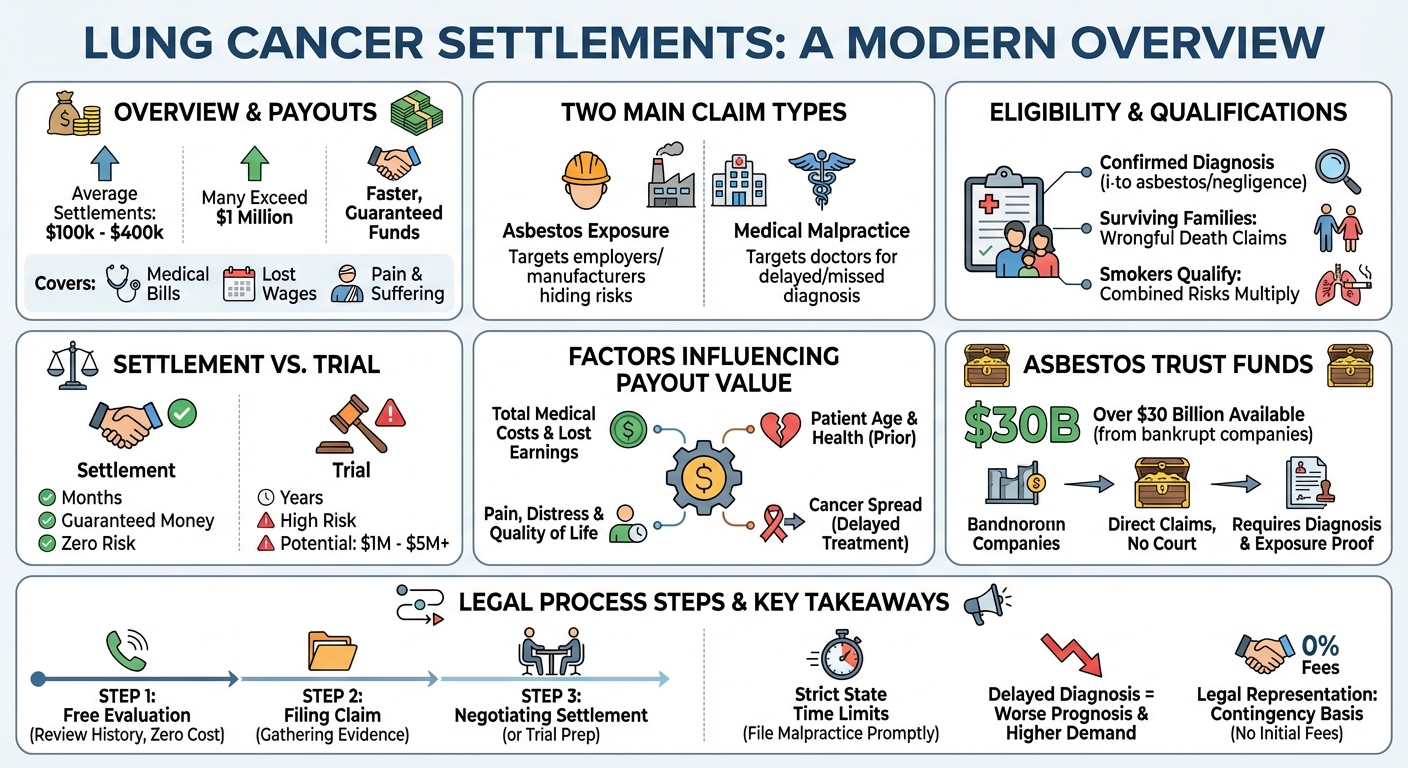
The average asbestos lung cancer settlement ranges from $100,000 to $400,000, though many cases result in payouts exceeding $1 million. Settlement amounts vary based on the cause of the cancer, such as occupational asbestos exposure or medical malpractice involving a delayed diagnosis. Compensation typically covers medical expenses, lost wages, and pain and suffering. Cases resolved through asbestos trust funds may have different payout structures compared to private lawsuit settlements or trial verdicts.
Understanding Lung Cancer Lawsuit Settlements
What is a Lung Cancer Settlement?
A lung cancer settlement is a legally binding financial agreement between a victim (or their family) and a negligent party. Instead of taking a lawsuit to trial, the defendant agrees to pay a specific amount of money to compensate the victim for medical bills, lost wages, and pain and suffering. Settlements provide a faster, guaranteed payout compared to the unpredictable nature of a jury verdict.
Asbestos Exposure vs. Medical Malpractice Claims
Most lung cancer lawsuits fall into two distinct legal categories:
- Asbestos Exposure: These claims are filed against manufacturers or employers who knowingly exposed workers to asbestos without proper warnings or safety gear. The inhalation of asbestos fibers is a leading cause of occupational lung cancer.
- Medical Malpractice: These claims are filed against healthcare providers who failed to diagnose lung cancer in a timely manner. If a doctor missed a tumor on an X-ray, the delay in treatment can drastically worsen the patient’s prognosis.
Who is Eligible to File a Lawsuit?
You may be eligible to file a lung cancer lawsuit if you have a confirmed lung cancer diagnosis and can link your illness to either documented asbestos exposure or medical negligence. If a loved one has already passed away from the disease, surviving family members may be eligible to file a wrongful death lawsuit to recover funeral expenses and loss of consortium.
Average Lung Cancer Settlement Amounts
What is the payout for lung cancer?
Average asbestos lung cancer settlements typically range from $100,000 to $400,000, though some cases exceed $1 million. Payouts depend heavily on the severity of the illness, accumulated medical expenses, and whether the claim involves an asbestos trust fund, a private settlement, or a medical malpractice verdict.
Factors That Influence Your Settlement Value
No two lung cancer cases are identical. Attorneys and insurance companies calculate settlement values based on several concrete factors:
- Economic Damages: The total cost of surgeries, chemotherapy, hospital stays, and lost earning capacity.
- Non-Economic Damages: Compensation for physical pain, emotional distress, and reduced quality of life.
- Age and Health: Younger victims or those who were in peak health prior to the diagnosis often receive higher compensation due to a greater loss of future life years.
- Smoking History: While smokers can still recover damages, defendants may argue comparative fault, which can reduce the final payout.
Settlement vs. Trial Verdict Payouts
| Factor | Settlement | Trial Verdict |
|---|---|---|
| Average Payout | $100,000 – $400,000 | $1 Million – $5 Million+ |
| Timeline | Months (Faster) | Years (Slower) |
| Risk Level | Zero risk (Guaranteed payout) | High risk (Jury could award nothing) |
Asbestos Trust Funds and Lung Cancer Claims
How Asbestos Trust Funds Work
Many companies that manufactured asbestos-containing products went bankrupt due to the sheer volume of lawsuits. To protect future victims, federal bankruptcy courts forced these companies to establish asbestos trust funds. Today, there is over $30 billion available across dozens of active trusts to compensate victims without the need for a traditional lawsuit.
Qualifying for Trust Fund Compensation
To qualify for a trust fund payout, you do not need to go to court. However, you must provide specific evidence, including a formal medical diagnosis of primary lung cancer and documented employment records proving you worked at a specific site where the bankrupt company’s asbestos products were used.
Do Smokers Qualify for Asbestos Settlements?
Yes. Many people mistakenly believe that a history of smoking disqualifies them from an asbestos lung cancer settlement. Medically, the combination of smoking and asbestos exposure creates a “synergistic effect,” meaning the two factors multiply the risk of developing lung cancer. While a smoking history may alter the case strategy, experienced attorneys successfully secure compensation for smokers regularly.
Medical Malpractice: Failure to Diagnose Lung Cancer
Proving Negligence in Delayed Diagnosis
To win a medical malpractice settlement for lung cancer, you must prove that a doctor breached the standard of care. This usually involves demonstrating that a competent physician would have identified the cancer sooner. Common examples of negligence include misinterpreting CT scans, failing to order biopsies for suspicious nodules, or ignoring a patient’s persistent respiratory symptoms.
How Misdiagnosis Worsens Prognosis and Increases Damages
Lung cancer is highly treatable in Stage 1 but becomes incredibly aggressive by Stage 3 or 4. A delayed diagnosis allows the cancer to spread, often requiring more invasive surgeries, harsher chemotherapy, and resulting in a significantly lower survival rate. This increased physical and emotional burden directly translates to higher settlement demands.
Statute of Limitations for Malpractice Claims
The time limit to file a medical malpractice lawsuit varies by state, typically ranging from one to three years. This clock usually starts ticking on the date the misdiagnosis was discovered, not the date the initial error occurred. Missing this deadline permanently bars you from recovering compensation.
Medical Factors Impacting Your Legal Claim
What’s the longest you can live with lung cancer?
Survival times vary widely based on the cancer’s stage at diagnosis. While some patients with early-stage, localized lung cancer can live for decades and achieve long-term remission, advanced-stage patients may live several months to a few years. Advanced treatments are continuously extending these maximum survival limits.
Can you completely recover from lung cancer?
Yes, you can completely recover from lung cancer, especially if it is caught in its earliest stages. Localized tumors can often be surgically removed or treated with targeted radiation, leading to remission. However, advanced lung cancer is generally considered treatable but not entirely curable.
Where does lung cancer first spread?
Lung cancer typically first spreads to the lymph nodes located within the chest. From there, if the disease continues to metastasize, it most commonly travels to the brain, bones, liver, and adrenal glands, which significantly complicates treatment and impacts the overall legal prognosis.
How Prognosis and Metastasis Affect Compensation
In the legal realm, a worse prognosis generally increases the valuation of a claim. If metastasis occurred because a doctor failed to diagnose the cancer promptly, the defendant is liable for the catastrophic shift in the patient’s life expectancy and the resulting need for palliative care.
The Lung Cancer Lawsuit Timeline and Process
Free Case Evaluation and Investigation
The legal process begins with a free consultation. Attorneys will review your medical records, employment history, and diagnostic timelines to determine if you have a viable claim. Because these cases are taken on a contingency fee basis, you pay nothing upfront.
Filing the Claim and Gathering Evidence
Once retained, your legal team will officially file the complaint. The discovery phase follows, where attorneys gather crucial evidence. This includes taking depositions from medical experts, securing pathology reports, and subpoenaing corporate records or hospital policies.
Negotiating a Fair Settlement
Before a trial date arrives, your attorney will enter negotiations with the defendant’s legal team or insurance providers. They will present the accumulated evidence and demand a payout that covers all past and future damages. If a fair agreement is reached, the settlement is finalized. If the defendant refuses to pay a just amount, your attorney will prepare to argue your case before a jury.