

Table of contents
Aeronautical engineers are at high risk for mesothelioma due to occupational asbestos exposure. From the 1930s to the 1980s, asbestos was heavily used in aircraft brakes, engine heat shields, and electrical insulation. Engineers inhaling toxic asbestos dust during design, testing, or manufacturing can develop mesothelioma decades later.
Aeronautical engineers have played a vital role in advancing aviation, but this innovation came with hidden dangers. For decades, asbestos was a staple in aircraft manufacturing, putting aerospace workers and engineers at a severe risk of developing mesothelioma.
The Link Between Aeronautical Engineering and Mesothelioma
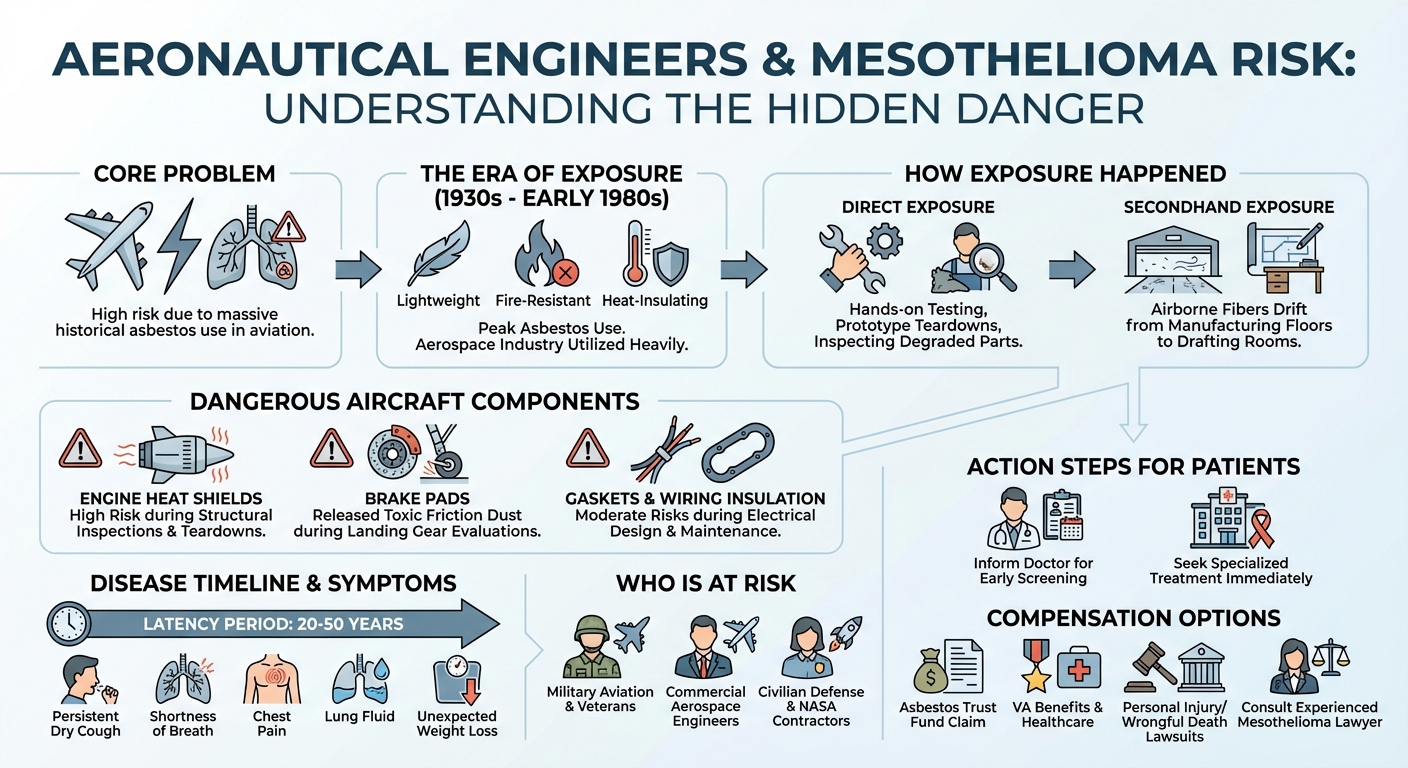
Mesothelioma is a rare, aggressive cancer caused almost exclusively by asbestos exposure. In the aerospace industry, asbestos was highly valued for its lightweight, fire-resistant, and heat-insulating properties. Aeronautical engineers, who spent their careers designing, testing, and inspecting aircraft, frequently worked in environments heavily contaminated with microscopic asbestos fibers.
How Aeronautical Engineers Were Exposed to Asbestos
Exposure in the aerospace sector was rarely limited to the mechanics turning the wrenches. Engineers faced both direct and indirect exposure risks throughout their careers.
Direct Exposure During Design, Testing, and Inspection
Aeronautical engineers often worked hands-on with prototype aircraft and experimental components. During the testing and teardown of jet engines, landing gear, and exhaust systems, engineers were forced to handle asbestos-containing materials. Inspecting worn brakes or degraded engine shields easily released toxic dust into the air they breathed.
Bystander (Secondhand) Exposure on the Manufacturing Floor
Even engineers who spent most of their time at drafting tables were not safe. Drafting rooms and engineering offices were frequently located inside or immediately adjacent to massive manufacturing hangars. As mechanics and assembly line workers cut, sanded, and installed asbestos parts, the microscopic fibers became airborne, circulating through the hangar’s ventilation systems and exposing everyone in the vicinity.
The Era of Peak Asbestos Use in Aviation (1930s to 1980s)
The use of asbestos in aviation skyrocketed during World War II and continued through the Cold War and the dawn of commercial jet travel. From the 1930s until the early 1980s, virtually every military and civilian aircraft contained asbestos. Engineers active during this 50-year window face the highest risk of developing mesothelioma today.
Common Asbestos-Containing Aircraft Parts
Aircraft operate under extreme friction and temperature conditions, making asbestos an attractive, albeit deadly, solution for early manufacturers.
| Aircraft Component | Purpose of Asbestos Use | Exposure Risk for Engineers |
|---|---|---|
| Engine Heat Shields | Protecting the fuselage from extreme jet and piston engine heat. | High risk during engine teardowns, testing, and structural inspections. |
| Brake Pads | Withstanding massive friction during landing. | High risk during landing gear testing and prototype evaluations. |
| Gaskets and Wiring | Preventing electrical fires and sealing high-pressure valves. | Moderate risk during electrical system design and maintenance checks. |
Engine Heat Shields and Insulation
Jet engines generate thousands of degrees of heat. Asbestos blankets and heat shields were used to line the engine compartments and protect the aircraft’s structural integrity. When these shields degraded or were removed for inspection, they released highly concentrated asbestos dust.
Brake Pads and Landing Gear Assemblies
Stopping a massive aircraft requires brake pads that will not catch fire under extreme friction. Asbestos was the primary friction material in aircraft brakes for decades. Engineers evaluating landing gear performance were frequently exposed to the toxic dust generated by wearing brake pads.
Electrical Wiring and Gaskets
Miles of electrical wiring run through commercial and military aircraft. To prevent electrical fires, this wiring was often coated in asbestos insulation. Additionally, asbestos gaskets were used to seal high-pressure air and fluid lines throughout the aircraft.
Military vs. Civilian Aerospace Exposure
The risks of asbestos exposure spanned both the defense and commercial sectors of the aerospace industry.
U.S. Air Force and Navy Aviation Engineers
Military aircraft were built to withstand combat, meaning they utilized even heavier concentrations of asbestos for fireproofing. U.S. Air Force and Navy aviation engineers, as well as civilian defense contractors, worked in cramped hangars and aboard aircraft carriers where asbestos dust was inescapable. Veterans make up a disproportionate number of mesothelioma patients today.
Commercial Aerospace Manufacturing (Boeing, Lockheed, NASA contractors)
The commercial aviation boom relied on the same asbestos-laden technologies. Engineers working for major aerospace giants like Boeing, Lockheed Martin, McDonnell Douglas, and various NASA contractors were routinely exposed during the design and assembly of commercial airliners and space exploration vehicles.
Recognizing Mesothelioma: Symptoms and the Latency Period
One of the most insidious aspects of mesothelioma is its latency period. It typically takes 20 to 50 years after asbestos exposure for symptoms to appear. An aeronautical engineer exposed in the 1970s might only be receiving a diagnosis today.
- Common Symptoms Include:
- Persistent, dry cough or wheezing
- Shortness of breath (dyspnea)
- Unexplained chest or lower back pain
- Fluid buildup in the lungs (pleural effusion)
- Unexplained weight loss and fatigue
Because these symptoms mimic common respiratory conditions, aerospace workers with a history of asbestos exposure must proactively inform their doctors of their work history to ensure early and accurate screening.
Compensation Options for Aerospace Workers and Engineers
Aeronautical engineers diagnosed with mesothelioma have several avenues for financial compensation to cover medical bills, lost wages, and secure their family’s future.
Filing an Asbestos Trust Fund Claim
Many of the companies that manufactured asbestos aircraft parts filed for bankruptcy to avoid lawsuits. However, they were legally required to establish asbestos trust funds to compensate future victims. Engineers can file claims against these trusts without ever going to court.
VA Benefits for Military Engineers
Veterans who served as aviation engineers in the Armed Forces are entitled to VA benefits. The Department of Veterans Affairs recognizes mesothelioma as a 100% service-connected disability, providing significant monthly compensation and access to top-tier VA healthcare.
Pursuing a Mesothelioma Lawsuit
If the companies responsible for the asbestos exposure are still in business, engineers can pursue a personal injury lawsuit. These lawsuits hold negligent manufacturers accountable for failing to warn workers about the known dangers of asbestos. Families of engineers who have passed away can also file wrongful death claims.
Taking Action: Medical and Legal Next Steps
A mesothelioma diagnosis requires immediate, coordinated action to protect your health and your legal rights.
Seeking Treatment at Specialized Centers
Mesothelioma is incredibly rare, and general oncologists may not have the expertise to treat it effectively. It is crucial to seek care at specialized cancer centers, where multidisciplinary teams offer advanced treatments like immunotherapy, targeted radiation, and specialized surgical options.
Consulting with an Experienced Mesothelioma Lawyer
Navigating asbestos trust funds, VA claims, and complex litigation requires specialized legal knowledge. Consulting with an experienced mesothelioma lawyer ensures that your work history is thoroughly investigated, the responsible aircraft component manufacturers are identified, and you receive the maximum compensation you deserve.