

Table of contents
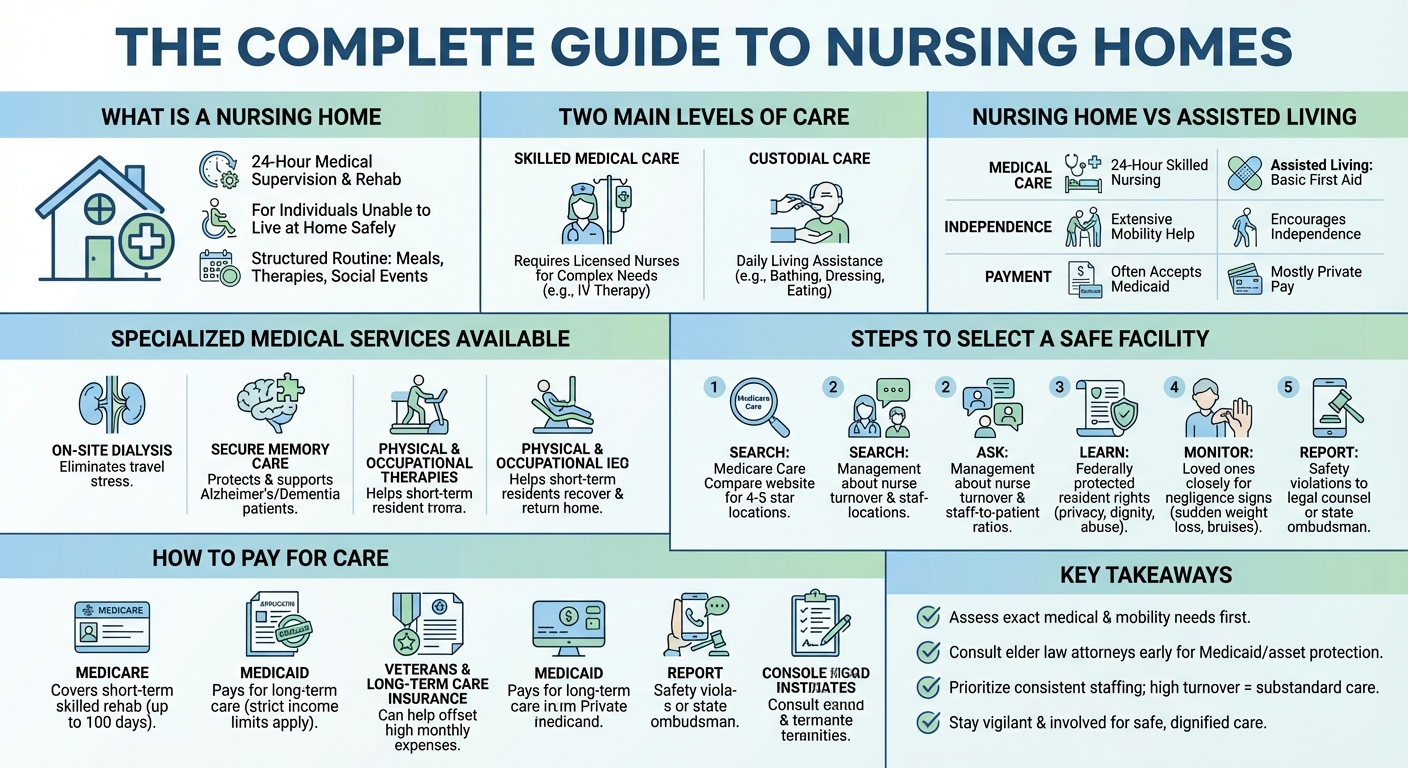
A nursing home is a residential facility that provides 24-hour medical care, rehabilitation services, and assistance with daily living activities. Also known as skilled nursing facilities, they are designed for older adults or individuals with disabilities who do not need a hospital but require more support than can be provided at home.
The Complete Guide to Nursing Homes: Care, Costs, and Safety
Choosing the right long-term care facility is one of the most important decisions a family can make. Whether you are planning for the future or navigating a sudden medical transition, understanding how nursing homes operate, what they cost, and how to evaluate their safety is critical. This guide breaks down everything you need to know to make an informed, confident choice.
What is meant by a nursing home?
A nursing home, also known as a skilled nursing facility, is a residential care setting that provides 24-hour medical supervision, personal care assistance, and rehabilitation services. These facilities are designed for individuals who do not require hospitalization but cannot be safely cared for at home due to severe physical or cognitive limitations.
What does it mean to be in a nursing home?
Being in a nursing home means living in a structured environment where trained staff provide round-the-clock assistance with daily activities, medication management, and medical care. Residents receive personalized care plans tailored to their health needs, ensuring their safety, hygiene, and nutritional requirements are consistently met.
Daily Life and Routine
Daily life in a nursing home is highly structured but aims to provide a sense of community and normalcy. Residents typically follow a routine that includes three nutritious meals served in a communal dining room or their private room. Facilities employ activity directors who organize daily social events, ranging from arts and crafts to light group exercise, music therapy, and religious services, ensuring residents remain mentally and socially engaged.
Levels of Personal and Medical Care
Care in a nursing home is generally divided into two categories: skilled medical care and custodial care. Skilled care involves services that can only be performed by licensed nurses or therapists, such as wound care, IV therapy, and catheter management. Custodial care focuses on Activities of Daily Living (ADLs), providing essential help with bathing, dressing, eating, and mobility.
Nursing Homes vs. Assisted Living: Key Differences
Many families confuse nursing homes with assisted living facilities, but they serve entirely different needs. The primary distinction lies in the level of medical care and the independence of the residents.
| Feature | Nursing Home (Skilled Nursing) | Assisted Living Facility |
|---|---|---|
| Medical Care | 24/7 skilled nursing and medical supervision | Basic first aid and medication management |
| Assistance Level | Extensive help with all daily activities | Help with some daily activities; encourages independence |
| Cost Coverage | Medicaid/Medicare (short-term) often accepted | Mostly private pay; Medicaid waivers vary by state |
Medical Supervision Requirements
Nursing homes are federally mandated to have a registered nurse (RN) on duty at least eight consecutive hours a day, seven days a week, and licensed nursing staff available 24 hours a day. Assisted living facilities, conversely, are not required to provide continuous skilled medical supervision and are better suited for medically stable older adults.
Mobility and Independence Levels
Residents in assisted living generally maintain a high degree of mobility and independence, often living in private apartments. Nursing home residents typically have significant mobility impairments, requiring wheelchairs, bedbound care, or mechanical lifts for safe transfers.
Medical Services and Specialized Care Facilities
Can dialysis be done in a nursing home?
Yes, dialysis can be done in a nursing home. Many modern skilled nursing facilities offer on-site hemodialysis or peritoneal dialysis through specialized staff or partnerships with local dialysis providers. This eliminates the need for residents to travel to off-site clinics, improving their comfort and reducing transportation-related stress.
Memory Care for Alzheimer’s and Dementia
Many nursing homes feature dedicated memory care wings. These secure units are designed to prevent wandering and are staffed by professionals trained in dementia care. They utilize specialized communication techniques and environmental cues to reduce anxiety and confusion for residents with advanced Alzheimer’s disease.
Physical and Occupational Rehabilitation
Not all nursing home stays are permanent. Many patients enter a facility strictly for short-term rehabilitation after a stroke, joint replacement, or severe illness. Physical therapists help restore mobility and strength, while occupational therapists assist patients in relearning daily tasks so they can safely return home.
Paying for Care: Costs and Financial Assistance
Will Medicare pay for nursing home care?
Medicare will pay for short-term nursing home care, but it does not cover long-term custodial care. Under Part A, Medicare covers up to 100 days of skilled nursing facility care per benefit period, provided you have a qualifying hospital stay of at least three days and require specialized medical or rehabilitative services.
Medicaid Coverage and Eligibility
For long-term care, Medicaid is the primary payer in the United States. Because it is a needs-based program, applicants must meet strict income and asset limits to qualify. Many families work with elder law attorneys to legally spend down assets and qualify for Medicaid without impoverishing a healthy spouse.
Veterans Benefits and Long-Term Care Insurance
Veterans and their surviving spouses may qualify for the Aid and Attendance benefit, which provides monthly payments to help cover nursing home costs. Additionally, long-term care insurance policies can offset thousands of dollars in monthly expenses, though coverage limits and elimination periods vary by policy.
How to Select a Safe Nursing Home
Using the Medicare Care Compare Tool
The federal government provides the Medicare Care Compare website, which assigns a 5-star rating to certified facilities. This tool allows you to evaluate nursing homes based on health inspections, staffing levels, and quality of resident care measures. Always prioritize facilities with consistent 4- or 5-star ratings.
Evaluating Staffing Ratios and Turnover
A facility is only as good as its staff. High turnover rates or low staff-to-patient ratios often lead to burnout and substandard care. When touring a facility, ask management directly about their RN turnover rate and the average number of patients assigned to a single certified nursing assistant (CNA) during a shift.
Understanding Resident Rights and Spotting Negligence
Every resident is protected by the federal Nursing Home Reform Act, which guarantees the right to privacy, dignity, and freedom from abuse or chemical restraints. Families should remain vigilant for signs of negligence, such as unexplained bruises, frequent infections, or sudden weight loss. If you suspect a facility has violated these rights, it is crucial to report the issue to the state ombudsman and consult legal counsel regarding potential liability.