

Table of contents
Yes, you can file a nursing home dehydration lawsuit if a facility’s negligence caused your loved one to suffer severe fluid loss. If staff failed to provide adequate water, monitor fluid intake, or manage medical conditions, you may be entitled to compensation for medical bills, pain, and suffering.
1. Understanding Nursing Home Dehydration Lawsuits
What Constitutes Dehydration Neglect in a Care Facility?
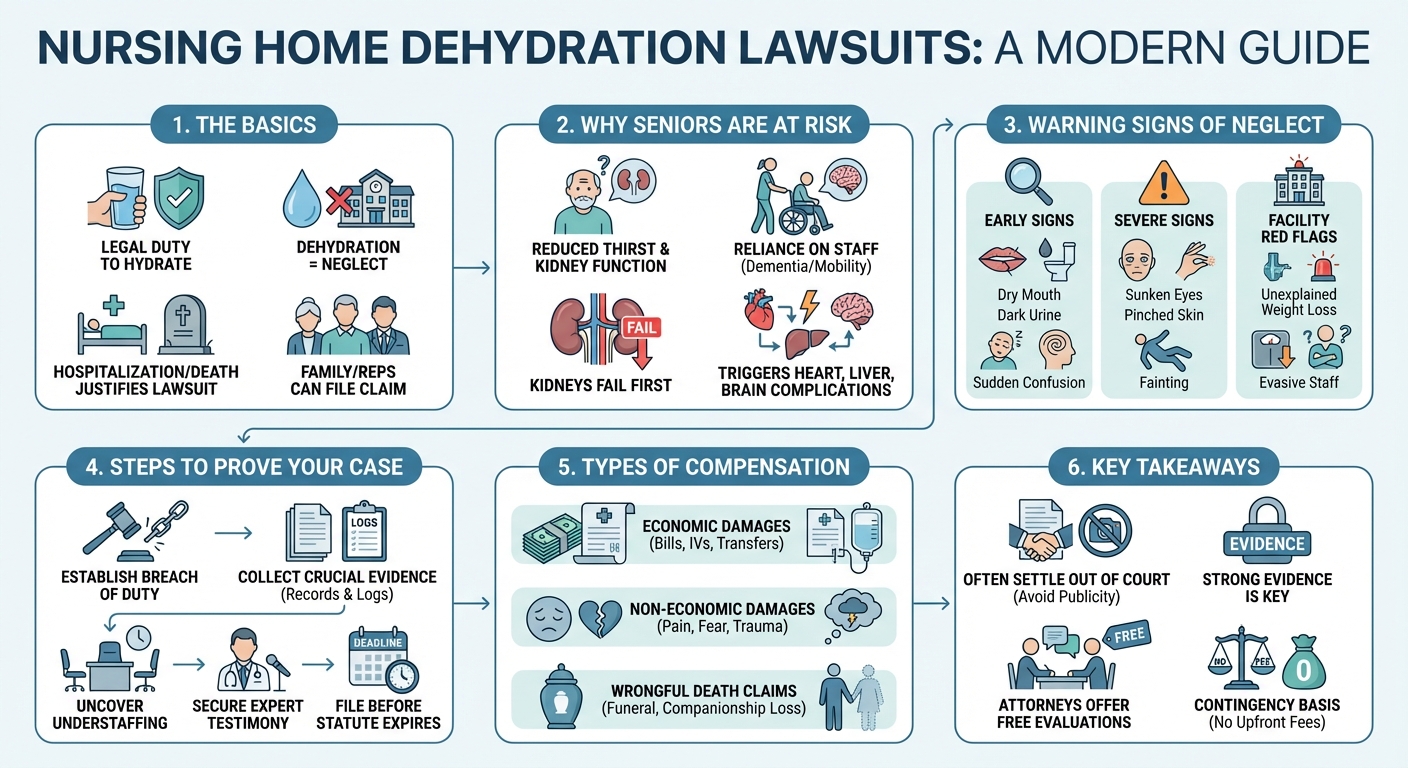
Dehydration in a nursing home is rarely an unavoidable accident; it is frequently a direct result of neglect. Dehydration neglect occurs when a facility fails to provide adequate fluids to a resident, ignores their dietary needs, or lacks the staff necessary to ensure residents are drinking enough water. When staff members skip water rounds, fail to assist residents who cannot drink independently, or neglect to monitor daily fluid intake, they put vulnerable seniors at severe risk of life-threatening complications.
The Legal Duty of Care for Nursing Homes
Nursing homes and assisted living facilities are bound by strict state and federal regulations. They have a legal duty of care to maintain the health, safety, and well-being of their residents. This includes providing adequate hydration and nutrition. When a facility breaches this duty through understaffing, poor training, or intentional neglect, they can be held legally and financially liable for any resulting harm through a nursing home dehydration lawsuit.
2. Can You Sue a Nursing Home for Dehydration?
When Dehydration Becomes Grounds for a Lawsuit
You can sue a nursing home for dehydration if you can prove that the facility’s negligence directly caused the resident’s fluid loss and subsequent injuries. A lawsuit is typically warranted when dehydration leads to hospitalization, severe medical complications, or wrongful death. Isolated incidents of mild thirst may not constitute a lawsuit, but a documented pattern of neglect or a severe acute injury resulting from lack of water is strong grounds for legal action.
Who Can File a Claim on Behalf of an Elderly Resident?
If the resident is incapacitated or has passed away, specific family members or legal representatives can file a lawsuit on their behalf. This typically includes spouses, adult children, or individuals who hold a durable power of attorney for healthcare or finances. In the event of a tragic loss, the executor of the resident’s estate can file a wrongful death lawsuit against the negligent facility.
3. Medical Dangers: The Physical Impact of Severe Dehydration
Why the Elderly Are Highly Susceptible to Fluid Loss
Seniors are naturally more vulnerable to dehydration due to a diminished sense of thirst, decreased kidney function, and the side effects of various prescription medications. Additionally, many nursing home residents suffer from mobility issues or cognitive impairments like dementia, making them entirely reliant on staff to bring them water and encourage them to drink. When staff fail to intervene, dehydration can escalate rapidly.
What organs shut down first when dehydrated?
When a person becomes severely dehydrated, the kidneys are typically the first organs to shut down. Without enough fluid, blood volume drops, preventing the kidneys from filtering waste. This leads to acute kidney failure, which can quickly trigger a dangerous cascade of liver, heart, and brain complications.
4. Identifying Neglect: Signs and Symptoms
Physical Symptoms of Dehydration in Seniors
Recognizing the early signs of dehydration can save a loved one’s life. Families should be vigilant during visits and look for signs that the facility is failing to provide basic care.
| Condition | Common Symptoms and Warning Signs |
|---|---|
| Mild to Moderate Dehydration | Dry mouth, cracked lips, dark-colored urine, lethargy, and sudden confusion or irritability. |
| Severe Dehydration | Sunken eyes, poor skin turgor (skin stays “tented” when pinched), rapid heart rate, low blood pressure, and fainting. |
What are the red flags of nursing home abuse?
Common red flags of nursing home abuse and neglect include unexplained weight loss, severe dehydration, sudden behavioral changes, poor personal hygiene, and frequent infections like bedsores. Additionally, if staff members are evasive or refuse to let you visit your loved one alone, it may indicate systemic neglect.
5. How to Prove Negligence in a Dehydration Case
Establishing a Breach of Duty
To win a dehydration lawsuit, your legal team must prove that the nursing home breached its standard of care. This means demonstrating that a reasonably competent facility would have provided adequate hydration under the same circumstances, but the defendant facility failed to do so.
Essential Evidence: Medical Records, Hydration Logs, and Staffing Reports
Evidence is the cornerstone of any successful nursing home lawsuit. Key documents include the resident’s medical records, which detail the diagnosis of dehydration and related complications. Attorneys will also subpoena the facility’s hydration logs, dietary records, and staffing schedules. Often, staffing logs reveal that the facility was dangerously understaffed, making it impossible for nurses to provide adequate care to all residents.
The Role of Expert Medical Testimony
Expert witnesses are crucial in these cases. Medical experts, such as geriatricians or nursing home administrators, are brought in to testify about how the dehydration occurred, how it could have been prevented, and how the lack of fluids directly caused the resident’s specific injuries or death.
6. Navigating the Legal Process Against a Care Facility
How difficult is it to sue a nursing home?
Suing a nursing home can be difficult because corporate facilities often have aggressive legal teams and complex arbitration agreements. However, it is highly achievable with an experienced attorney who knows how to subpoena staffing logs, secure medical records, and use expert testimony to prove undeniable neglect.
What are the odds of winning a lawsuit against a nursing home?
The odds of winning a lawsuit against a nursing home increase significantly when you have strong, documented medical evidence of neglect. While every case is unique, many dehydration claims result in favorable out-of-court settlements because corporate facilities prefer to avoid the public exposure of a jury trial.
Statute of Limitations for Filing a Claim
Every state has a strict deadline, known as the statute of limitations, for filing a nursing home abuse or personal injury lawsuit. This timeframe generally ranges from one to three years from the date of the injury or the discovery of the neglect. Failing to file within this window will permanently bar you from seeking compensation.
7. Compensation and Settlements for Dehydration Victims
Economic Damages: Medical Bills and Ongoing Care
Victims of dehydration neglect are entitled to economic damages to cover out-of-pocket expenses. This includes the cost of emergency room visits, IV fluid treatments, hospital stays, and the expenses associated with transferring the resident to a safer, more capable care facility.
Non-Economic Damages: Pain, Suffering, and Emotional Distress
Dehydration is a painful and frightening experience. Non-economic damages compensate the resident for the physical pain, emotional trauma, anxiety, and diminished quality of life they endured due to the facility’s negligence.
Wrongful Death Claims Related to Dehydration
If dehydration neglect tragically results in a resident’s passing, the family can pursue a wrongful death claim. Compensation in these cases can cover funeral and burial expenses, outstanding medical bills, and the family’s loss of companionship and emotional support.
8. Get Help from an Experienced Nursing Home Abuse Lawyer
Free Case Evaluation and Consultation
If you suspect your loved one suffered from dehydration due to nursing home neglect, you do not have to fight the facility alone. Our legal team offers a free, confidential case evaluation to review your situation, answer your questions, and determine the best path forward for your family.
No Upfront Fees: How Our Contingency Fee Structure Works
We believe that families seeking justice should not have to worry about out-of-pocket legal expenses. We handle nursing home dehydration lawsuits on a contingency fee basis. This means you pay absolutely no upfront fees, and we only get paid if we successfully secure a settlement or verdict on your behalf.