

Table of contents
A Catholic Church sexual abuse lawyer helps survivors hold priests, dioceses, and religious institutions accountable for sexual misconduct and systemic cover-ups. These specialized attorneys navigate complex statutes of limitations, diocese bankruptcies, and survivor settlement trusts to secure compensation for therapy, medical care, and emotional distress, ensuring confidentiality throughout the process.
Catholic Church Sexual Abuse Lawyer: Seeking Justice and Accountability
Surviving sexual abuse by a member of the Catholic clergy leaves deep, lasting scars. For decades, the systemic protection of abusers within the Church allowed predators to evade justice while survivors were silenced. A dedicated Catholic Church sexual abuse lawyer helps survivors step forward, reclaim their power, and hold both the individual perpetrators and the broader religious institutions accountable for their actions.
A Trauma-Informed Approach to Your Legal Journey
Taking legal action against a powerful institution like the Catholic Church is daunting. That is why our legal team utilizes a trauma-informed approach. We understand that recounting your experience can be triggering. Our primary goal is to create a safe, confidential environment where you control the pace of the process. We handle the aggressive legal maneuvering, allowing you to focus entirely on your healing and recovery.
Breaking the Silence: Holding the Institution Accountable
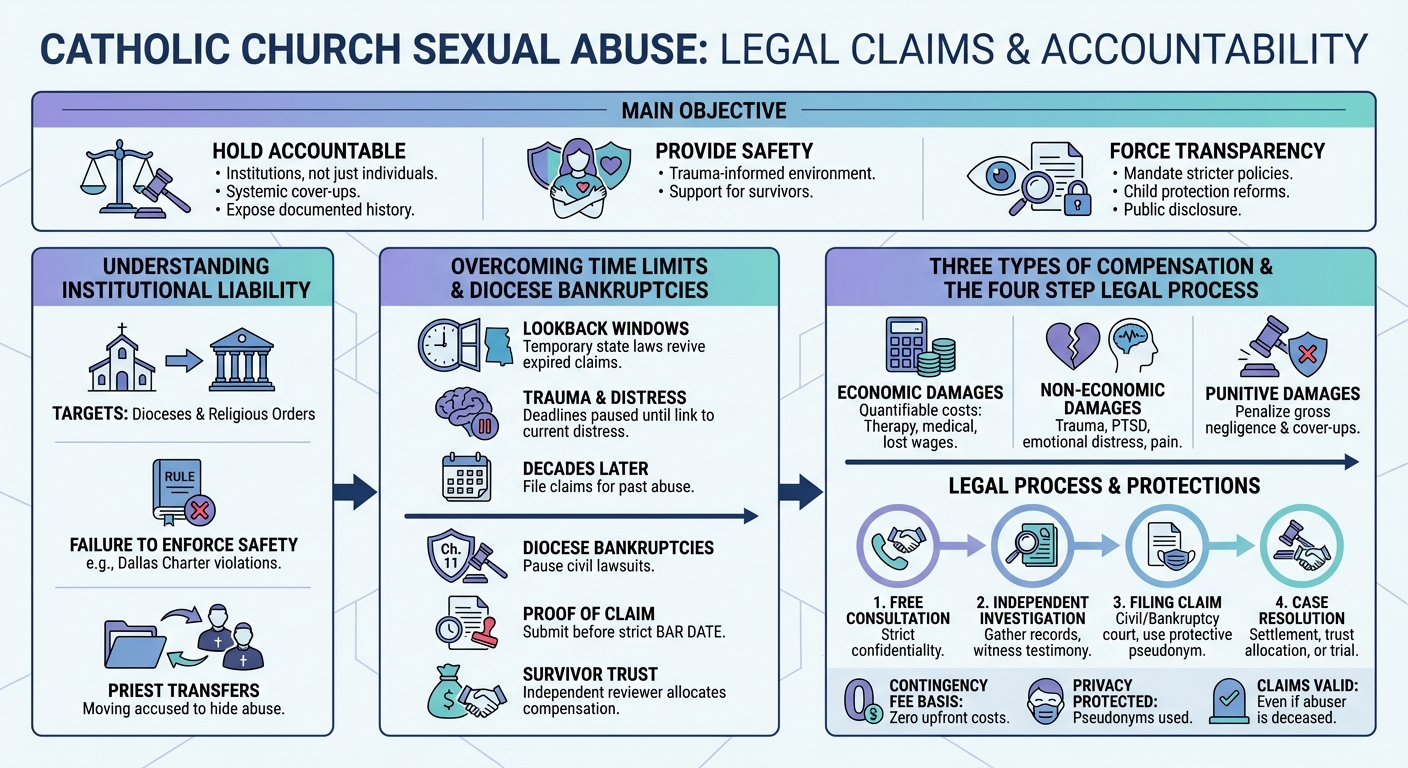
Filing a lawsuit does more than secure individual compensation; it forces transparency. By stepping forward, survivors expose hidden records, prevent abusers from being quietly reassigned to new parishes, and compel the Church to implement stricter child protection policies. Your courage plays a vital role in dismantling the culture of secrecy that has plagued the institution for generations.
Understanding Institutional Liability in the Catholic Church
When abuse occurs within a parish or Catholic school, the liability rarely stops with the individual priest or staff member. The legal concept of institutional liability allows survivors to hold the overarching organizations responsible for enabling the abuse.
The Systemic History of Reassignment and Cover-Ups
A tragic hallmark of the Catholic Church abuse crisis is the historical practice of transferring accused priests to new parishes rather than reporting them to law enforcement. Bishops and archbishops often prioritized the Church’s public image over the safety of parishioners. This documented history of cover-ups forms the basis for claims of negligent retention and supervision.
Suing the Diocese and Archdiocese vs. the Individual Priest
While you can sue the individual abuser, they often lack the financial resources to provide adequate restitution. Instead, lawsuits are typically directed at the diocese, archdiocese, or specific religious orders (such as the Jesuits or Franciscans). These entities held the power to hire, supervise, and terminate the abusers, making them vicariously liable for the harm inflicted upon you.
The Role of the Dallas Charter and Institutional Failures
In 2002, the United States Conference of Catholic Bishops established the Charter for the Protection of Children and Young People, commonly known as the Dallas Charter. While it mandated zero tolerance for abuse, many dioceses failed to properly implement or enforce its guidelines. Demonstrating a diocese’s failure to adhere to these established safety protocols is a powerful tool in proving institutional negligence.
Overcoming Legal Hurdles: Statutes of Limitations and Lookback Windows
One of the most common concerns for survivors is whether too much time has passed to file a claim. Because childhood trauma is often repressed, many survivors do not come forward until decades later. The law is increasingly evolving to accommodate this reality.
What is a Statute of Limitations Lookback Window?
A statute of limitations sets a strict deadline for filing a lawsuit. However, recognizing the unique nature of clergy abuse, many states have enacted “lookback windows.” A lookback window is a temporary legislative period that revives expired claims, allowing survivors of historical abuse to file civil lawsuits regardless of when the abuse occurred.
Can I Still File a Claim if the Abuse Happened Decades Ago?
Yes, in many cases. Even if your state does not currently have an active lookback window, there may be other legal avenues. Some states toll (pause) the statute of limitations until the survivor discovers the psychological connection between the childhood abuse and their current emotional distress. A skilled attorney can evaluate the specific timeline of your case.
State-Specific Exceptions for Childhood Sexual Abuse
Statutes of limitations vary drastically by state. Some states have permanently eliminated the civil statute of limitations for child sexual abuse, while others have extended the deadline to when the victim reaches age 40 or 50. Consulting with a nationwide clergy abuse law firm is critical to understanding the exact deadlines applicable to your jurisdiction.
Navigating Catholic Diocese Bankruptcies
Faced with mounting lawsuits, dozens of Catholic dioceses and religious orders across the United States have filed for Chapter 11 bankruptcy. While this tactic complicates the legal process, it does not mean survivors are left without recourse.
How Chapter 11 Bankruptcy Affects Survivor Claims
When a diocese files for Chapter 11 bankruptcy, an automatic stay halts all pending civil lawsuits against that specific entity. Instead of proceeding to a jury trial, survivors must resolve their claims through the federal bankruptcy court system. The goal of the bankruptcy is to reorganize the diocese’s assets and establish a global settlement trust to compensate all victims.
Filing a Proof of Claim in Bankruptcy Court
To receive compensation from a bankrupt diocese, you must file a “Proof of Claim” before a strict deadline established by the bankruptcy judge, known as the Bar Date. Missing this deadline generally forfeits your right to any future compensation from the diocese. Our attorneys meticulously prepare and file these claims to ensure your rights are protected.
Ensuring You Are Included in Survivor Settlement Trusts
During the bankruptcy proceedings, a Tort Claimants Committee (TCC) is formed to represent the interests of survivors. The TCC negotiates with the diocese to fund a Survivor Settlement Trust. Once the trust is established, an independent claims reviewer evaluates each survivor’s Proof of Claim and allocates compensation based on the severity and duration of the abuse.
Types of Compensation Available in Catholic Church Abuse Lawsuits
No amount of money can undo the trauma of sexual abuse. However, financial compensation is a crucial step toward securing the resources needed for long-term healing and holding the Church financially accountable.
| Type of Damage | Description | Examples |
|---|---|---|
| Economic Damages | Quantifiable financial losses resulting from the abuse. | Past and future therapy costs, psychiatric care, inpatient treatment, and lost earning capacity due to trauma. |
| Non-Economic Damages | Compensation for intangible, subjective losses. | Pain and suffering, emotional distress, loss of enjoyment of life, and PTSD. |
| Punitive Damages | Awarded to punish the institution for egregious conduct. | Penalties for documented cover-ups, destroying evidence, or knowingly transferring a predator. |
Economic Damages: Therapy, Medical Care, and Lost Earning Capacity
Survivors often require years of specialized psychological treatment. Economic damages cover the cost of past and future therapy, psychiatric medications, and rehabilitation. Additionally, if the trauma impacted your ability to maintain employment or advance in your career, you can seek compensation for lost wages and diminished earning capacity.
Non-Economic Damages: Pain, Suffering, and Emotional Distress
The psychological toll of clergy abuse is profound. Non-economic damages compensate you for the severe emotional distress, anxiety, depression, post-traumatic stress disorder (PTSD), and overall loss of quality of life caused by the betrayal of trust.
Punitive Damages for Institutional Negligence
In cases where a diocese exhibited gross negligence or intentional misconduct—such as actively hiding a priest’s abuse history from parishioners—juries or settlement trusts may award punitive damages. These are designed to punish the institution and deter similar behavior in the future.
The Process of Filing a Claim Against the Catholic Church
Taking the first step is often the hardest. We have streamlined our legal process to make it as transparent and stress-free as possible for survivors.
Step 1: Free, 100% Confidential Consultation
Your journey begins with a secure, private case evaluation. You will speak directly with a compassionate attorney who will listen to your story, answer your questions, and explain your legal options. This consultation is entirely free and carries no obligation.
Step 2: Independent Investigation and Evidence Gathering
If you choose to move forward, our legal team will launch an independent investigation. We gather critical evidence, including church employment records, internal diocese communications, witness testimonies, and historical data on the abusive priest to build a compelling case of institutional liability.
Step 3: Filing the Lawsuit or Bankruptcy Claim
Depending on the legal status of the diocese, we will either file a civil lawsuit in state court or submit a Proof of Claim in federal bankruptcy court. We handle all procedural requirements, ensuring that your identity remains protected through the use of pseudonyms (like John Doe or Jane Doe) whenever possible.
Step 4: Settlement Negotiations, Mediation, and Trial
Most Catholic Church abuse cases are resolved through out-of-court settlements or bankruptcy trust allocations, sparing survivors the trauma of testifying in a public trial. However, if the institution refuses to offer a fair settlement, our seasoned trial lawyers are fully prepared to present your case before a jury.
Why Choose Our Catholic Church Abuse Attorneys?
Clergy abuse litigation is a highly complex, specialized area of law. You need a legal team with a proven track record of standing up to the Vatican’s legal defense teams and navigating the intricacies of diocese bankruptcies.
Dedicated, Trauma-Informed Legal Representation
We are not just litigators; we are advocates for survivors. Our attorneys have dedicated their careers to exposing institutional abuse. We work alongside mental health professionals to ensure our legal strategy aligns with your personal healing journey.
No Upfront Costs: Our Contingency Fee Guarantee
We believe that financial barriers should never prevent a survivor from seeking justice. We represent all clergy abuse clients on a strict contingency fee basis. This means you pay zero upfront costs, and we only collect a legal fee if we successfully secure a settlement or verdict on your behalf.
Frequently Asked Questions About Suing the Catholic Church
Below are answers to some of the most common questions survivors have when considering legal action against the Catholic Church.
Will my name be made public if I sue the Catholic Church?
No. Your privacy is our top priority. In civil lawsuits, we routinely petition the court to allow survivors to proceed under a pseudonym, such as “John Doe” or “Jane Doe.” In bankruptcy proceedings, survivor identities are strictly shielded from public records and the media.
What if the priest or clergy member who abused me has passed away?
You can still pursue a claim even if the abuser is deceased. Because the primary target of the lawsuit is the diocese or religious order that enabled the abuse, the death of the individual priest does not invalidate your claim against the institution.
How long does a Catholic Church abuse lawsuit typically take?
The timeline varies significantly based on the jurisdiction and whether the diocese is in bankruptcy. Cases resolved through a bankruptcy trust may take 1 to 3 years to finalize, while civil lawsuits can take longer if they proceed to trial. We work diligently to expedite the process while maximizing your compensation.
Do I need to have physical evidence to prove my case?
No. It is extremely rare for survivors of historical abuse to have physical evidence. Cases are built on your testimony, corroborating statements from other victims of the same priest, psychological evaluations, and internal church records showing a pattern of reassignment and cover-ups.