

Table of contents
A dog bite lawsuit is a legal claim filed against a dog owner whose pet has injured someone. Victims can seek compensation for medical bills, lost wages, and pain and suffering. Liability depends on state laws, which typically follow either strict liability rules or the one-bite rule.
The Complete Guide to Dog Bite Cases: Laws, Settlements, and Statistics
Dog attacks can be traumatic, leaving victims with severe physical injuries, emotional distress, and mounting medical bills. Navigating the aftermath requires a clear understanding of your legal rights. This guide breaks down everything you need to know about dog bite cases, from state liability laws to securing fair compensation.
What Constitutes a Dog Bite Lawsuit?
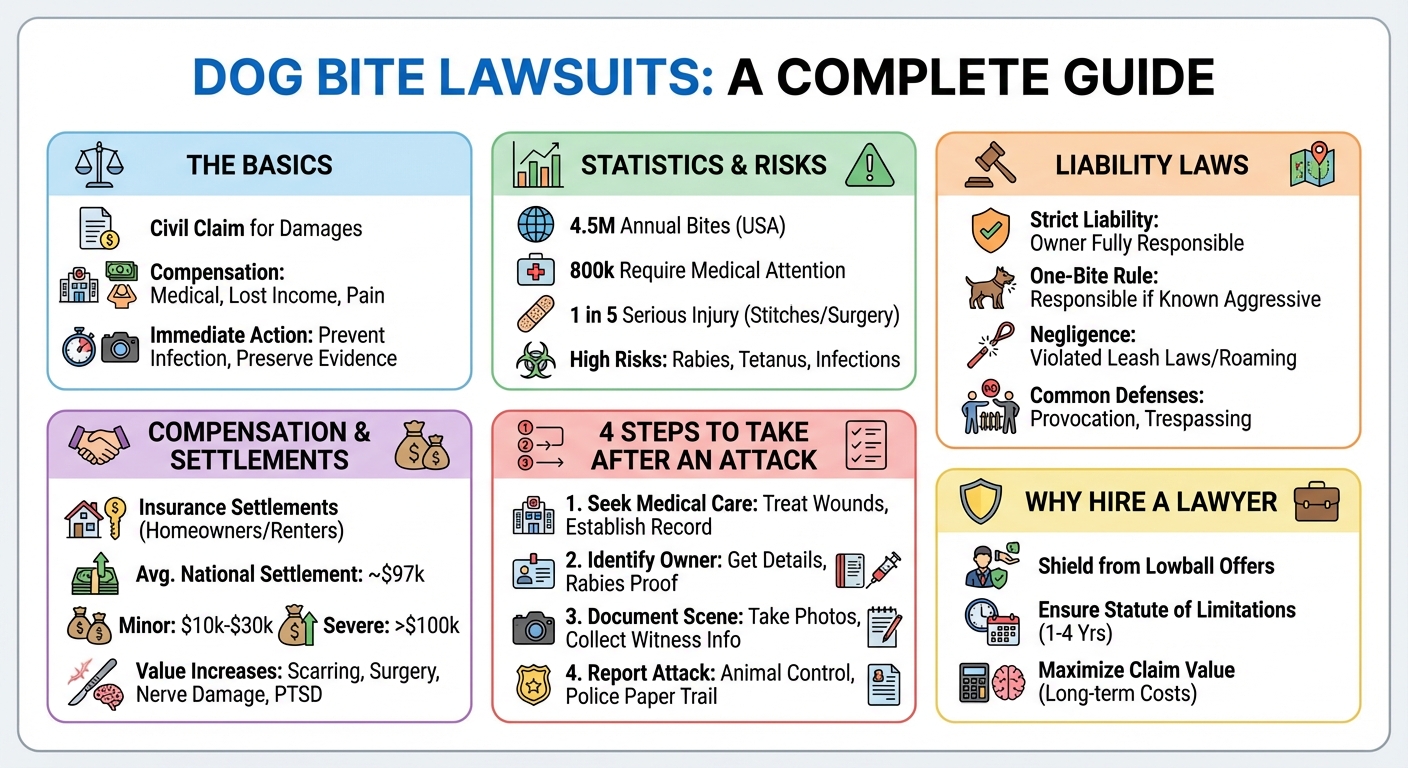
A dog bite lawsuit is a civil claim filed by an injured victim against the owner or handler of the dog that attacked them. The goal of this legal action is to recover financial compensation for damages caused by the attack. These damages typically include emergency room bills, reconstructive surgery costs, lost income, and compensation for pain and suffering.
Why Prompt Legal and Medical Action is Critical
Time is of the essence following an animal attack. Seeking immediate medical care prevents dangerous infections and creates an official medical record of your injuries. Simultaneously, prompt legal action ensures that crucial evidence—such as witness statements and animal control reports—is preserved before it disappears or memories fade.
Dog Bite Statistics: Frequency and Severity
How common are serious dog bites?
Serious dog bites are highly common in the United States. Out of the estimated 4.5 million dog bites that occur annually, approximately 800,000 are severe enough to require medical attention. This means nearly 1 in 5 dog attacks results in injuries needing professional medical care, including stitches or surgery.
Which dog breed has the most reported bites?
Pit bulls and mixed-breed dogs frequently account for the highest number of reported dog bites in the United States. However, experts emphasize that bite statistics often reflect popularity, misidentification, and owner behavior rather than inherent breed aggression. Any dog, regardless of breed or size, can bite if provoked or frightened.
The Impact of Rabies and Infections
Beyond the physical trauma of tearing and puncture wounds, dog bites carry a high risk of infection. According to the CDC, dog bites are responsible for a significant portion of rabies cases worldwide. Even if rabies is ruled out, victims are at risk for Capnocytophaga, MRSA, and tetanus, making immediate antibiotic treatment and wound cleaning essential.
Understanding Dog Bite Liability Laws
Strict Liability States vs. The One-Bite Rule
Liability in dog bite cases depends heavily on where the attack occurred. States generally follow one of two legal doctrines:
| Legal Doctrine | How It Works | Victim’s Burden of Proof |
|---|---|---|
| Strict Liability (e.g., California, Florida) | The owner is liable for damages even if the dog has never bitten anyone before. | Must prove the bite occurred in a public place or lawfully in a private place. |
| One-Bite Rule (e.g., Texas, New York) | The owner is only liable if they knew or should have known the dog had aggressive tendencies. | Must prove the dog had a history of aggression and the owner was negligent. |
Negligence and Leash Law Violations
Even in states with the one-bite rule, an owner can be held liable if their negligence caused the attack. If an owner violates local leash laws or allows their dog to roam freely in a neighborhood, they can be held responsible for any resulting injuries, regardless of the dog’s past behavior.
Common Defenses: Provocation and Trespassing
Dog owners and their insurance companies often try to avoid paying claims by arguing that the victim was at fault. The two most common defenses are provocation (claiming the victim teased, hit, or cornered the dog) and trespassing (claiming the victim was unlawfully on private property when the bite occurred). Overcoming these defenses requires strong evidence and witness testimony.
Settlements and Compensation in Dog Bite Lawsuits
Do most dog bite cases settle?
Yes, the vast majority of dog bite cases settle out of court. Insurance companies generally prefer to negotiate a fair settlement rather than risk the unpredictable costs and public exposure of a jury trial. Only a small percentage of disputed claims proceed all the way to formal litigation and trial.
How much compensation for a dog bite?
Compensation for a dog bite varies widely based on injury severity, but the national average settlement is approximately $97,000. Minor injuries may settle between $10,000 and $30,000, while severe cases involving permanent scarring, nerve damage, or multiple surgeries can easily exceed $100,000 to cover extensive medical and emotional damages.
Factors That Increase Settlement Value (Scarring, Surgery, PTSD)
Insurance adjusters look at several factors when calculating a settlement offer. Elements that significantly increase the value of a claim include:
- Permanent Scarring or Disfigurement: Especially on highly visible areas like the face or hands.
- Need for Reconstructive Surgery: Costs for plastic surgery or skin grafts.
- Nerve Damage: Loss of function or chronic pain in the affected limb.
- Psychological Trauma: Diagnosed PTSD, cynophobia (fear of dogs), or severe anxiety.
The Role of Homeowners and Renters Insurance
Most dog bite settlements are not paid out of the owner’s pocket. Instead, they are covered by the dog owner’s homeowners or renters insurance policy. These policies typically provide liability coverage ranging from $100,000 to $300,000. If the damages exceed the policy limits, an umbrella policy or a personal lawsuit against the owner may be necessary.
What to Do Immediately After a Dog Attack
Seek Immediate Medical Attention
Your health is the top priority. Wash the wound with soap and water if possible, and go to the emergency room or urgent care immediately. Delaying treatment can lead to severe infections and gives the insurance company an excuse to downplay your injuries.
Identify the Dog and Owner
Before leaving the scene, get the name, address, and contact information of the dog owner. Ask for proof of the dog’s rabies vaccination. If the owner is uncooperative, note their physical description and the dog’s breed and appearance.
Documenting the Scene and Gathering Evidence
While general accident documentation is important, dog bite cases require specific evidence. Take clear, well-lit photographs of your injuries, torn clothing, and the location of the attack. If there were any witnesses, collect their names and phone numbers immediately.
Reporting the Attack to Animal Control
Always file a report with your local animal control agency or the police. An official report creates a paper trail, triggers an investigation into the dog’s history, and forces the owner to provide vaccination records. This report is a vital piece of evidence for your claim.
When to Hire a Personal Injury Lawyer for a Dog Bite
Navigating Insurance Adjusters and Lowball Offers
Insurance adjusters are trained to minimize payouts. They may ask for recorded statements to use against you or offer a quick, lowball settlement before you know the full extent of your medical costs. A lawyer handles all communication, ensuring you do not accidentally compromise your case.
Understanding the Statute of Limitations
Every state has a strict deadline, known as the statute of limitations, for filing a personal injury lawsuit. This window typically ranges from one to four years from the date of the bite. If you miss this deadline, you lose your right to seek compensation entirely.
How an Attorney Maximizes Your Claim Value
An experienced personal injury attorney understands how to properly value your claim, including future medical expenses and emotional distress. They will gather expert medical testimony, negotiate aggressively with the insurance company, and prepare your case for trial if a fair settlement cannot be reached.