

Table of contents
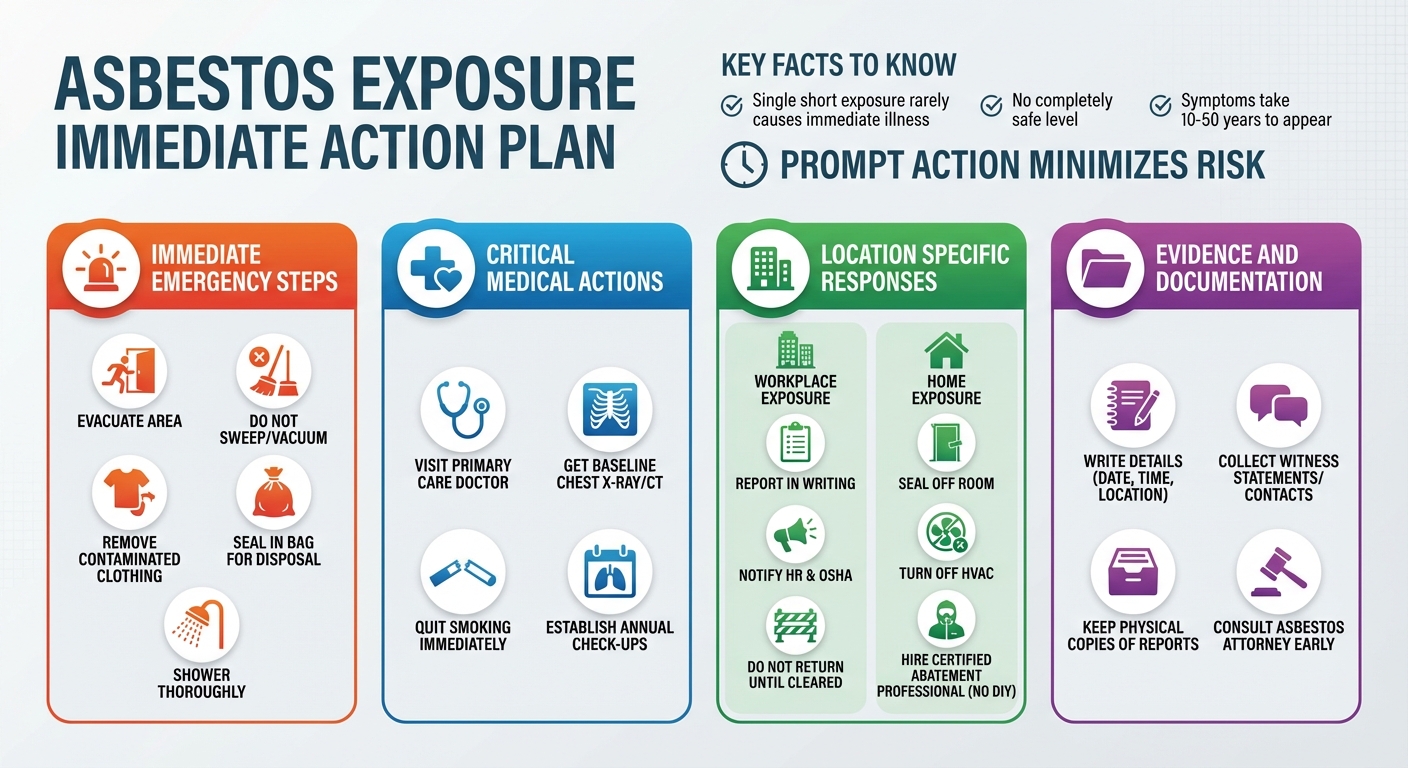
If you are exposed to asbestos, immediately stop what you are doing and evacuate the area. Do not sweep or vacuum the dust. Carefully remove and seal contaminated clothing in a plastic bag, shower thoroughly to remove fibers from your skin, and contact your doctor to document the exposure.
What to Do If Exposed to Asbestos: An Immediate Action Plan
Discovering that you have been exposed to asbestos can be terrifying, but panic is not necessary. While asbestos fibers are highly toxic when inhaled, a single, short-term exposure rarely results in immediate illness. However, prompt and calculated action is critical to minimize your risk.
Understanding the difference between short-term and long-term exposure risks is your first step. Long-term, occupational exposure carries the highest risk for developing diseases like mesothelioma or asbestosis. Short-term exposure—such as a one-off home renovation accident—carries a lower risk, but there is still no universally “safe” level of asbestos exposure. Taking immediate steps to stop the exposure and document the event is vital for your physical and legal health.
Immediate Steps to Take Right After Exposure
If you suspect you have just disturbed asbestos-containing materials, your immediate priority is to prevent further inhalation and stop the fibers from spreading.
- Stop the activity and evacuate the area immediately: Leave the room or workspace right away. Do not attempt to clean up the debris yourself.
- Do not sweep, vacuum, or dust the area: Standard household vacuums and brooms will only agitate the microscopic fibers, launching them back into the air where they can be easily inhaled.
- Carefully remove and isolate contaminated clothing: Strip off your clothes before entering clean areas of your home or workplace. Place the contaminated clothing in a heavy-duty plastic bag, seal it tightly, and dispose of it according to local hazardous waste guidelines. Do not wash these clothes in your washing machine.
- Wash yourself thoroughly: Take a shower immediately. Wash your hair and body with plenty of soap and water to rinse away any microscopic fibers that may have settled on your skin.
Medical Next Steps: Protecting Your Long-Term Health
Because asbestos-related diseases have a latency period of 10 to 50 years, you will not feel sick immediately. However, establishing a medical baseline right now is crucial.
- Schedule an appointment with your primary care doctor: Inform your healthcare provider about the exact date, duration, and nature of your exposure. This ensures the incident is officially recorded in your medical history.
- Establish a baseline: Ask your doctor if you should undergo baseline chest X-rays or a high-resolution CT scan. While these tests won’t show immediate asbestos damage, they provide a vital comparison point for future screenings.
- Stop smoking immediately: If you smoke, quit. Smoking combined with asbestos exposure creates a dangerous multiplier effect, increasing your risk of developing lung cancer by up to 90 times compared to a non-smoker.
- Set up a long-term monitoring schedule: Work with your doctor to schedule annual or bi-annual respiratory check-ups to catch any potential abnormalities early.
Workplace vs. Home Exposure: How to Handle the Source
The steps you take to handle the physical source of the asbestos depend entirely on where the exposure occurred.
| Exposure Location | Immediate Actions Required | Who to Contact |
|---|---|---|
| At Work | Report the incident in writing immediately. Do not return to the area until it is cleared. | Your HR department, workplace safety officer, and OSHA (Occupational Safety and Health Administration). |
| At Home | Seal off the room. Turn off HVAC systems to prevent fibers from circulating through the house. | A state-certified asbestos abatement professional. Never attempt DIY removal. |
Documenting Your Exposure (Before You Forget the Details)
Memories fade, but asbestos diseases take decades to develop. If you ever need to file a claim for medical compensation, your success will rely on the evidence you gather today.
- Create an exposure log: Write down the exact date, time, and location of the exposure. Note the specific materials involved (e.g., floor tiles, pipe insulation, popcorn ceiling).
- Gather witness statements and workplace records: If coworkers or contractors were present, get their contact information and ask them to write down what they saw. Keep copies of any incident reports filed with your employer.
- Protect your future rights: Thorough documentation connects your current exposure to any future diagnosis, which is the cornerstone of any personal injury or workers’ compensation claim.
Frequently Asked Questions About Asbestos Exposure
Can you be exposed to asbestos and be okay?
Yes, a single, brief exposure to asbestos rarely causes long-term disease. The human body can clear small amounts of fibers. However, there is no universally safe level of asbestos, so even minor exposures should be documented and discussed with your doctor to ensure proper monitoring.
How long do I have to be exposed to asbestos to get sick?
Most asbestos-related diseases, like mesothelioma or asbestosis, develop after years of regular, heavy exposure in industrial or construction settings. However, short-term, intense exposures can also cause illness. The latency period between initial exposure and the onset of symptoms typically ranges from 10 to 50 years.
What are the first signs of asbestos exposure?
Asbestos exposure does not cause immediate physical symptoms like coughing or sneezing. The first signs of asbestos-related disease usually appear decades later and include shortness of breath, a persistent dry cough, chest tightness, unexplained weight loss, and a crackling sound in the lungs when breathing.
What is the 3 5 7 rule for asbestos sampling?
The 3 5 7 rule refers to EPA guidelines for sampling surfacing materials for asbestos. Inspectors must collect at least 3 samples from areas less than 1,000 square feet, 5 samples for areas between 1,000 and 5,000 square feet, and 7 samples for areas larger than 5,000 square feet.
When to Consult an Asbestos Attorney
While you may not need to file a lawsuit immediately after an exposure, consulting with an asbestos attorney early on can be highly beneficial. An experienced lawyer can help you understand the statute of limitations for asbestos claims in your state, which dictates how long you have to take legal action if you eventually become ill. Furthermore, our firm can guide you on how to properly preserve evidence today—such as workplace records and witness testimonies—so that if a diagnosis of mesothelioma or asbestosis occurs decades from now, the critical connection to your exposure is already firmly established.