
Table of contents
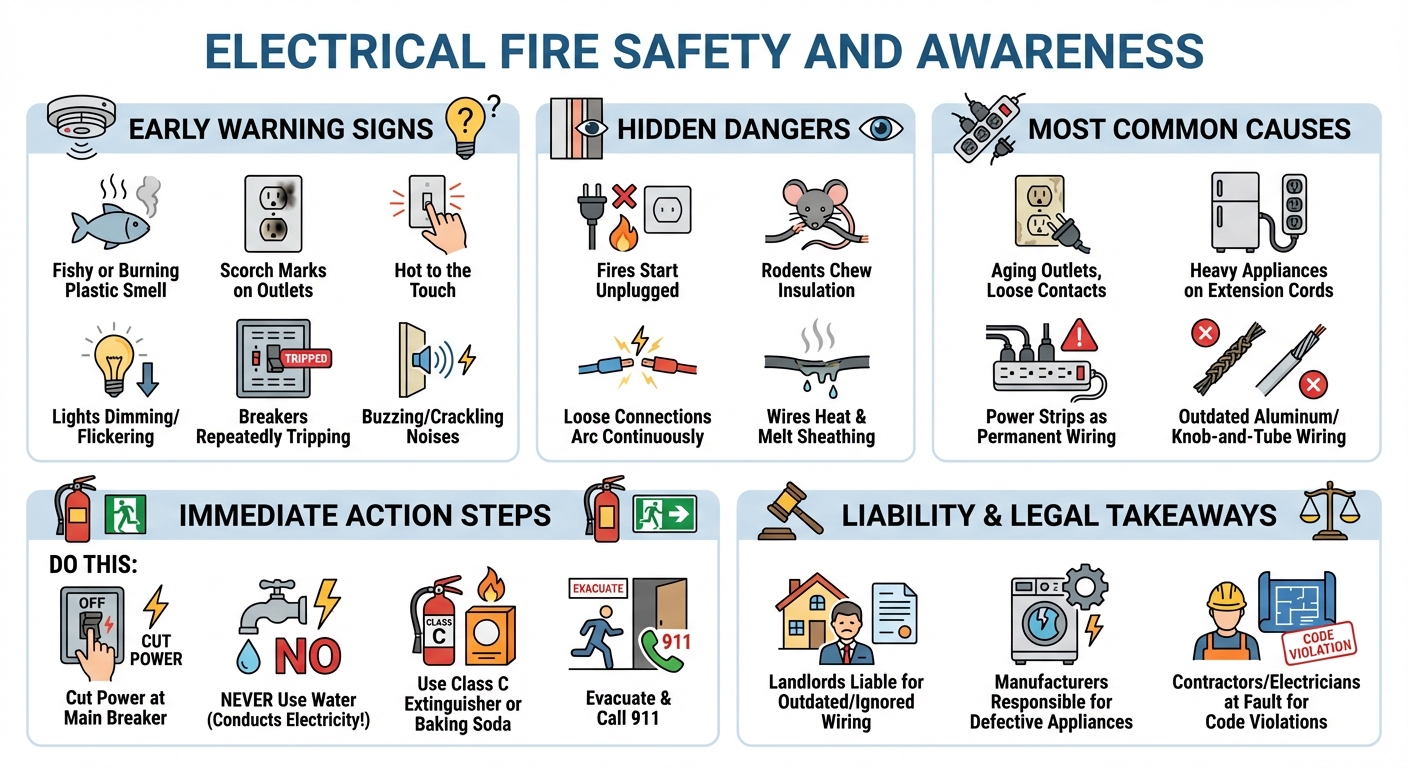
The most common signs of an electrical fire include a persistent burning plastic or ‘fishy’ smell, discolored or scorch-marked outlets, flickering lights, and buzzing or crackling sounds behind your walls. If your circuit breaker trips frequently or switch plates feel hot to the touch, an electrical fire may be imminent.
Electrical fires are uniquely dangerous because they often smolder behind walls long before flames become visible. Knowing the early warning signs can mean the difference between a minor electrical repair and a devastating property loss. If you suspect your home or business is at risk, recognizing these indicators is your first line of defense.
How do you tell if you have an electric fire?
You can tell you have an electric fire if you notice persistent burning plastic or fishy odors, scorch marks on wall outlets, or switches that feel hot to the touch. Other major warning signs include flickering lights, frequently tripped circuit breakers, and buzzing or crackling noises coming from inside your walls.
Flickering or Dimming Lights
If your lights dim or flicker when you turn on a major appliance—like a microwave or air conditioner—it means the circuit is drawing more current than it can safely handle. While occasional flickering can happen, persistent dimming indicates an overloaded circuit or loose wiring, both of which are major fire hazards.
Discolored, Scorch-Marked, or Hot Outlets
Outlets and switch plates should always be cool to the touch. If an outlet feels warm, or if you see brown or black scorch marks around the plug slots, the wiring behind the wall is overheating. This is a sign that an electrical arc is actively burning the plastic receptacle.
Frequent Circuit Breaker Trips
Circuit breakers are designed to cut power when a system overloads. If your breaker trips repeatedly, it is doing its job to prevent a fire. However, constantly resetting a tripped breaker without investigating the root cause allows the underlying electrical fault to worsen, eventually leading to a fire.
Buzzing, Sizzling, or Crackling Sounds behind Walls
Electricity should flow silently. If you hear a buzzing, sizzling, or crackling noise coming from an outlet, switch, or wall, it is a sign of electrical arcing. Arcing occurs when electricity jumps across a loose connection, producing intense heat that can easily ignite surrounding wood and drywall.
Can you smell an electrical fire before it starts?
Yes, you can often smell an electrical fire before visible flames erupt. As wire insulation overheats and begins to melt, it releases toxic gases that smell strongly of burning plastic, rubber, or even fish. If you detect this persistent odor without an obvious source, a hidden fire may be starting.
The ‘Fishy’ or Burning Plastic Odor
Many homeowners are surprised to learn that an electrical fire often smells like fish or urine. This distinct odor comes from the heat-resistant chemicals used in plastic wire insulation and outlet covers. When these components reach dangerous temperatures, they emit this highly recognizable, acrid smell.
Why Copper Wires Produce Distinct Smells When Overheating
Copper wiring itself doesn’t smell, but the protective sheathing around it does. As copper wires carry too much current, they heat up like the coils in a toaster. This heat transfers to the surrounding PVC or rubber insulation, causing it to melt, off-gas, and eventually catch fire.
Can an electrical fire start if nothing is plugged in?
Yes, an electrical fire can start even if nothing is plugged into your outlets. As long as the power is on at the breaker, electricity flows through the hidden wires inside your walls. Damaged insulation, loose connections, or rodent-chewed wires can arc and ignite surrounding building materials at any time.
Hidden Wiring Degradation and Rodent Damage
Wires hidden behind drywall are vulnerable to environmental factors. Mice, rats, and squirrels frequently chew through wire insulation, exposing the bare copper. Once exposed, these live wires can spark against each other or nearby metal pipes, starting a fire inside the wall cavity even when no appliances are running.
Live Circuits and Phantom Loads
Even when devices are turned off or unplugged, the circuit itself remains live. Loose connections at the junction box or within the outlet receptacle can cause continuous arcing. Additionally, “phantom loads” from hardwired fixtures or faulty smart-home devices can draw unexpected power, leading to overheating.
What is the most common cause of electrical fires?
The most common cause of electrical fires is faulty electrical outlets and aging, outdated wiring. Over time, receptacle contacts loosen, causing electrical arcing that generates intense heat. Other leading causes include overloaded extension cords, plugging high-wattage appliances into power strips, and degraded insulation on older home wiring systems.
Faulty Outlets and Aging Receptacles
As outlets age, the metal contacts inside them lose their grip. When you plug in a cord, the loose connection creates high electrical resistance, which translates directly into heat. This heat melts the outlet and can quickly ignite the surrounding wall studs.
Overloaded Extension Cords and Power Strips
Extension cords are meant for temporary use, not permanent wiring solutions. Plugging heavy-duty appliances—like space heaters, refrigerators, or window AC units—into standard extension cords or power strips easily overwhelms the wire’s capacity, causing the cord to melt and catch fire.
Outdated Knob-and-Tube or Aluminum Wiring
Homes built before the 1970s may contain aluminum wiring or knob-and-tube systems. Aluminum wiring expands and contracts with temperature changes, leading to loose connections and arcing. Knob-and-tube wiring lacks a grounding wire and its insulation degrades over time, making it highly susceptible to sparking.
Immediate Steps to Take If You Suspect an Electrical Fire
If you notice any of the warning signs above, you must act quickly to prevent a catastrophic fire.
Cutting Power at the Breaker Box
If an outlet is smoking, sparking, or smells like burning plastic, immediately go to your electrical panel and flip the main breaker to the “OFF” position. Cutting the power stops the flow of electricity and eliminates the heat source.
Why You Should Never Use Water on an Electrical Fire
Water conducts electricity. Throwing water on an active electrical fire can result in a lethal electric shock and can actually spread the fire further. If flames are visible, only use a Class C fire extinguisher (which contains non-conductive chemicals) or baking soda for very small outlet fires.
When to Evacuate and Call 911
If the fire is growing, the smoke is thick, or you cannot safely reach the breaker box, evacuate the premises immediately. Do not try to be a hero. Once you are safely outside, call 911 and inform the dispatcher that it is an electrical fire.
Who Is Liable for Damages and Injuries from an Electrical Fire?
Electrical fires can cause devastating injuries, severe burns, and total property loss. If the fire was caused by someone else’s negligence, you may have grounds for a lawsuit to recover your damages.
Landlord Negligence and Unsafe Rental Properties
Property owners and landlords have a legal duty to maintain safe premises. If a landlord ignored complaints about flickering lights, refused to update ancient wiring, or failed to hire a licensed electrician for repairs, they can be held liable for injuries and damages under premises liability laws.
Defective Appliances and Product Liability Claims
Sometimes, the wiring in the home is fine, but a defective product causes the fire. If a poorly manufactured space heater, faulty lithium-ion battery, or defective kitchen appliance catches fire, the manufacturer or retailer can be held responsible through a product liability lawsuit.
Poor Workmanship by Contractors or Electricians
If an electrical fire is traced back to recent renovations, the contractor or electrician may be at fault. Failing to adhere to local building codes, using improper wire gauges, or leaving exposed connections are clear signs of professional negligence.