

Table of contents
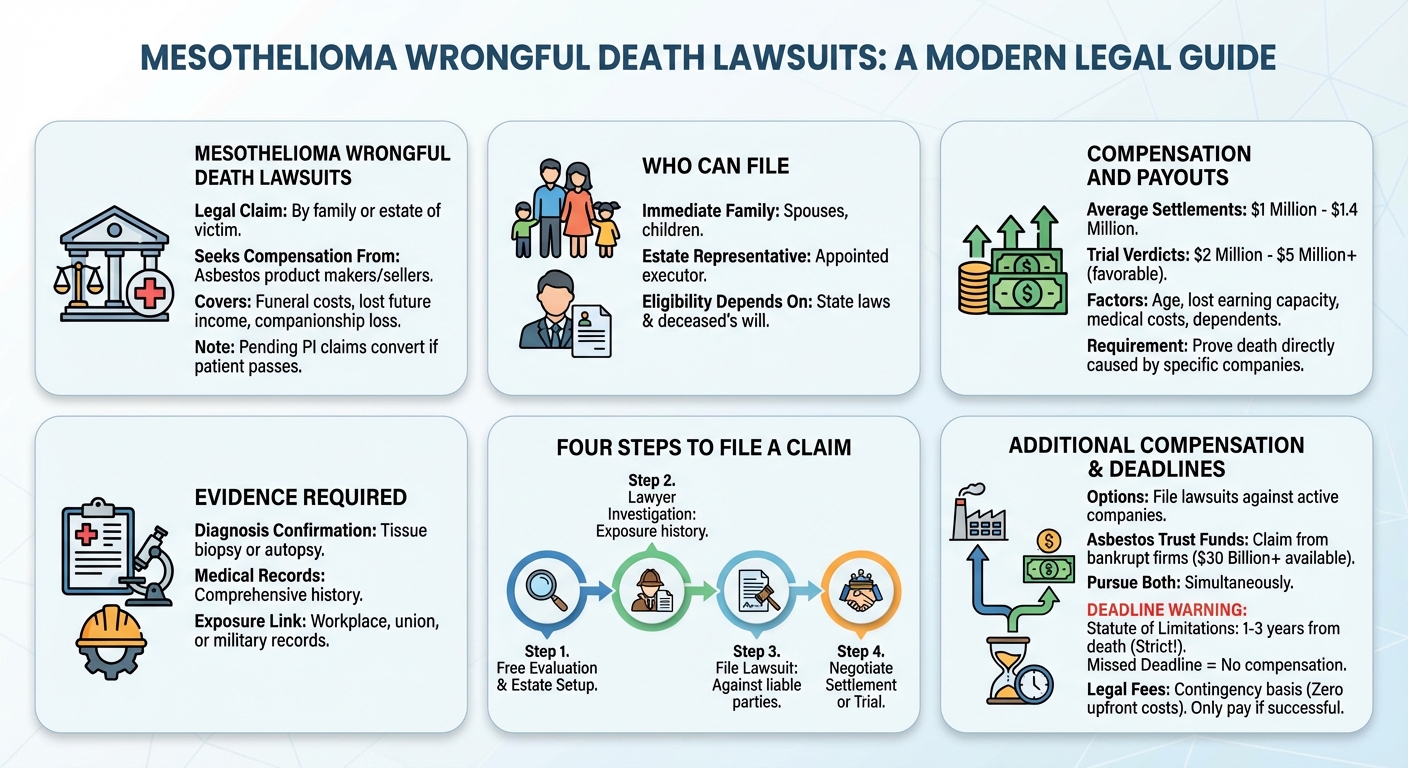
A mesothelioma wrongful death lawsuit is a legal claim filed by the surviving family members or estate of someone who died from mesothelioma. These lawsuits seek compensation from the companies that manufactured or sold the asbestos-containing products responsible for the fatal exposure. Average settlements range from $1 million to $1.4 million.
Understanding Mesothelioma Wrongful Death Lawsuits
Losing a loved one to mesothelioma is a devastating experience, made even more tragic by the knowledge that asbestos exposure was entirely preventable. A mesothelioma wrongful death lawsuit provides a legal avenue for grieving families to hold negligent asbestos companies accountable and secure financial stability for the future.
What Constitutes a Wrongful Death in Asbestos Cases?
In the context of asbestos litigation, a wrongful death occurs when a person dies from an illness directly caused by exposure to asbestos-containing products. Because manufacturers knew about the lethal risks of asbestos for decades but failed to warn workers and consumers, families have the legal right to pursue compensation for the loss of their loved one.
How Wrongful Death Claims Differ from Personal Injury Claims
While both claim types seek justice for asbestos exposure, they are filed at different stages and by different parties:
- Personal Injury Claims: Filed by the living mesothelioma patient to cover ongoing medical bills, lost wages, and pain and suffering.
- Wrongful Death Claims: Filed by the deceased patient’s family or estate representative to recover funeral costs, lost future income, and compensation for loss of companionship.
If a patient passes away while a personal injury claim is pending, the lawsuit can usually be converted into a wrongful death claim.
Who is Eligible to File a Wrongful Death Claim?
Eligibility to file a wrongful death lawsuit depends heavily on the victim’s estate plan and the specific laws of the state where the claim is filed. Generally, the right to file falls to immediate family or a designated representative.
Immediate Family Members (Spouses and Children)
In most jurisdictions, the deceased’s surviving spouse and biological or adopted children have the primary right to file a wrongful death lawsuit. In some cases, financial dependents or stepchildren who relied on the deceased for support may also be eligible.
The Role of the Estate Representative or Executor
Often, the court requires the executor or personal representative of the deceased’s estate to formally file the lawsuit. If the victim left a will, this person is usually named within it. If there is no will, the court will appoint an administrator—typically the closest living relative—to act on behalf of the estate.
State-by-State Variations in Filing Eligibility
State laws dictate exactly who can file and benefit from a wrongful death claim. Some states restrict filing strictly to the estate executor, while others allow extended family members, such as parents or siblings, to file if there is no surviving spouse or child. Consulting with an experienced mesothelioma attorney is critical to determining your eligibility based on local statutes.
Mesothelioma Wrongful Death Settlements and Payouts
Financial compensation cannot bring back a family member, but it can alleviate the crushing financial burden left behind by a prolonged battle with cancer.
What is the average settlement for mesothelioma death?
The average settlement for a mesothelioma wrongful death lawsuit typically ranges between $1 million and $1.4 million. If a case proceeds to trial and results in a favorable verdict, compensation can sometimes exceed $2 million to $5 million, depending on the specific circumstances of the asbestos exposure and resulting damages.
How much compensation for death from mesothelioma?
Compensation for death from mesothelioma varies significantly, but families generally receive between $1 million and $1.4 million through out-of-court settlements. This compensation covers medical bills, funeral expenses, lost future income, and the family’s loss of consortium or companionship due to the preventable asbestos-related death.
Does everyone with mesothelioma get a settlement?
Not everyone with mesothelioma automatically gets a settlement. To receive compensation, the victim’s family or estate must file a legal claim and successfully prove that the mesothelioma was directly caused by exposure to asbestos-containing products manufactured, distributed, or sold by the specific defendant companies.
Factors That Influence Your Settlement Amount
Several variables determine the final payout of a wrongful death claim, including:
- Age and Earning Capacity: Younger victims who were still working typically yield higher settlements due to a greater loss of future income.
- Medical Expenses: The total cost of treatments, hospital stays, and palliative care incurred before death.
- Number of Dependents: Families with multiple dependents may receive higher compensation for loss of support.
- Jurisdiction: The state where the lawsuit is filed can impact the payout due to varying caps on non-economic damages.
Medical Evidence Required for a Successful Claim
Proving a wrongful death case requires concrete medical evidence linking the victim’s passing to asbestos exposure.
What test confirms mesothelioma?
A tissue biopsy is the only definitive test that confirms a mesothelioma diagnosis. While imaging tests like X-rays, CT scans, or MRIs can identify abnormalities or fluid buildup, doctors must extract and examine a tissue or fluid sample under a microscope to officially diagnose mesothelioma.
Gathering Posthumous Medical Records and Autopsy Reports
To build a strong case, your legal team will need comprehensive medical records detailing the diagnosis and treatment. If the victim passed away before a formal diagnosis was made, an autopsy report or posthumous tissue analysis can provide the necessary proof that mesothelioma was the cause of death.
Linking the Diagnosis to Workplace Asbestos Exposure
Medical proof must be paired with evidence of exposure. Attorneys will investigate the deceased’s employment history, military service records, and union documents to identify exactly when, where, and how they were exposed to asbestos, and which companies supplied the toxic materials.
The Legal Process: How to File a Claim After a Loved One’s Passing
Filing a lawsuit may seem overwhelming while grieving, but an experienced legal team will handle the heavy lifting. The process generally follows these steps:
Step 1: Free Case Evaluation and Estate Setup
The process begins with a free, no-obligation consultation. If you have a viable claim, your attorney will help you establish the estate and ensure the proper representative is appointed by the court to act on the deceased’s behalf.
Step 2: Investigating the Asbestos Exposure History
Lawyers will conduct a deep-dive investigation into the victim’s life. They will interview former coworkers, review historical corporate records, and utilize proprietary asbestos product databases to pinpoint the exact source of exposure.
Step 3: Filing the Lawsuit Against Liable Manufacturers
Once the evidence is gathered, your attorney will file the wrongful death complaint in the appropriate court. The lawsuit will name the manufacturers, distributors, or employers responsible for the asbestos exposure as defendants.
Step 4: Negotiating Settlements vs. Going to Trial
The vast majority of mesothelioma wrongful death cases are resolved through out-of-court settlements. Defendants often prefer to settle to avoid the unpredictability and public relations damage of a jury trial. However, if a fair settlement cannot be reached, your legal team will be prepared to argue your case in court.
Wrongful Death Lawsuits vs. Asbestos Trust Funds
Lawsuits are not the only path to compensation. Many families are also eligible to file claims against asbestos trust funds.
Filing Claims with Bankrupt Asbestos Companies
Many companies that manufactured asbestos products filed for Chapter 11 bankruptcy to avoid the overwhelming number of lawsuits. As part of their bankruptcy reorganization, they were forced by courts to establish asbestos trust funds—currently totaling over $30 billion—to compensate current and future victims.
Can You Pursue Both Options Simultaneously?
Yes. Because most victims were exposed to multiple asbestos products throughout their careers, it is common to file a wrongful death lawsuit against solvent (still operating) companies while simultaneously filing claims with the trust funds of bankrupt companies.
Statute of Limitations for Mesothelioma Wrongful Death
Time is of the essence when pursuing a wrongful death claim due to strict legal deadlines.
How Long Do You Have to File After a Death?
The statute of limitations for a wrongful death lawsuit varies by state, typically ranging from one to three years from the date of the victim’s death. If you miss this deadline, you will be permanently barred from seeking compensation.
Understanding the Discovery Rule in Asbestos Litigation
In some complex cases, the cause of death may not be immediately recognized as mesothelioma. The “discovery rule” may allow the statute of limitations countdown to begin on the date the family discovered—or reasonably should have discovered—that asbestos exposure caused the fatal illness.
Why Choose Our Firm for Your Mesothelioma Wrongful Death Case
Navigating the legal system after a tragic loss requires an attorney who is not only highly skilled in complex asbestos litigation but also deeply compassionate toward what your family is enduring.
Zero Upfront Costs and Compassionate Legal Support
We operate on a contingency fee basis. This means you pay absolutely nothing out of pocket. We advance all costs associated with investigating and litigating your case, and we only collect a fee if we successfully secure a settlement or verdict on your behalf.
Contact Us for a Free, Confidential Consultation
If you have lost a loved one to mesothelioma, you deserve justice and financial security. Contact our legal team today for a free, confidential case review. We will listen to your story, explain your legal options, and fight relentlessly to hold the responsible asbestos companies accountable.