

Table of contents
Lung cancer from asbestos develops when microscopic asbestos fibers are inhaled and become permanently trapped in the lung tissue. Over decades, these fibers cause chronic inflammation and genetic mutations, leading to tumors. Asbestos exposure is known to cause all major types of lung cancer, including non-small cell and small cell lung carcinoma.
Understanding Lung Cancer from Asbestos Exposure
Asbestos is a naturally occurring mineral once prized for its heat resistance and durability. Unfortunately, its microscopic fibers are highly toxic. When inhaled, these fibers can lead to severe respiratory diseases, including lung cancer. Understanding how this exposure translates into a life-threatening illness is the first step toward seeking proper medical treatment and legal recourse.
The Medical Link: How Asbestos Fibers Damage the Lungs
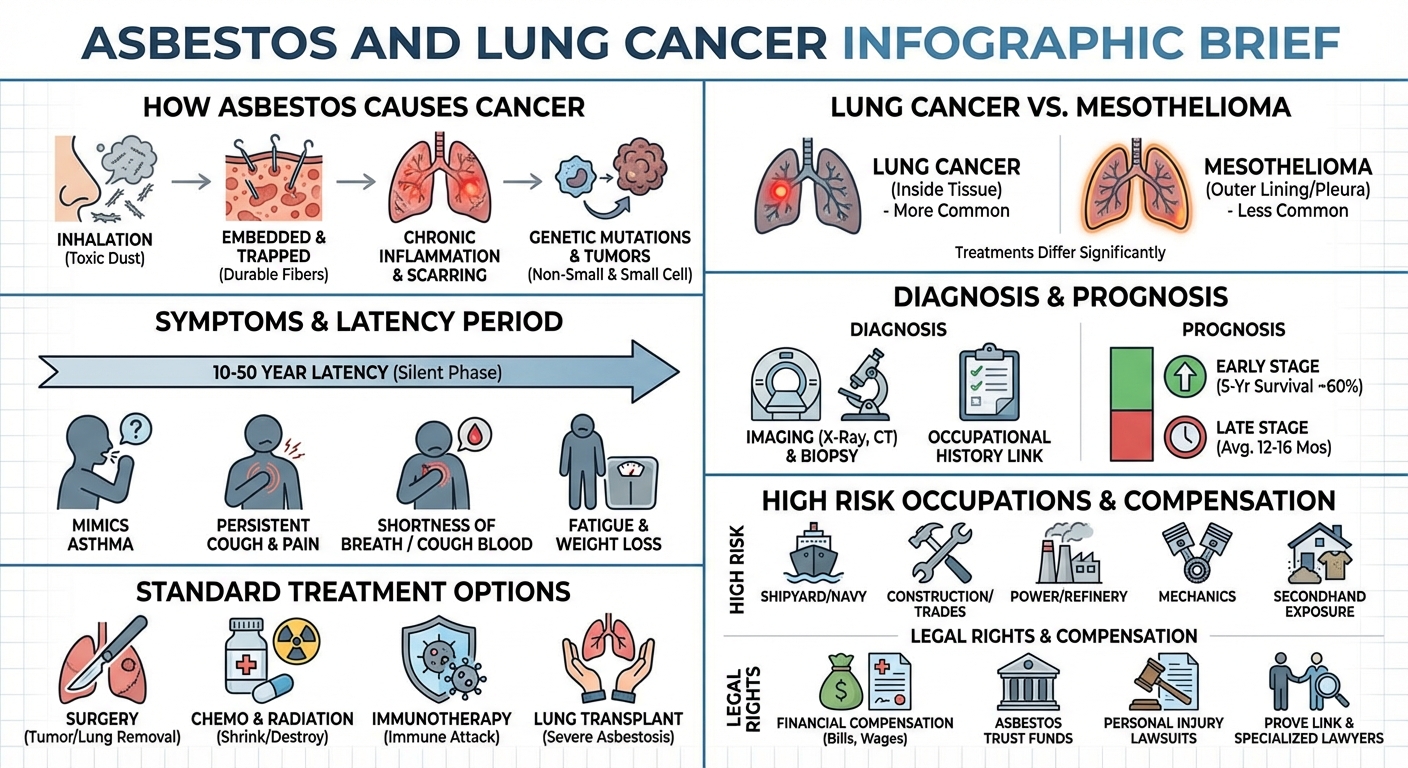
When asbestos-containing materials are disturbed, they release invisible, needle-like fibers into the air. If a person breathes in this toxic dust, the fibers travel down the respiratory tract and embed themselves deep into the lung tissue. Because asbestos is incredibly durable, the human body cannot dissolve or expel these fibers. Over decades, the constant irritation causes chronic inflammation, cellular damage, and genetic mutations that eventually trigger the uncontrolled growth of cancerous tumors.
Can the lungs remove asbestos?
No, the lungs cannot effectively remove asbestos fibers. Once inhaled, these microscopic, needle-like fibers become permanently trapped deep within the lung tissue. Over time, the body’s immune system tries to break them down but fails, leading to chronic inflammation, severe scarring, and eventually the cellular mutations that cause cancer.
Types of Lung Cancer Caused by Asbestos
Asbestos does not create a unique, standalone category of lung cancer. Instead, it acts as a powerful carcinogen that increases the risk of developing standard forms of the disease.
What kind of lung cancer do you get from asbestos?
Asbestos exposure is linked to all major histological types of lung cancer. The most common types you get from asbestos are non-small cell lung cancer—which includes adenocarcinoma and squamous cell carcinoma—and small cell lung cancer. The specific type depends on cellular mutations rather than the asbestos itself.
Asbestos Lung Cancer vs. Mesothelioma: Key Differences
While both are caused by asbestos, lung cancer and mesothelioma are distinct diseases:
- Location: Asbestos lung cancer develops inside the lung tissue itself. Mesothelioma develops in the pleura, which is the protective lining surrounding the lungs.
- Frequency: Asbestos-related lung cancer is far more common than pleural mesothelioma.
- Treatment: Because they form in different tissues, the surgical approaches and chemotherapy regimens for the two cancers differ significantly.
Symptoms and the Latency Period
One of the most dangerous aspects of asbestos-related diseases is how quietly they develop. Patients rarely show signs of illness immediately after exposure.
Early Warning Signs and Respiratory Symptoms
When symptoms finally do appear, they often mimic less serious respiratory conditions like asthma or bronchitis. Key warning signs include:
- A persistent, worsening cough
- Chest pain that intensifies with deep breathing or coughing
- Unexplained shortness of breath
- Coughing up blood (hemoptysis)
- Chronic fatigue and unexplained weight loss
The 10 to 50-Year Latency Rule
Asbestos-related lung cancer is characterized by a prolonged latency period. It typically takes anywhere from 10 to 50 years after the initial exposure for tumors to form and symptoms to manifest. This massive delay often makes it difficult for patients to immediately connect their current illness to a job they held decades ago.
How Doctors Diagnose Asbestos-Related Lung Cancer
Diagnosis usually begins with imaging tests, such as X-rays or CT scans, to locate tumors or signs of asbestos scarring (asbestosis). If a mass is found, doctors will perform a biopsy to test the tissue for cancer cells. A thorough occupational history is crucial during this phase; telling your doctor about past asbestos exposure ensures they screen for the right markers.
Prognosis, Life Expectancy, and Treatment Options
Receiving a lung cancer diagnosis is overwhelming, but understanding the prognosis and available medical interventions can help patients make informed decisions.
What is the life expectancy of asbestos lung cancer?
The life expectancy of asbestos lung cancer varies widely based on the stage at diagnosis. On average, patients diagnosed at an early stage have a 5-year survival rate of around 60 percent. However, if the cancer has spread before detection, the average life expectancy drops to roughly 12 to 16 months.
Standard Treatments: Surgery, Chemotherapy, and Immunotherapy
Treatment plans are highly individualized based on the cancer’s stage and the patient’s overall health:
- Surgery: If caught early, surgeons may remove the tumor, a lobe of the lung (lobectomy), or the entire lung (pneumonectomy).
- Chemotherapy and Radiation: Often used to shrink tumors before surgery or kill remaining cancer cells afterward.
- Immunotherapy: A newer class of drugs that helps the patient’s own immune system recognize and attack cancer cells.
Can a lung transplant cure asbestosis?
While a lung transplant cannot technically cure the systemic effects of asbestos exposure, it is the only definitive treatment for severe asbestosis. By replacing heavily scarred lungs with healthy donor lungs, a transplant can significantly improve breathing, restore lung function, and greatly extend the patient’s overall lifespan.
Who is at Risk? High-Exposure Occupations
While anyone exposed to asbestos is at risk, certain industries used the toxic mineral heavily throughout the 20th century.
Construction, Shipyard, and Industrial Workers
Before strict regulations were enacted in the 1980s, asbestos was a staple in American industry. The highest-risk occupations include:
- Shipyard workers and Navy veterans
- Construction workers, roofers, and insulators
- Power plant and refinery workers
- Auto mechanics (especially those working with brakes and clutches)
- Plumbers and pipefitters
The Danger of Secondhand Asbestos Exposure
You did not have to work directly with asbestos to be at risk. Many spouses and children developed lung cancer through secondhand exposure. This occurred when industrial workers unknowingly brought microscopic asbestos fibers home on their clothing, skin, hair, and tools, exposing their families during laundry or daily contact.
Legal Rights and Compensation for Asbestos Victims
Because the dangers of asbestos were known by manufacturers long before workers were warned, victims of asbestos-related lung cancer have strong legal rights to pursue financial compensation.
Asbestos Trust Funds vs. Personal Injury Lawsuits
There are two primary ways to recover damages:
- Asbestos Trust Funds: Many bankrupt asbestos companies were forced by courts to set aside billions of dollars in trust funds to compensate future victims. Claims can often be filed against these trusts without going to court.
- Personal Injury Lawsuits: If the companies responsible for your exposure are still in business, you can file a lawsuit to recover damages for medical bills, lost wages, and pain and suffering.
Proving the Link Between Your Occupation and Lung Cancer
To secure compensation, you must prove that your lung cancer is directly tied to asbestos exposure. This requires compiling medical records, pathology reports, employment history, and sometimes expert testimony to demonstrate that your specific occupational exposure was a substantial contributing factor to your illness.
How an Asbestos Exposure Lawyer Can Help
Navigating asbestos litigation is highly complex due to the decades-long latency period and the sheer number of corporate mergers and bankruptcies. An experienced asbestos exposure lawyer can investigate your work history, identify the specific asbestos products you handled, determine the liable parties, and fight to maximize your financial recovery while you focus on your health.