

Table of contents
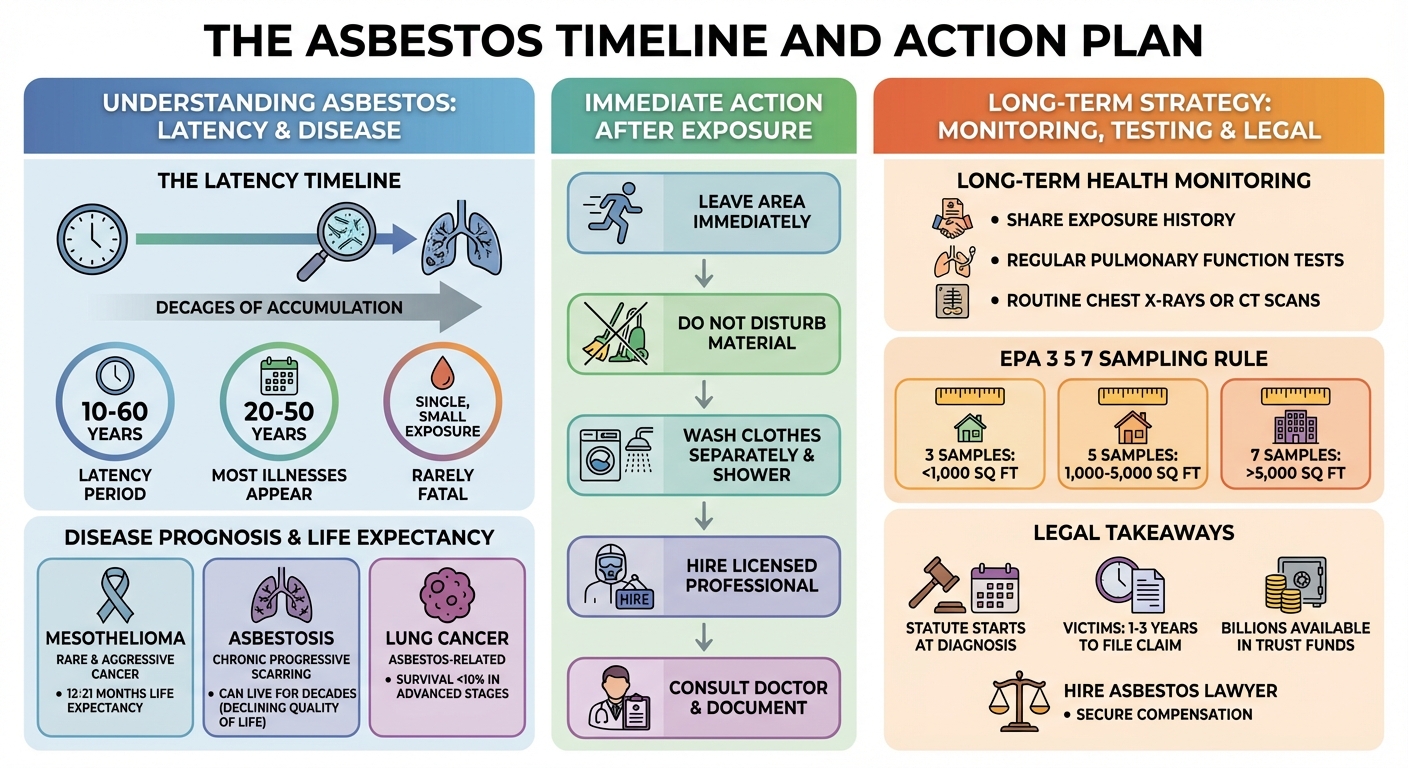
Asbestos does not kill immediately. It takes between 10 and 60 years after exposure for fatal asbestos-related diseases, such as mesothelioma or asbestosis, to develop. However, once a patient is diagnosed with an aggressive asbestos disease like mesothelioma, life expectancy is typically reduced to 12 to 21 months.
The Asbestos Timeline: How Long Does It Take to Become Fatal?
Asbestos is a silent danger. Unlike acute toxins that cause immediate harm, asbestos fibers cause microscopic damage that accumulates over decades. If you have been exposed to asbestos, understanding the timeline from initial exposure to potential illness is crucial for your health and peace of mind.
Understanding the 10 to 60-Year Latency Period
When microscopic asbestos fibers are inhaled or ingested, they can become permanently lodged in the lining of the lungs, abdomen, or heart. The body cannot easily break down or expel these fibers. Over time, they cause chronic inflammation, scarring, and genetic mutations. This slow biological process is known as the latency period. For most asbestos-related diseases, the latency period ranges from 10 to 60 years, with the majority of cases developing 20 to 50 years after the initial exposure.
Life Expectancy After an Asbestos Disease Diagnosis
While it takes decades for an asbestos-related disease to develop, the timeline accelerates dramatically once symptoms appear and a diagnosis is made. The life expectancy after diagnosis depends entirely on the specific disease, the stage at which it is caught, and the patient’s overall health. Some conditions are chronic but manageable, while others are rapidly fatal.
How quickly can you get sick from asbestos?
You do not get sick immediately. It takes 10 to 50 years after your initial exposure for asbestos-related diseases to develop and show symptoms. This long delay is known as the latency period. Short-term symptoms like coughing immediately after exposure are usually due to general dust, not asbestos disease.
Will a small amount of asbestos kill you?
While there is no universally safe level of asbestos exposure, a single, small exposure is highly unlikely to kill you. The risk of developing fatal diseases like mesothelioma or asbestosis increases significantly with the duration, frequency, and concentration of the exposure over time.
Life Expectancy by Asbestos-Related Disease
Because asbestos exposure can trigger several different illnesses, the prognosis varies widely. Here is a breakdown of the most common asbestos-related diseases and their typical life expectancies.
Mesothelioma: Progression and Survival Rates
Mesothelioma is a rare, aggressive cancer that primarily affects the pleural lining of the lungs. Because its early symptoms mimic common respiratory issues, it is often diagnosed in its later stages. The average life expectancy for a mesothelioma patient is 12 to 21 months after diagnosis. However, early detection and advanced treatments like surgery, chemotherapy, and immunotherapy can extend survival for some patients.
Asbestosis: Long-Term Lung Scarring
Asbestosis is a chronic, non-cancerous respiratory disease caused by severe scarring of the lung tissue. While it is not immediately fatal, it is a progressive disease that worsens over time. Asbestosis restricts breathing and forces the heart to work harder, which can eventually lead to fatal complications like heart failure. Patients can live for decades with asbestosis, but their quality of life is often severely impacted.
Asbestos-Related Lung Cancer
Asbestos exposure significantly increases the risk of developing lung cancer, especially for individuals who also smoke. The life expectancy for asbestos-related lung cancer depends heavily on the stage at diagnosis. If caught early, localized lung cancer has a much higher survival rate. However, advanced-stage lung cancer has a five-year survival rate of less than 10%.
What to do if I breathed in asbestos?
If you suspect you breathed in asbestos, immediately leave the area and avoid disturbing the material further. Wash your clothes separately and shower to remove fibers. You should then consult a doctor to document the exposure in your medical records and discuss a long-term monitoring plan.
Immediate Steps After Accidental Exposure
Do not panic. A single exposure event rarely leads to disease. Ensure the contaminated area is sealed off and contact a licensed asbestos abatement professional to handle any cleanup. Do not attempt to sweep or vacuum the material, as this will release more fibers into the air.
Long-Term Medical Monitoring and Screenings
Because of the long latency period, proactive medical monitoring is your best defense. Inform your primary care physician about your exposure history. They will likely recommend regular pulmonary function tests and chest X-rays or CT scans to monitor your lungs for early signs of scarring or tumors.
What is the 3 5 7 rule for asbestos sampling?
The 3-5-7 rule refers to EPA guidelines for taking core samples of surfacing materials to test for asbestos. It requires taking 3 samples from areas less than 1,000 square feet, 5 samples for areas between 1,000 and 5,000 square feet, and 7 samples for areas larger than 5,000 square feet.
Protecting Your Health and Legal Rights After Exposure
If you or a loved one has been diagnosed with an asbestos-related disease, you have legal rights. Many companies knew about the dangers of asbestos but failed to warn their workers, leading to billions of dollars being set aside in asbestos trust funds for victims.
Statute of Limitations for Asbestos Claims
Because asbestos diseases take decades to develop, the law uses a “discovery rule.” This means the statute of limitations (the legal time limit to file a lawsuit) begins on the date of your diagnosis, not the date of your exposure. In most states, you have between one and three years from your diagnosis date to file a claim.
Why You Need an Asbestos Injury Lawyer
Navigating an asbestos claim requires specialized legal expertise. An experienced asbestos injury lawyer can help you track down old employment records, identify the specific asbestos products you were exposed to, and file claims against responsible companies or bankruptcy trust funds. This compensation can cover mounting medical bills, lost wages, and provide financial security for your family.