

Table of contents
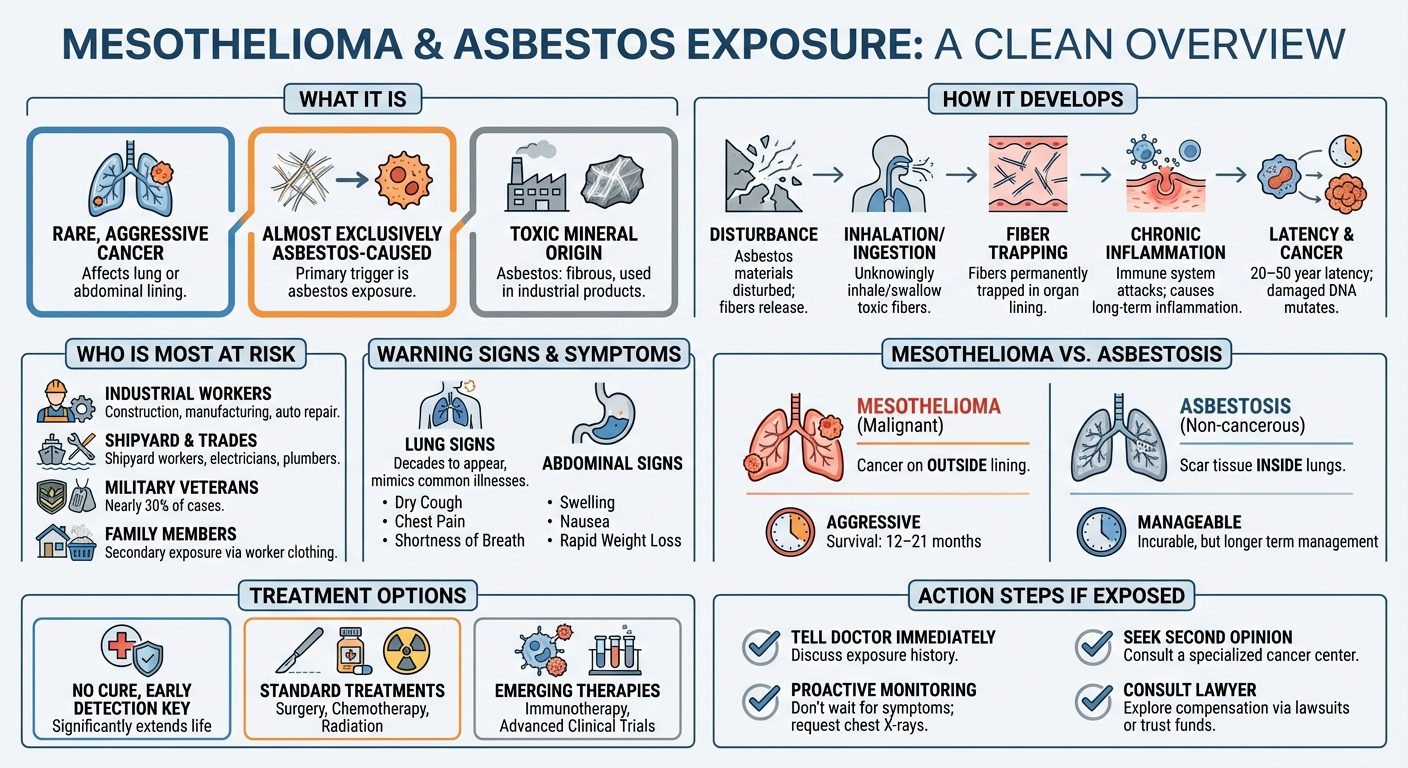
Mesothelioma is a rare, aggressive cancer almost exclusively caused by exposure to asbestos. When microscopic asbestos fibers are inhaled or ingested, they become trapped in the lining of the lungs or abdomen. Over 20 to 50 years, these fibers cause chronic inflammation and genetic mutations that lead to mesothelioma.
Understanding the Link Between Asbestos and Mesothelioma
The connection between asbestos and mesothelioma is one of the most well-documented causal relationships in modern medicine. For decades, millions of workers and consumers were unknowingly exposed to toxic fibers that would later threaten their lives. Understanding how this exposure leads to disease is the first step in navigating a diagnosis or managing your health risks.
What is Asbestos?
Asbestos is a group of naturally occurring, fibrous minerals known for their incredible heat resistance, tensile strength, and insulating properties. Throughout the 20th century, asbestos was heavily mined and woven into thousands of commercial, industrial, and household products, including insulation, roofing shingles, brake pads, and cement. While highly effective for construction and manufacturing, asbestos is highly toxic to human tissue when its microscopic fibers become airborne.
What is Mesothelioma?
Mesothelioma is a rare, aggressive form of cancer that develops in the mesothelium—the thin layer of tissue that covers the majority of your internal organs. The most common form is pleural mesothelioma, which affects the lining of the lungs. Less commonly, it can develop in the lining of the abdomen (peritoneal mesothelioma) or the heart (pericardial mesothelioma). Asbestos exposure is the only definitively known cause of this disease.
How does asbestos cause mesothelioma?
Asbestos causes mesothelioma when microscopic fibers are inhaled or swallowed, becoming permanently lodged in the protective lining of the lungs, abdomen, or heart. Over decades, these trapped fibers cause chronic inflammation, scarring, and genetic mutations in the cells, which eventually develop into cancerous mesothelioma tumors.
Inhalation and Ingestion of Microscopic Fibers
When asbestos-containing materials are disturbed, damaged, or deteriorate over time, they release invisible, needle-like fibers into the air. If a person breathes in this toxic dust, the fibers travel down the respiratory tract and embed themselves deeply into the pleural lining of the lungs. Alternatively, if asbestos dust is swallowed—often after clearing the respiratory tract—the fibers can travel to the digestive system and embed in the peritoneal lining of the abdomen.
Cellular Damage and Genetic Mutation Over Time
The human body cannot break down or expel asbestos fibers. Once trapped, they act as a constant irritant. The immune system repeatedly attempts to destroy the foreign bodies, leading to chronic inflammation and the formation of scar tissue. Over a period of 20 to 50 years, this relentless cellular irritation damages the DNA of the mesothelial cells, causing them to mutate, divide uncontrollably, and form malignant tumors.
Who is at Risk? Common Sources of Asbestos Exposure
Because asbestos was used so widely, exposure occurred across many different environments. However, certain groups face a significantly higher risk of developing mesothelioma.
High-Risk Occupations (Construction, Shipyards, Manufacturing)
Occupational exposure is the leading cause of mesothelioma. Workers who handled asbestos directly or worked in poorly ventilated areas where asbestos dust was present are at the highest risk. High-risk trades include:
- Construction workers and roofers
- Shipyard workers and naval architects
- Factory and manufacturing workers
- Electricians, plumbers, and pipefitters
- Auto mechanics (specifically working with brakes and clutches)
Secondhand and Environmental Exposure
You did not have to work directly with asbestos to be exposed. Many spouses and children of industrial workers developed mesothelioma through “take-home” exposure. Workers would unknowingly bring asbestos dust home on their clothes, skin, and hair, exposing their families during laundry or physical contact. Additionally, people living near asbestos mines or processing plants faced environmental exposure from airborne dust.
Military Veterans and Asbestos
Military veterans, particularly those who served in the U.S. Navy between the 1930s and 1970s, represent nearly 30% of all mesothelioma cases. Asbestos was heavily used in military vessels, barracks, and vehicles for fireproofing and insulation. Veterans who spent time in confined ship compartments often inhaled high concentrations of asbestos fibers.
How long can you live with asbestos in your lungs?
You can live with asbestos fibers in your lungs for your entire life without immediate issues, as the latency period for asbestos-related diseases is typically 20 to 50 years. However, once these dormant fibers trigger mesothelioma or asbestosis, life expectancy drops significantly depending on the disease stage.
The Latency Period of Asbestos-Related Diseases
The “latency period” refers to the gap between the initial exposure to asbestos and the onset of disease symptoms. Unlike acute toxins that cause immediate illness, asbestos is a slow-acting carcinogen. It is incredibly common for a worker exposed in the 1970s to only begin showing signs of mesothelioma today.
Why Symptoms Take Decades to Appear
Mesothelioma tumors grow very slowly in their early stages. Because the mesothelium is a flexible lining, tumors can expand for years without putting enough pressure on the lungs or organs to cause noticeable pain or breathing issues. By the time the tumors are large enough to cause symptoms, the cancer has typically advanced to later stages.
Recognizing the Symptoms of Mesothelioma
Because mesothelioma symptoms mimic those of common, less severe respiratory or gastrointestinal conditions, misdiagnosis is frequent. Knowing the specific warning signs is crucial for anyone with a history of asbestos exposure.
Pleural Mesothelioma Symptoms (Lungs)
Pleural mesothelioma affects the chest cavity. Early symptoms are often mistaken for asthma, pneumonia, or COPD. Look out for:
- Persistent, dry cough
- Shortness of breath (dyspnea)
- Chest pain beneath the rib cage
- Unexplained weight loss
- Fluid buildup in the chest (pleural effusion)
Peritoneal Mesothelioma Symptoms (Abdomen)
Peritoneal mesothelioma affects the abdominal lining and often presents with digestive issues. Symptoms include:
- Abdominal pain and swelling
- Nausea or vomiting
- Changes in bowel habits
- Feeling full after eating very little
- Unexplained weight loss
When to See a Doctor
If you have a known history of asbestos exposure and experience any of these symptoms for more than a few weeks, consult a physician immediately. Be sure to explicitly mention your asbestos exposure history, as this will prompt the doctor to order specific imaging tests, such as a CT scan or X-ray, rather than treating it as a routine illness.
Asbestosis vs. Mesothelioma: Key Differences
While both conditions are caused by asbestos exposure and affect the lungs, they are fundamentally different diseases with different treatments.
Non-Cancerous vs. Cancerous Conditions
Asbestosis is a chronic, non-cancerous respiratory disease. It occurs when inhaled asbestos fibers cause severe scarring of the lung tissue itself, making the lungs stiff and unable to expand fully. Mesothelioma, on the other hand, is a malignant cancer that attacks the lining outside the lungs, rather than the lung tissue itself.
Differences in Treatment and Prognosis
| Feature | Asbestosis | Mesothelioma |
|---|---|---|
| Disease Type | Non-cancerous scarring (fibrosis) | Malignant cancer |
| Primary Location | Inside the lung tissue | Lining of the lungs or abdomen |
| Prognosis | Incurable, but manageable for years | Aggressive, typically 12-21 months |
| Treatment Focus | Symptom relief, oxygen therapy | Surgery, chemotherapy, radiation |
What is the survival rate for mesothelioma?
The overall survival rate for mesothelioma is generally low, with an average life expectancy of 12 to 21 months after diagnosis. Approximately 10% of patients live five years or longer. Survival rates depend heavily on the cancer’s stage, tumor location, cell type, and the patient’s overall health.
Factors Impacting Life Expectancy
No two mesothelioma diagnoses are exactly alike. Several variables dictate a patient’s prognosis:
- Cell Type: Epithelioid cells respond better to treatment than sarcomatoid or biphasic cells.
- Patient Age and Health: Younger, healthier patients can withstand aggressive surgeries and chemotherapy.
- Tumor Location: Peritoneal mesothelioma generally has slightly higher survival rates than pleural mesothelioma.
Average Survival Timelines by Stage
Catching the disease early is the most critical factor in survival. Patients diagnosed at Stage 1 or Stage 2, where the cancer is localized, have a median life expectancy of 19 to 21 months, with many living much longer. Patients diagnosed at Stage 3 or Stage 4, where the cancer has spread to lymph nodes or distant organs, typically have a life expectancy of 12 months or less.
Can mesothelioma be cured if caught early?
Currently, there is no definitive cure for mesothelioma, even if caught early. However, early-stage diagnosis allows for aggressive treatments like tumor-removing surgeries, chemotherapy, and radiation. These treatments can significantly extend a patient’s life expectancy, reduce symptoms, and occasionally lead to long-term remission.
Early-Stage Treatment Options (Surgery, Chemo, Radiation)
When mesothelioma is diagnosed in Stages 1 or 2, doctors often employ a multimodal treatment approach. This may involve:
- Surgery: Procedures like an extrapleural pneumonectomy (EPP) or pleurectomy with decortication (P/D) aim to remove all visible tumors.
- Chemotherapy: Drugs are used to shrink tumors before surgery or kill remaining cancer cells afterward.
- Radiation: Targeted beams help prevent tumors from seeding and spreading along surgical incisions.
Emerging Therapies and Clinical Trials
While a traditional cure does not exist, medical advancements are improving outcomes. Immunotherapy, which trains the body’s immune system to attack mesothelioma cells, has recently become a first-line treatment option. Patients are also encouraged to participate in clinical trials testing gene therapy, targeted therapy, and novel drug combinations.
What to Do If You Were Exposed to Asbestos
Discovering that you were exposed to asbestos can be frightening, but taking proactive steps can protect both your health and your family’s future.
Proactive Medical Monitoring
Do not wait for symptoms to appear. If you know you were exposed to asbestos, inform your primary care physician. Request regular pulmonary function tests and chest X-rays. Early detection is the most powerful tool you have against asbestos-related diseases.
Protecting Your Legal and Financial Rights
Because asbestos manufacturers knew about the dangers of their products and hid them from the public, victims of mesothelioma have strong legal rights. If diagnosed, you may be entitled to substantial compensation to cover medical bills, lost wages, and secure your family’s financial future. Exploring a mesothelioma lawsuit or filing claims with asbestos trust funds is a crucial step following a diagnosis.
Connecting with Specialists and Legal Advocates
Mesothelioma is incredibly rare, meaning most general oncologists have never treated a case. It is vital to seek a second opinion from a dedicated mesothelioma specialist at a comprehensive cancer center. Simultaneously, consulting with an experienced mesothelioma lawyer can help you understand your legal options and ensure you receive the support you deserve during a difficult time.