

Table of contents
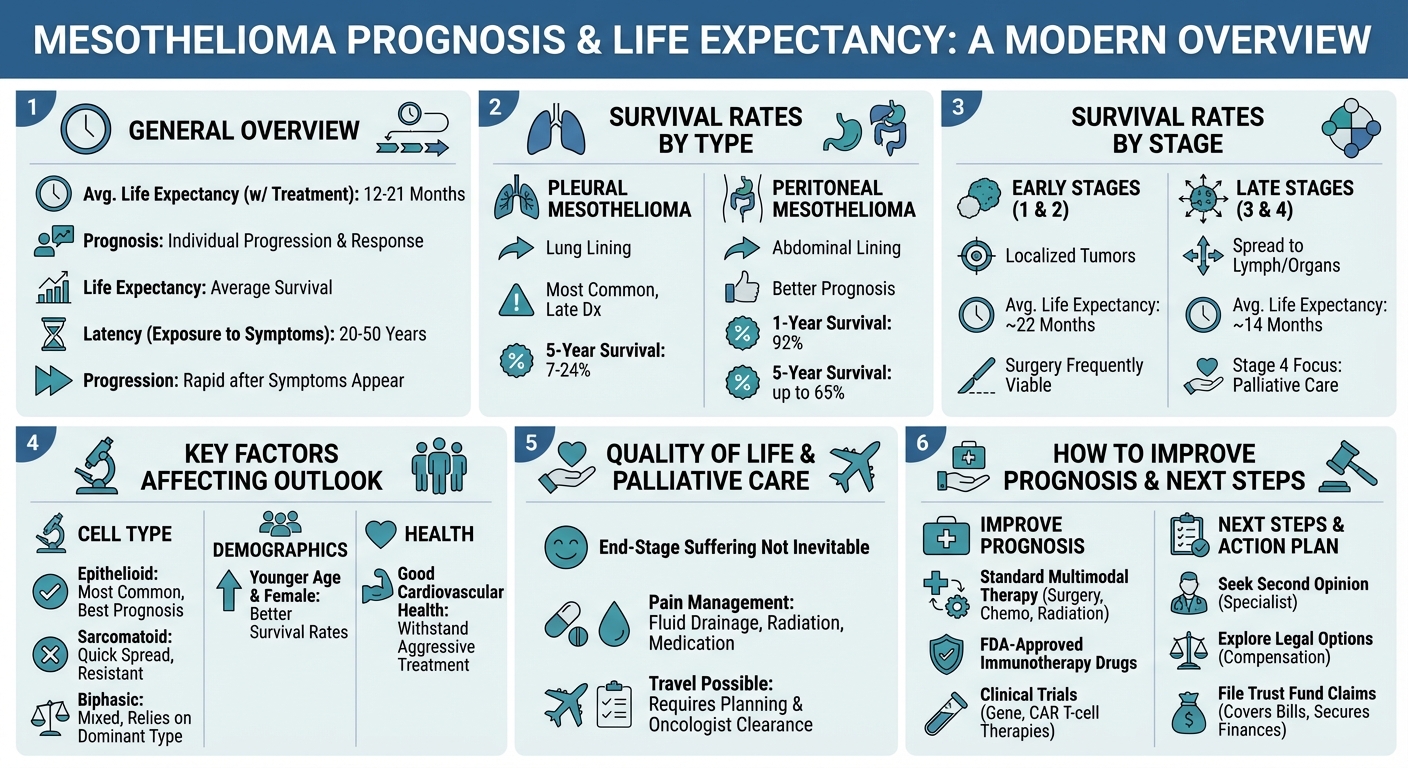
The average mesothelioma prognosis is 12 to 21 months with treatment. However, life expectancy varies widely based on the cancer’s type, stage, and cell histology. Patients with early-stage peritoneal mesothelioma often live several years, while late-stage pleural mesothelioma has a shorter survival time.
Understanding Mesothelioma Prognosis vs. Life Expectancy
When doctors discuss your mesothelioma outlook, they use two distinct terms: prognosis and life expectancy. A prognosis is your doctor’s overall prediction of how the disease will progress, including your potential response to treatment and symptom development. Life expectancy refers to the average amount of time patients with similar diagnoses live. While the average life expectancy for mesothelioma is 12 to 21 months with treatment, your individual prognosis is unique. Many patients outlive these averages by responding well to aggressive therapies or clinical trials.
Average Mesothelioma Survival Rates by Type
The location of the tumors plays a massive role in your overall outlook. Mesothelioma is primarily categorized into two main types, each with vastly different survival statistics.
Pleural Mesothelioma Survival Rates
Pleural mesothelioma affects the lining of the lungs and is the most common form of the disease. Because it is often diagnosed in later stages, the prognosis is generally guarded. The American Cancer Society notes that the five-year survival rate for pleural mesothelioma ranges from 7% to 24%, depending on how early the cancer is caught and treated.
Peritoneal Mesothelioma Survival Rates
Peritoneal mesothelioma develops in the lining of the abdomen. This type has a significantly better prognosis, largely due to the effectiveness of cytoreductive surgery combined with heated intraperitoneal chemotherapy (HIPEC). For peritoneal patients, the one-year survival rate is approximately 92%, and the five-year survival rate reaches up to 65%.
How quickly does mesothelioma progress?
Mesothelioma progresses rapidly once symptoms finally appear, often advancing from early to late stages within just a few months. However, the initial latency period between asbestos exposure and tumor development can take 20 to 50 years. Progression speed heavily depends on the specific cell type and treatment plan.
Mesothelioma Prognosis by Stage
Cancer staging is one of the most reliable indicators of life expectancy. Staging applies primarily to pleural mesothelioma, as peritoneal mesothelioma is rarely staged using the traditional TNM system.
Early-Stage (Stages 1 & 2) vs. Late-Stage (Stages 3 & 4)
Patients diagnosed with early-stage mesothelioma (Stages 1 and 2) have tumors localized to one side of the body. They are often candidates for life-extending surgeries, resulting in an average life expectancy of around 22 months. Conversely, late-stage mesothelioma (Stages 3 and 4) indicates the cancer has spread to lymph nodes or distant organs. Surgery is rarely an option, and the average life expectancy drops to roughly 14 months.
What is the end stage of mesothelioma?
The end stage of mesothelioma, known as Stage 4, occurs when the cancer has spread from the original lining to distant organs, bones, or the brain. Tumors can no longer be surgically removed. Treatments at this stage focus entirely on palliative care to relieve symptoms and maximize comfort.
Key Factors That Affect Your Outlook
Beyond stage and location, several biological and demographic factors influence a patient’s prognosis.
Cell Type: Epithelioid, Sarcomatoid, and Biphasic
- Epithelioid: The most common and responsive to treatment, offering the best prognosis.
- Sarcomatoid: Highly aggressive cells that spread quickly and resist standard therapies, resulting in a poorer outlook.
- Biphasic: A mix of both cell types. The prognosis depends on which cell type is dominant.
Patient Age, Gender, and Overall Health
Younger patients and women generally have better survival rates. A strong immune system, good cardiovascular health, and the absence of other underlying conditions (like heart disease or severe COPD) allow patients to withstand aggressive treatments like surgery and chemotherapy.
Quality of Life and Symptom Management
A prognosis isn’t just about how long you will live; it is also about how well you will live. Managing symptoms like shortness of breath, chest pain, and fatigue is a critical part of mesothelioma care.
Is dying of mesothelioma painful?
Dying of mesothelioma can cause pain as tumors press against nerves, bones, or organs, but severe suffering is not inevitable. Medical teams utilize advanced palliative care, including fluid drainage, targeted radiation, and prescription pain medications, to effectively manage discomfort and maintain peace during a patient’s final days.
Traveling and Lifestyle Adjustments
Many patients want to travel to see loved ones or visit specialized cancer centers after a diagnosis. While travel is possible, it requires careful planning.
Can you fly with mesothelioma?
You can generally fly with mesothelioma, but you must get clearance from your oncologist first. Commercial airplane cabin pressure and lower oxygen levels can severely worsen breathing difficulties, particularly for pleural mesothelioma patients. You may require supplemental oxygen, medical documentation, and specialized travel insurance before flying.
How to Improve Your Prognosis
Receiving a mesothelioma diagnosis is overwhelming, but proactive steps can improve your outlook and extend your life expectancy.
Standard Treatments and Palliative Care
Multimodal therapy—a combination of surgery, chemotherapy, and radiation—is the gold standard for extending life in early-stage patients. For those in later stages, palliative procedures like thoracentesis (draining fluid from the lungs) can drastically improve breathing and daily comfort.
Clinical Trials and Emerging Therapies
Immunotherapy has revolutionized mesothelioma treatment, with drugs like Opdivo and Yervoy now FDA-approved for certain patients. Enrolling in clinical trials can provide access to cutting-edge treatments like gene therapy, CAR T-cell therapy, and photodynamic therapy before they are widely available.
Next Steps After Receiving Your Prognosis
Taking immediate, organized action following your diagnosis can protect both your health and your family’s future.
Seeking a Second Opinion
Mesothelioma is incredibly rare. General oncologists may misdiagnose the stage or cell type. Always seek a second opinion from a dedicated mesothelioma specialist at a comprehensive cancer center to ensure you receive the most accurate prognosis and aggressive treatment plan possible.
Securing Financial Compensation for Your Family
Mesothelioma treatments are expensive, and the disease is almost exclusively caused by corporate negligence regarding asbestos exposure. Exploring your legal options for mesothelioma compensation can help cover medical bills, travel costs to specialists, and provide financial security for your loved ones. Filing a claim does not require suing your former employer directly, as many victims receive payouts from established asbestos trust funds.