

Table of contents
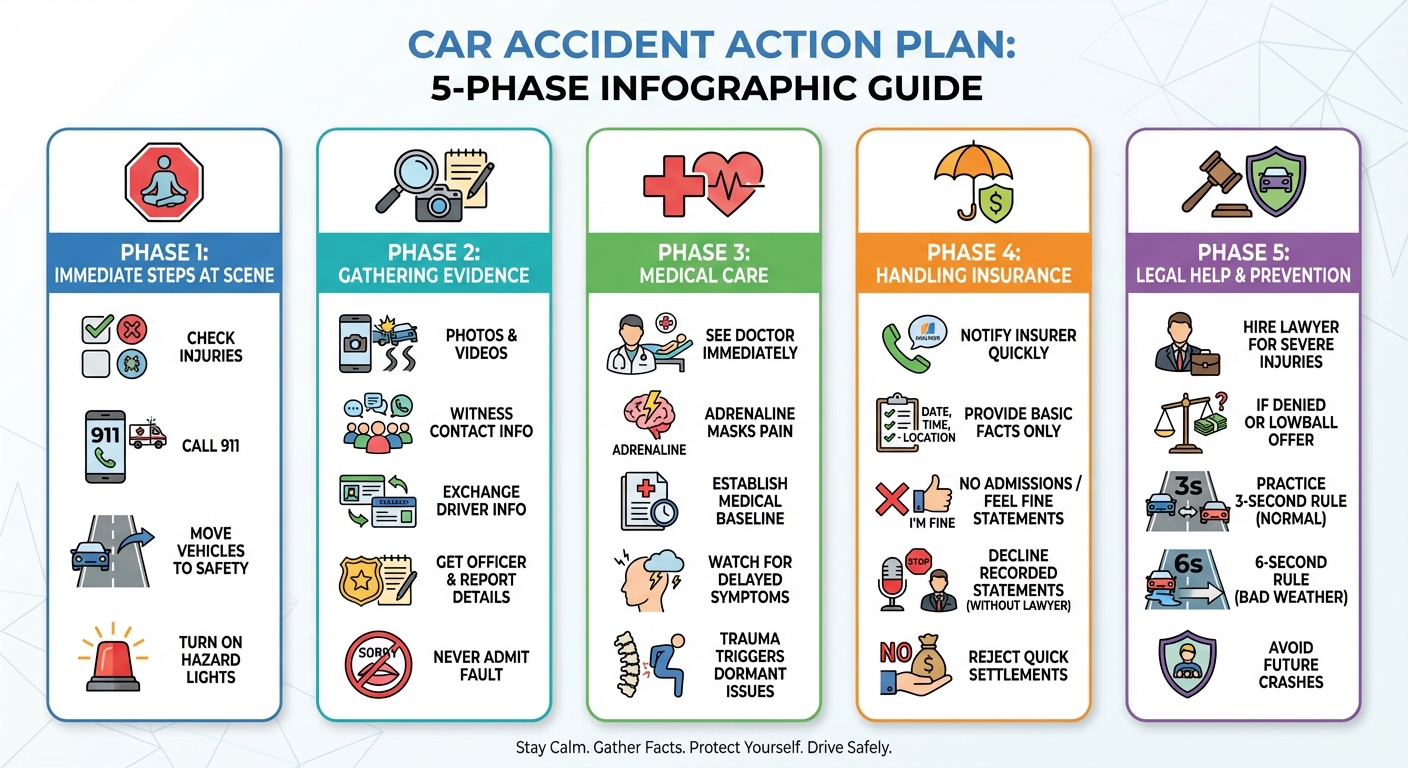
If you are in a car accident, first check yourself and others for injuries, then call 911. Move your vehicle to a safe location if possible. Exchange contact and insurance information with the other driver, document the scene with photos, and seek medical attention immediately, even if you feel fine.
Immediate Steps: What to Do at the Scene of a Car Accident
What is the first thing you should do in a car accident?
The very first thing you should do in a car accident is stop your vehicle, stay calm, and check yourself and your passengers for injuries. If anyone is hurt, call 911 immediately to request medical assistance and police presence before doing anything else.
Assess Injuries and Call 911 Immediately
Once you have checked for immediate physical harm, ensure first responders are on the way. Even in minor collisions, having a police officer present is highly recommended. They will secure the scene, direct traffic, and create an official record of the incident.
Move Vehicles to Safety (If Possible and Legal)
If there are no severe injuries and your vehicle is drivable, steer it to the shoulder or a nearby parking lot. Leaving cars in the middle of a busy roadway increases the risk of secondary pile-ups. Turn on your hazard lights to warn oncoming traffic.
Gathering Evidence to Protect Your Claim
Documenting the Scene: Photos, Videos, and Witnesses
Use your smartphone to capture wide-angle shots of the entire crash site, close-ups of vehicle damage, skid marks, and traffic signs. If bystanders saw the crash, politely ask for their names and phone numbers. Independent witness testimony is incredibly valuable if fault is later disputed.
Exchanging Information with the Other Driver
Keep interactions brief and polite. You need to collect the other driver’s full name, phone number, insurance company, policy number, and license plate number. Do not discuss whose fault the crash was or apologize for the incident.
The Importance of the Official Police Report
Insurance companies rely heavily on the responding officer’s crash report. This document contains objective details, weather conditions, and initial fault assessments. Always request the officer’s name, badge number, and the report identification number so you can obtain a copy later.
Medical Care and Understanding Crash Injuries
Why Immediate Medical Evaluation is Critical (Even if You Feel Fine)
Adrenaline masks pain. You might walk away from a crash feeling completely normal, only to experience severe stiffness or neurological symptoms days later. Seeing a doctor immediately establishes a medical baseline and links any injuries directly to the accident.
Can a car accident cause spinal stenosis?
While a car accident does not typically cause the underlying bone degeneration associated with spinal stenosis, the blunt force trauma can accelerate the condition or trigger dormant symptoms. The impact can cause herniated discs or spinal inflammation, severely compressing nerves and causing immediate, intense pain.
Watching for Delayed Symptoms
Pay close attention to your body in the weeks following a collision. Symptoms like persistent headaches, dizziness, numbness in your extremities, or neck stiffness can indicate concussions, whiplash, or soft tissue damage that requires specialized treatment.
Navigating the Insurance Process Safely
Reporting the Crash to Your Insurance Company
Notify your auto insurer about the accident as soon as possible to comply with your policy’s reporting deadlines. Stick strictly to the basic facts: the date, time, location, and the parties involved. Do not offer unsolicited opinions.
What not to say during an insurance claim?
During an insurance claim, never say ‘I am sorry,’ ‘I think it was my fault,’ or ‘I feel fine.’ Avoid guessing speeds or distances, and do not agree to a quick settlement offer before fully understanding the extent of your medical injuries and vehicle damage.
Avoiding the Recorded Statement Trap
Insurance adjusters often request a recorded statement shortly after the crash. They are trained to ask leading questions that minimize your claim. You are generally not legally obligated to provide a recorded statement to the other driver’s insurance company without an attorney present.
Defensive Driving: Avoiding the Next Accident
What is the 3/6 second rule?
The 3/6 second rule is a defensive driving guideline for maintaining a safe following distance. You should leave at least 3 seconds of space between your car and the vehicle ahead under normal conditions, and increase it to 6 seconds during rain, fog, or heavy traffic.
Maintaining Safe Following Distances
Rear-end collisions are among the most common types of accidents. By adhering to the 3/6 second rule, you give yourself adequate reaction time to brake safely if the driver in front of you suddenly stops or swerves.
When Should You Hire a Car Accident Lawyer?
Signs You Need Legal Representation
Consider hiring a personal injury attorney if your accident resulted in severe injuries, missed work, or if the insurance company is denying liability. A lawyer will handle aggressive adjusters, calculate your total damages, and gather the necessary evidence to build a strong case.
Protecting Your Rights When Settlement Fails
If an insurance company refuses to offer a fair settlement that covers your medical bills and property damage, your attorney can file a lawsuit. Having legal representation ensures you are prepared for litigation and protects you from accepting lowball offers.