

Table of contents
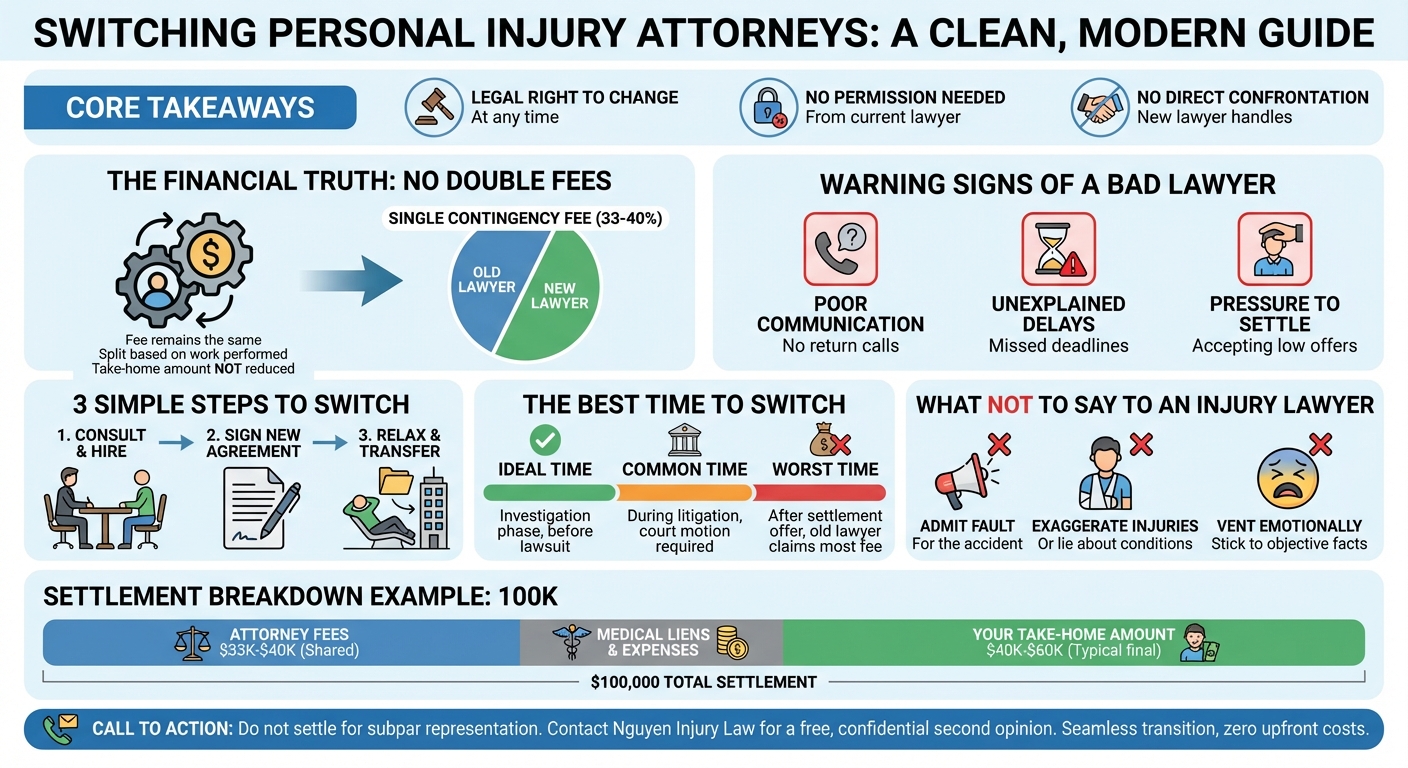
Yes, you can switch attorneys in a personal injury case at almost any time. You have the absolute legal right to change representation if you are dissatisfied. Furthermore, you typically will not pay double fees; your new and old lawyers will split the standard contingency fee based on the work performed.
Can I Switch Attorneys in a Personal Injury Case? (The Short Answer)
Yes, you can. If you are unhappy with the way your claim is being handled, you have the absolute legal right to change representation at almost any time during your case.
Your Legal Right to Change Representation
When you hire a personal injury lawyer, they work for you. You are the client, and you hold the power to terminate the attorney-client relationship if your lawyer is not meeting expectations. Whether your case is in the early investigation stages or a lawsuit has already been filed, Texas law protects your right to seek better legal counsel.
Why You Do Not Need Your Current Lawyer’s Permission
Many clients mistakenly believe they are “locked in” once they sign a contract. This is false. You do not need to ask your current lawyer for permission to leave, nor do you have to confront them directly. Once you hire a new attorney, they will handle the legal and administrative steps required to formally dismiss your previous counsel.
Will I Have to Pay Two Lawyers if I Switch?
The most common reason injured victims stay with a bad lawyer is the fear of paying double attorney fees. Fortunately, this is a misconception.
The Myth of Paying Double Fees
Switching personal injury lawyers does not mean you will pay two separate contingency fees out of your settlement. The total percentage deducted from your final compensation (typically 33% to 40%) remains exactly the same. The only difference is how that single fee is divided behind the scenes.
How Contingency Fees Are Split Between Lawyers
When your case resolves, your new lawyer and your former lawyer will divide the standard contingency fee. This split is based on the amount of work each firm contributed to the case. You are not responsible for mediating this split; the attorneys will negotiate it between themselves or have a judge decide.
Understanding Attorney Liens and Quantum Meruit
Your previous lawyer will likely place an “attorney’s lien” on your case file. Under the legal principle of quantum meruit (meaning “as much as is deserved”), they are entitled to compensation for the reasonable value of the services they already provided, plus reimbursement for any out-of-pocket expenses (like medical record fees or court filing costs). This amount is paid out of the final attorney fee portion of your settlement, not out of your pocket.
How to know when a lawyer is bad?
You can know when a lawyer is bad if they consistently fail to communicate, miss important legal deadlines, or pressure you into accepting a lowball settlement offer. A bad attorney may also dismiss your concerns, refuse to explain their case strategy, or leave you completely in the dark regarding your case status.
Lack of Communication and Unreturned Calls
If weeks go by without an update, or if you can only ever speak to a paralegal who doesn’t know the details of your case, your attorney is failing in their duty to communicate.
Missed Deadlines and Unexplained Delays
Personal injury cases are bound by strict statutes of limitations and court deadlines. Unexplained delays or missed filings are massive red flags that your case is not a priority.
Pressuring You to Accept a Lowball Settlement
A lawyer who pushes you to accept the very first offer from an insurance company—without fighting for maximum compensation—is likely running a “settlement mill” and prioritizing quick turnarounds over your financial recovery.
How to switch personal injury attorney?
To switch your personal injury attorney, you should first consult and hire a new lawyer before firing your current one. Once you sign a representation agreement with the new firm, they will draft a termination letter, notify your former attorney, and handle the complete transfer of your case files.
Step 1: Consult and Hire Your New Attorney First
Never fire your current lawyer before securing a new one. Doing so leaves your case unprotected and vulnerable to missed deadlines. Seek out a free consultation with a new firm to ensure they are willing to take over your claim.
Step 2: Sign the New Representation Agreement
Once you find an attorney you trust, review and sign their contingency fee agreement. This legally authorizes them to act on your behalf.
Step 3: Let Your New Lawyer Handle the Breakup and File Transfer
You do not have to make an awkward phone call to your old lawyer. Your new attorney will send a formal “stop work” letter, notify the insurance companies and the court, and request your complete case file.
When Is the Best Time to Change Lawyers?
While you can switch at almost any time, the timing of your transition can impact the complexity of the switch.
Switching During the Investigation Phase
This is the easiest and most ideal time to switch. If a lawsuit has not yet been filed and the lawyer is still gathering medical records, the transition is seamless and the former lawyer’s lien will be minimal.
Switching After a Lawsuit is Filed (Litigation)
If your case is already in court, switching is still highly common, but it requires your new lawyer to file a “Motion for Substitution of Counsel” with the judge. Judges routinely grant these motions unless the trial date is imminent.
Why You Shouldn’t Wait Until a Settlement Offer is Made
If your current lawyer has already secured a settlement offer, it becomes much harder to switch. The first lawyer can claim they did all the work to get that offer, entitling them to the majority of the fee. If you are unhappy, make the switch before negotiations finalize.
What not to say to an injury lawyer?
When speaking to an injury lawyer, do not admit fault, exaggerate your injuries, or lie about your medical history. Additionally, avoid discussing unverified gossip about your previous attorney. Stick to the factual details of your accident, your documented medical treatment, and your genuine concerns about your current case progress.
Admitting Fault or Exaggerating Injuries
Honesty is critical. If you exaggerate your pain or hide pre-existing conditions, it will destroy your credibility when the insurance company investigates. Let the medical records speak for themselves.
Discussing Unverified Details About Your Previous Lawyer
When explaining why you want to switch, keep it professional. Focus on objective facts—like unreturned phone calls or missed deadlines—rather than emotional venting. Your new lawyer needs to assess the legal health of your case, not the personal drama.
How much of a $100K settlement will I get?
From a $100K settlement, you will typically get between $40,000 and $60,000. Your lawyer will deduct their standard contingency fee, usually 33% to 40% ($33,000 to $40,000). Afterward, case expenses and outstanding medical liens are paid. Switching lawyers does not increase this standard fee deduction; the attorneys simply split it.
Standard Contingency Fee Deductions (33% to 40%)
Most personal injury lawyers charge 33.3% if the case settles before litigation, and 40% if a lawsuit is filed. This is standard across the industry.
Medical Liens and Case Expenses
In addition to attorney fees, your settlement must pay back any doctors, hospitals, or health insurance providers who treated you on a lien basis. Court filing fees and expert witness costs are also deducted here.
How Switching Lawyers Affects Your Final Take-Home Amount
Because the new and old lawyers split the single 33% to 40% fee, your final take-home amount is generally unaffected by the switch. You get the benefit of better representation without paying a financial penalty.
Get a Free Second Opinion on Your Texas Personal Injury Case
If you feel like your case is being neglected, you don’t have to settle for subpar legal representation. You deserve an attorney who communicates clearly, fights aggressively, and treats your recovery as a priority.
Why Nguyen Injury Law is Ready to Take Over Your Case
At Nguyen Injury Law, we frequently take over cases from “billboard lawyers” who treat clients like case numbers. We know how to seamlessly transition your file, manage the previous attorney’s lien, and get your claim back on track toward maximum compensation.
Schedule Your Confidential Consultation Today
Contact us today for a free, completely confidential second opinion. We will review your case, explain your options, and help you make the best decision for your future—with zero upfront costs.