

Table of contents
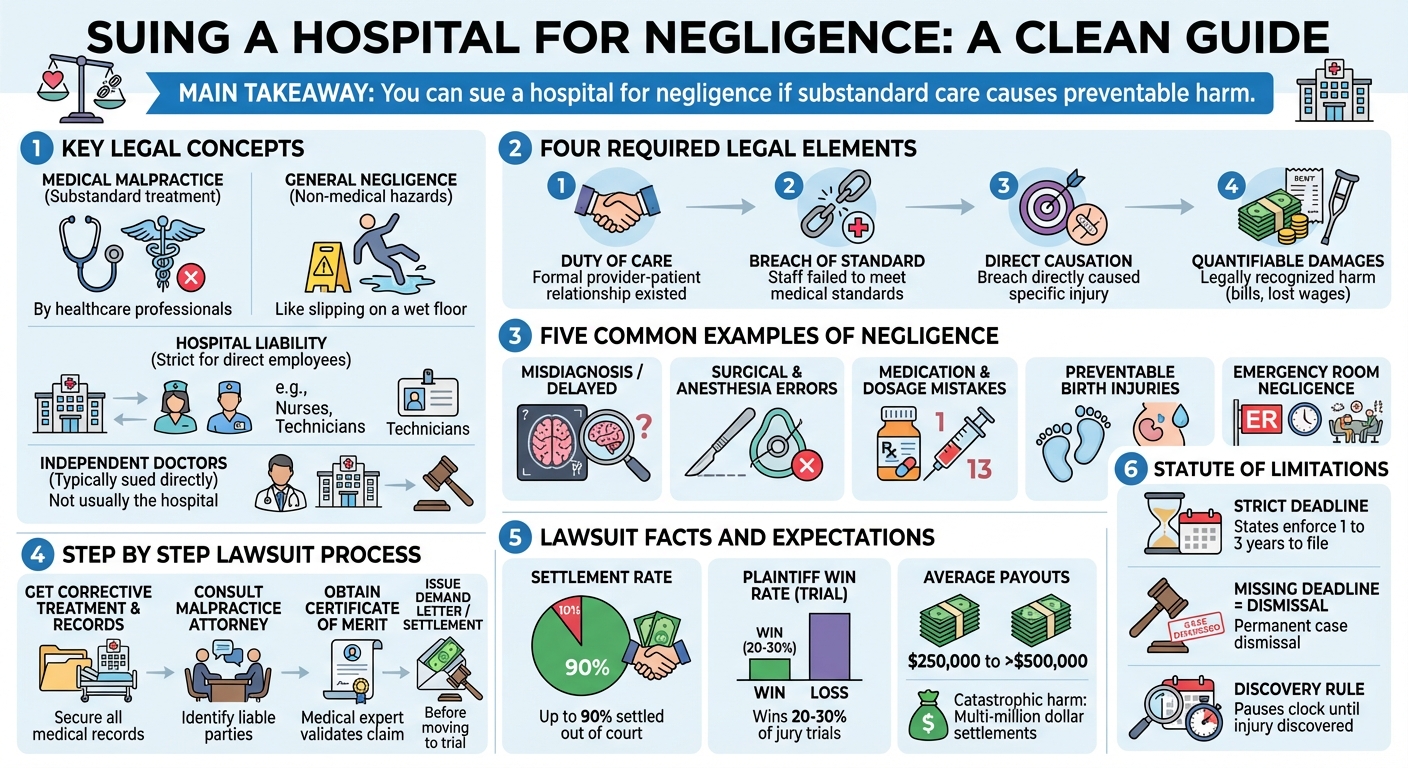
Yes, you can sue a hospital for negligence if you can prove that the facility or its employees breached the standard of care, directly causing your injury. You must establish four legal elements: a duty of care, a breach of that duty, direct causation, and quantifiable damages.
Can You Sue a Hospital for Negligence?
Yes, you can sue a hospital for negligence if you suffer preventable harm due to the substandard care of the facility or its employees. However, suing a medical institution is a complex legal process that falls under medical malpractice law. To succeed, you must prove that the hospital’s actions—or lack thereof—directly violated the accepted standard of medical care and resulted in your injuries.
Understanding Medical Malpractice vs. General Negligence
While both involve a failure to exercise proper care, they apply to different scenarios within a hospital setting. Medical malpractice occurs when a healthcare professional provides substandard medical treatment (e.g., administering the wrong medication or performing surgery on the wrong site). General negligence (often called premises liability) occurs when you are injured by a non-medical hazard, such as slipping on a wet floor in the hospital lobby. Both are grounds for a lawsuit, but medical malpractice claims require specialized expert testimony and adhere to stricter legal procedures.
When Can You Sue a Hospital? (Understanding Liability)
Determining who is legally responsible for your injury is the most critical step in a hospital negligence case. Hospitals are not automatically liable for every mistake made within their walls.
What grounds can you sue a hospital on?
You can sue a hospital on several legal grounds, including vicarious liability for the actions of its employees, negligent hiring or understaffing, and corporate negligence. Additionally, you can sue if the facility failed to maintain safe environments, properly sanitize equipment, or enforce standard patient safety protocols.
Hospital Employees vs. Independent Doctors (Vicarious Liability)
Under the legal doctrine of respondeat superior (vicarious liability), a hospital is generally responsible for the negligence of its direct employees. This typically includes nurses, medical technicians, paramedics, and support staff.
However, many doctors and surgeons are independent contractors, not hospital employees. If an independent doctor commits malpractice, you typically sue the doctor directly rather than the hospital. A hospital can only be held liable for an independent doctor’s actions if the hospital failed to verify their credentials (negligent credentialing) or if the patient reasonably believed the doctor was a hospital employee (ostensible agency).
The 4 Elements Required to Prove Hospital Negligence
To win a medical malpractice lawsuit against a hospital, your legal team must successfully demonstrate four critical elements:
- Duty of Care: A formal provider-patient relationship existed, meaning the hospital owed you a legal duty to provide competent care.
- Breach of Standard of Care: The hospital or its staff failed to meet the medical standard of care that a reasonably prudent healthcare provider would have offered under similar circumstances.
- Direct Causation: You must prove that the hospital’s specific breach of duty was the direct cause of your injury, rather than an underlying illness or unavoidable complication.
- Quantifiable Damages: You must have suffered legally recognized harm, such as additional medical bills, lost wages, physical pain, or emotional distress.
What are 5 examples of medical negligence?
Medical negligence can take many forms, but the most common examples include: 1) Misdiagnosis or delayed diagnosis, 2) Surgical and anesthesia errors, 3) Medication and dosage mistakes, 4) Preventable birth injuries, and 5) Emergency room negligence, such as prematurely discharging an unstable patient.
1. Misdiagnosis or Delayed Diagnosis
Failing to accurately diagnose a condition—such as cancer, a heart attack, or a stroke—can prevent a patient from receiving life-saving treatment, leading to severe complications or death.
2. Surgical and Anesthesia Errors
This includes operating on the wrong body part, leaving surgical instruments inside the patient, or administering an incorrect dose of anesthesia, which can cause brain damage or fatal complications.
3. Medication and Dosage Mistakes
Administering the wrong drug, giving an incorrect dosage, or failing to check a patient’s chart for lethal drug allergies are common forms of nursing and pharmacy negligence.
4. Birth Injuries
Negligence during labor and delivery, such as failing to monitor fetal distress or improper use of delivery instruments (like forceps), can result in lifelong conditions like cerebral palsy or Erb’s palsy.
5. Emergency Room Negligence
ERs are chaotic, but staff still owe a standard of care. Rushing patient evaluations, ignoring critical symptoms, or failing to order necessary diagnostic tests are actionable forms of negligence.
How to Sue a Hospital for Negligence: Step-by-Step Process
Filing a lawsuit against a major healthcare facility requires meticulous preparation. Here is how the process generally unfolds:
Step 1: Secure Your Health and Medical Records
Your first priority is your health; seek corrective medical treatment from a different, unaffiliated healthcare provider. Immediately request a complete copy of your medical records from the negligent hospital, as these documents are the foundation of your case.
Step 2: Consult a Medical Malpractice Attorney
Medical malpractice is not a DIY legal area. An experienced attorney will evaluate your records, identify the liable parties (hospital vs. independent contractors), and determine if you have a viable claim.
Step 3: The Expert Witness Affidavit (Certificate of Merit)
Most states require plaintiffs to file a “Certificate of Merit” alongside their lawsuit. This is a sworn statement from a qualified medical expert confirming that your claim has validity and that the hospital’s care fell below acceptable medical standards.
Step 4: Pre-Suit Settlement vs. Trial
Before going to court, your attorney will likely issue a demand letter to the hospital’s malpractice insurance carrier. If the insurer refuses to offer a fair settlement to cover your damages, your attorney will formally file the lawsuit and prepare for trial.
Lawsuit Viability and Compensation Expectations
Because these cases are expensive and time-consuming, attorneys only take cases with a high probability of success and significant damages.
What are the odds of winning a lawsuit against a hospital?
The odds of winning a medical malpractice lawsuit at trial are historically low, with plaintiffs winning only 20% to 30% of cases that go to a jury. However, the vast majority of strong negligence claims—up to 90%—are settled out of court before a trial ever begins.
What is the average payout for negligence?
The average payout for medical negligence generally ranges from $250,000 to over $500,000, depending heavily on the severity of the injury. Cases involving catastrophic harm, lifelong disability, or wrongful death frequently result in multi-million dollar settlements or jury verdicts.
Statute of Limitations for Hospital Negligence Claims
You do not have unlimited time to sue a hospital. The statute of limitations sets a strict legal deadline for filing your claim.
State-by-State Deadlines
In most U.S. states, the statute of limitations for medical malpractice is between one and three years from the date the negligence occurred. If you miss this deadline, your case will be permanently dismissed, regardless of how strong your evidence is.
The Discovery Rule
Because medical errors are not always immediately apparent (e.g., a surgical sponge left inside the body), many states utilize the “Discovery Rule.” This rule pauses the statute of limitations clock until the date you discovered—or reasonably should have discovered—the injury caused by the hospital’s negligence.