

Table of contents
To sue a doctor for negligence, you must prove four legal elements: a doctor-patient relationship existed (duty of care), the doctor violated the medical standard of care (breach), this breach directly caused your injury (causation), and you suffered measurable harm (damages). The process typically requires hiring a medical malpractice attorney and securing expert witness testimony.
How to Sue a Doctor for Negligence: A Complete Guide
Experiencing a poor medical outcome does not automatically mean you have grounds for a lawsuit. Medicine is an inexact science, and complications can occur even when a physician does everything right. However, when a doctor makes a preventable error that deviates from standard medical practices, you may have a valid medical malpractice claim.
Understanding Medical Malpractice vs. Standard Complications
Medical malpractice occurs when a healthcare professional’s negligent act or omission causes injury to a patient. A standard complication is a known risk of a procedure that can happen despite proper care. To sue a doctor for negligence, your attorney must prove that a competent doctor in the same specialty would not have made the same mistake under similar circumstances.
When a Doctor’s Mistake Becomes a Lawsuit
A mistake escalates to a viable lawsuit when it directly results in significant harm. If a doctor prescribes the wrong medication but the pharmacist catches it before you take it, there is no lawsuit because there are no damages. A case only exists when negligence and measurable harm intersect.
What are the 4 proofs of negligence?
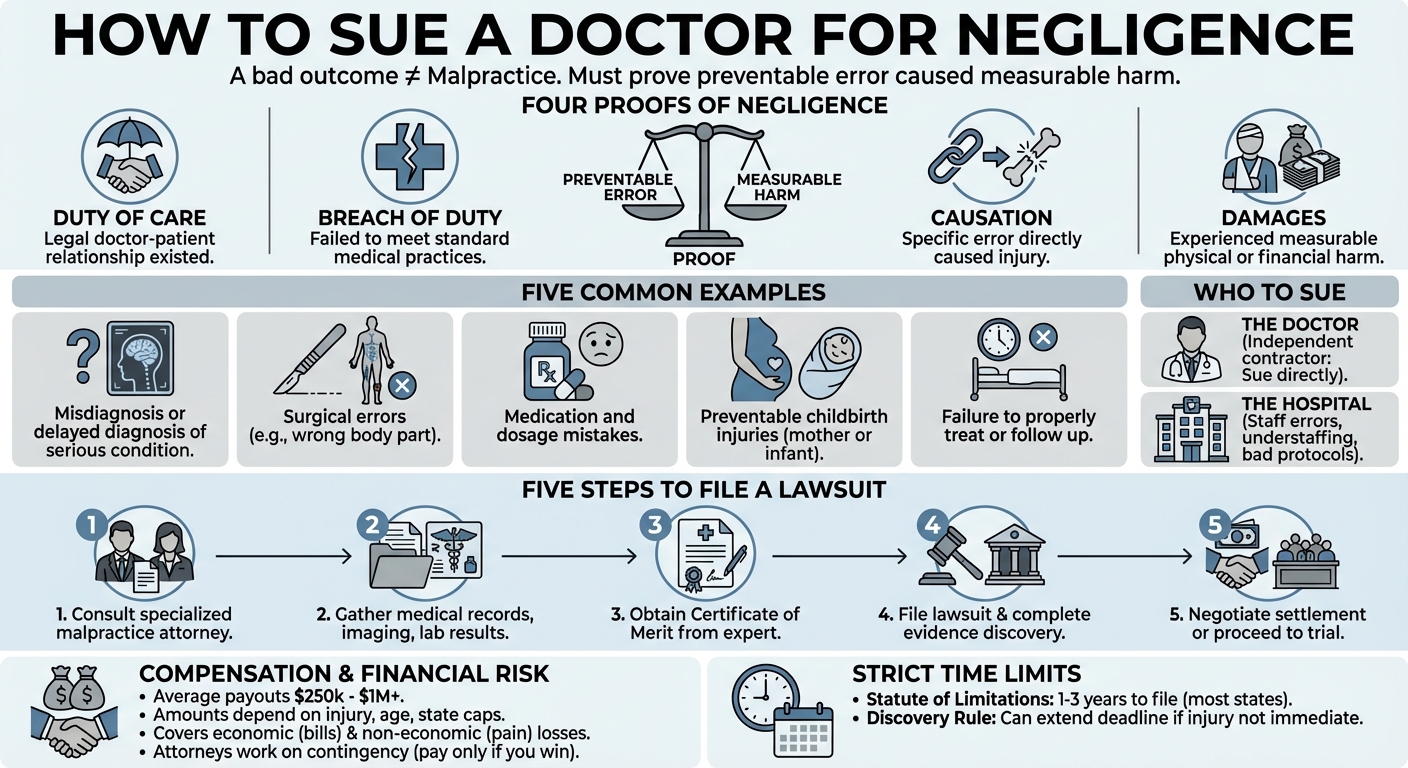
To successfully sue a doctor, the four proofs of negligence you must establish are: 1) Duty of care (a doctor-patient relationship existed), 2) Breach of duty (the doctor failed to meet standard medical practices), 3) Causation (the doctor’s mistake directly caused your injury), and 4) Damages (you suffered measurable physical or financial harm).
Duty of Care: Establishing the Doctor-Patient Relationship
You must first prove that you hired the doctor and the doctor agreed to treat you. This establishes a legal duty of care. Medical records, appointment logs, and billing statements easily satisfy this requirement.
Breach of Duty: Deviating from the Standard of Care
This is often the most heavily contested element. You must prove that the doctor failed to act as another reasonably prudent medical professional would have. This typically requires an expert medical witness in the same specialty to testify about what the standard of care should have been.
Causation: Linking the Breach to Your Injury
It is not enough to show that the doctor made a mistake; you must prove that the mistake directly caused your injury. If a doctor fails to diagnose a terminal illness that was already untreatable, causation may be difficult to prove because the outcome would likely have been the same.
Damages: Quantifying Your Physical and Financial Harm
Finally, you must show that the injury resulted in specific damages. This includes additional medical bills, lost wages, diminished earning capacity, and physical pain and suffering.
What are 5 examples of medical negligence?
Five common examples of medical negligence include: 1) misdiagnosis or delayed diagnosis of a serious condition, 2) surgical errors such as operating on the wrong body part, 3) medication or prescription dosage mistakes, 4) preventable childbirth injuries to the mother or infant, and 5) failure to properly treat or follow up with a patient.
Misdiagnosis or Delayed Diagnosis
When a doctor fails to recognize the symptoms of a serious illness—like cancer or a heart attack—the delay in treatment can lead to severe deterioration or death.
Surgical Errors and Wrong-Site Surgery
Surgical negligence includes leaving medical instruments inside the body, operating on the wrong patient, performing the wrong procedure, or damaging adjacent organs during surgery.
Medication and Prescription Errors
Administering the wrong drug, prescribing an incorrect dosage, or failing to check for dangerous drug interactions can cause catastrophic allergic reactions or organ failure.
Childbirth Injuries
Negligence during labor and delivery can result in lifelong conditions for the infant, such as cerebral palsy or Erb’s palsy, often caused by improper use of forceps or failure to monitor fetal distress.
Failure to Treat or Follow Up
Discharging a patient prematurely or failing to order necessary follow-up tests can allow an underlying condition to worsen to a critical state.
Suing a Doctor vs. Suing a Hospital
Determining who to sue depends heavily on the employment status of the physician and where the negligence occurred.
Independent Contractors vs. Hospital Employees
Most doctors are independent contractors, not direct employees of the hospital where they practice. If an independent doctor commits malpractice, you typically sue the doctor directly. However, if a nurse, technician, or staff member makes a mistake, the hospital is generally held liable under the doctrine of respondeat superior.
When to Target the Facility
You may sue the hospital if it failed to properly vet an incompetent doctor, if the facility was understaffed, or if hospital protocols directly led to your injury. For a deeper dive into facility liability, read our comprehensive guide on suing a hospital for negligence.
The Legal Process: How to Sue a Doctor for Malpractice
Medical malpractice claims are highly complex and strictly regulated. Here is the standard roadmap for pursuing a claim.
Step 1: Consult a Medical Malpractice Attorney
Because these cases are expensive and difficult to win, you need an attorney who specializes specifically in medical malpractice. They will evaluate your case during a free consultation to determine if it meets the legal threshold for a lawsuit.
Step 2: Gather Medical Records and Evidence
Your legal team will request all relevant medical records, imaging, lab results, and surgical notes. These documents form the foundation of your case.
Step 3: Obtain a Certificate of Merit (Expert Witness Testimony)
Many states require a “Certificate of Merit” before you can even file a lawsuit. This means an independent medical expert has reviewed your records and signed an affidavit stating that your claim has validity and the standard of care was breached.
Step 4: Filing the Lawsuit and the Discovery Phase
Once the lawsuit is filed, the discovery phase begins. Both sides exchange documents, take depositions (sworn out-of-court testimony) from the doctors, witnesses, and experts, and build their arguments.
Step 5: Settlement Negotiations vs. Going to Trial
The vast majority of medical malpractice cases are settled out of court. Malpractice insurance companies often prefer to settle to avoid the unpredictability of a jury trial. However, if a fair settlement cannot be reached, your attorney will present your case to a judge or jury.
What is the average medical negligence payout?
The average medical negligence payout typically ranges from $250,000 to over $1 million, depending on the severity of the injury. Settlement amounts are heavily influenced by your total economic damages, such as ongoing medical bills and lost earning capacity, as well as non-economic damages like pain and suffering.
Factors Influencing Settlement Amounts
- Severity of Injury: Permanent disabilities yield much higher settlements than temporary injuries.
- Age of the Patient: Younger patients often receive higher payouts due to a lifetime of lost earning potential.
- State Damage Caps: Many states have legal caps on the amount of non-economic damages you can recover in a malpractice suit.
Economic vs. Non-Economic Damages
Economic damages reimburse you for out-of-pocket losses (medical bills, lost wages, rehabilitation costs). Non-economic damages compensate you for subjective losses, such as physical pain, emotional distress, and loss of enjoyment of life.
Is it worth suing a doctor?
Suing a doctor is often worth it if you suffered severe, permanent injuries or significant financial losses due to clear medical negligence. Because malpractice attorneys work on contingency—meaning you pay nothing unless you win—your financial risk is minimized, making it worthwhile to pursue rightful compensation for medical bills and lost wages.
Weighing the Costs, Time, and Emotional Toll
Malpractice lawsuits can take anywhere from one to three years to resolve. They require patience and can be emotionally taxing as you relive the medical trauma. However, securing the funds necessary for lifelong medical care often outweighs these burdens.
Why Contingency Fee Structures Minimize Your Risk
You do not need to pay hourly rates to sue a doctor. Malpractice lawyers front the costs for expert witnesses, court filing fees, and investigations. They only take a percentage (usually 33% to 40%) if they successfully recover a settlement or verdict for you.
Statute of Limitations: How Long Do You Have to File?
You do not have unlimited time to sue a doctor. The statute of limitations imposes a strict legal deadline on your ability to file a claim.
State-by-State Deadlines
In most states, the statute of limitations for medical malpractice is between one and three years from the date the negligence occurred. If you miss this deadline, your case will be permanently dismissed, regardless of how strong your evidence is.
The Discovery Rule Exception
If the doctor’s mistake was not immediately obvious (e.g., a surgical sponge left inside your abdomen that causes an infection two years later), the “discovery rule” may apply. This rule pauses the clock until the date you discovered, or reasonably should have discovered, the injury.
Get a Free Medical Malpractice Case Evaluation
If you suspect that a doctor’s negligence caused severe harm to you or a loved one, do not wait to seek legal counsel. Contact our experienced medical malpractice team today for a free, confidential case evaluation. We will review your medical records, consult with top medical experts, and help you fight for the compensation you deserve.