
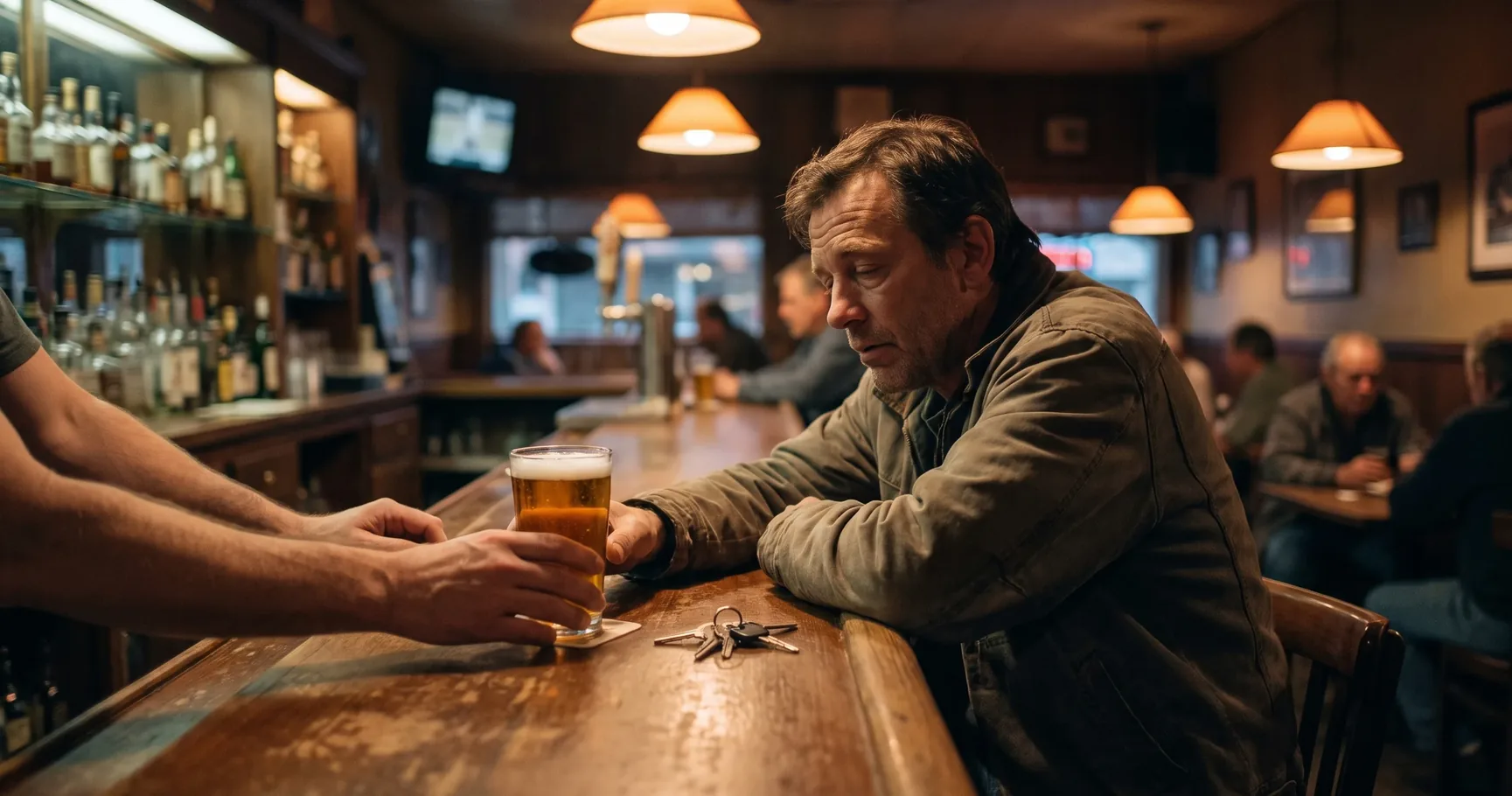
Texas law can hold a bar, restaurant, club, or store financially responsible for a drunk driving crash, but only when specific statutory elements are met. Under the Texas Dram Shop Act, a provider may be liable if it was apparent at the time of service that the customer was obviously intoxicated to the extent that the customer presented a clear danger, and that intoxication was a proximate cause of the injuries.
This matters because the drunk driver is often the least useful defendant. Many carry minimum liability limits, and some carry none at all. A licensed alcohol provider usually carries commercial liability coverage, which can be the difference between a token recovery and one that actually covers medical bills, lost income, and a permanent injury.
At a glance: Texas dram shop claims
| Question | General answer |
|---|---|
| Which law applies? | Chapter 2 of the Texas Alcoholic Beverage Code, commonly called the Dram Shop Act. |
| Who can be a defendant? | A licensed or permitted provider that sold or served the alcohol, and in limited circumstances an adult who served a minor under 18. |
| Who can bring the claim? | An injured third party, a surviving family member in a death case, and in some circumstances the intoxicated person. |
| Is the driver still liable? | Yes. A dram shop claim is in addition to the claim against the driver, not a replacement for it. |
| What kills these cases? | Lost surveillance video and lost point-of-sale records. Both can disappear in weeks. |
What is a dram shop claim in Texas?
A dram shop claim is a statutory cause of action against the business that provided the alcohol, separate from the ordinary negligence claim against the driver. The governing law is Chapter 2 of the Texas Alcoholic Beverage Code.
Chapter 2 is also exclusive. Section 2.03 provides that the chapter is the exclusive cause of action for providing an alcoholic beverage to a person 18 years of age or older, and that a provider's liability under the chapter is in lieu of common law warranties and duties. In practice, a claim against the bar has to be built inside the statute rather than as a general negligence theory.
What has to be proved under Section 2.02?
Section 2.02(b) sets out two elements, and both must be established:
- At the time the provision occurred, it was apparent to the provider that the individual being sold, served, or provided with an alcoholic beverage was obviously intoxicated to the extent that he presented a clear danger to himself and others.
- The intoxication of the recipient of the alcoholic beverage was a proximate cause of the damages suffered.
The wording is doing a lot of work. It is not enough to show that the driver was later measured over the legal limit, or that the bar sold the driver a large number of drinks. The question is what was apparent to the provider at the time of service. That is why these cases are won with evidence about the customer's visible condition at the bar, not only with a toxicology result from the hospital.
What evidence shows a customer was obviously intoxicated?
- Surveillance video: the strongest evidence there is, because it shows stumbling, slurred interaction, and the number of drinks served.
- Point-of-sale and tab data: timestamped drink-by-drink records, often tied to a server ID and a credit card.
- Server and bartender testimony: what they saw, what training they had, and whether anyone cut the customer off.
- Other patrons and rideshare drivers: independent witnesses to visible impairment.
- Retrograde extrapolation: expert analysis working a later blood alcohol result backward to the time of service.
- Crash investigation records: the police report, body camera footage, and any criminal case file.
Video is the piece that vanishes. Many venues overwrite their systems on a loop measured in days or weeks. A written preservation demand sent quickly is often what saves the case, and it should go out before anyone worries about whether the claim will ultimately be filed.
Can you sue a private host or a party in Texas?
Texas social host liability is narrow. Section 2.02(c) can make an adult 21 or older liable for damages caused by a minor's intoxication when the adult is not the minor's parent, guardian, spouse, or court-appointed custodian, and the adult knowingly served or provided the alcohol that contributed to the minor's intoxication, or allowed the minor to be served on premises the adult owns or leases.
Outside that situation, an ordinary host who serves an adult guest generally does not face the same statutory exposure as a licensed provider. Cases involving teenagers, house parties, and graduation events should be reviewed carefully, because the age of the drinker changes the analysis.
What is the trained server defense?
Providers routinely raise the safe harbor in Section 106.14, sometimes called the trained server defense. An employee's conduct is not attributable to the employer if the employer proves all three of the following:
- The employer requires its employees to attend a commission-approved seller training program.
- The employee actually attended such a program.
- The employer has not directly or indirectly encouraged the employee to violate the law.
Each element is a factual target. Requiring training on paper is not the same as requiring it in practice, certifications expire, and the third element opens the door to how the business actually operated: drink specials that reward volume, sales quotas, tip structures, staffing levels on a busy night, and prior incidents or citations at the same location. A claim can survive the safe harbor when the operation itself encouraged over-service.
How does shared fault affect a dram shop case?
Texas applies proportionate responsibility under Chapter 33 of the Civil Practice and Remedies Code. A jury can assign percentages to the bar, the driver, the injured person, and any designated responsible third party. Recovery is reduced by the injured person's percentage, and a claimant whose own share of responsibility is greater than 50 percent recovers nothing.
Two practical consequences follow. First, an injured third party in another vehicle is usually in a strong position, because the responsibility is divided between the driver and the provider. Second, a claim by the intoxicated customer is far harder, since that person's own conduct is squarely in front of the jury.
How long do you have to bring a claim?
Texas personal injury and wrongful death claims are generally subject to a two-year limitations period, and specific facts can shorten or alter that analysis. The evidence timeline is much shorter than the filing deadline. Video retention, employee turnover, and record purges routinely destroy proof within the first month, so an investigation should start immediately even when the criminal case against the driver is still pending.
Frequently asked questions
Do I have to wait for the driver's DWI case to finish?
No. The civil claim is separate from the criminal prosecution and can proceed on its own timeline. Waiting is usually harmful, because the evidence that proves over-service is held by the bar and is not preserved by the criminal case.
Can I sue both the driver and the bar?
Yes. The claim against the driver and the statutory claim against the provider can be pursued together, and they are often the reason a serious injury case has enough available coverage to be resolved fairly.
What if the driver left the bar hours before the crash?
Timing affects proximate cause but does not automatically end the claim. Receipts, video, phone records, and expert analysis can establish what the driver consumed, when, and what the driver's condition was at the point of service.
Does it matter that the bar was not the last place the driver drank?
More than one provider can be involved, and more than one can be a defendant. Each provider is evaluated on what was apparent to it at the time it served the customer.
What if a family member died in the crash?
A dram shop theory can support a wrongful death and survival claim. Those claims involve different damages and different eligible claimants, so the family should get advice before signing anything from an insurer. A Houston wrongful death lawyer can explain who is entitled to bring the claim.
Talk to a Houston dram shop lawyer before the video is gone
If a drunk driver injured you or killed someone in your family, the bar's records may be the most valuable evidence in the case, and it is on a deletion clock. Contact Nguyen Injury Law or call (713) 747-7777 for a free, confidential case review. You can also read our guide to drunk driving accident victim rights in Texas or learn how a Houston car accident lawyer builds the underlying crash claim.
This article provides general information, not legal advice. Results depend on the specific facts and law applicable to each case.
 Call (713) 747-7777