

Table of contents
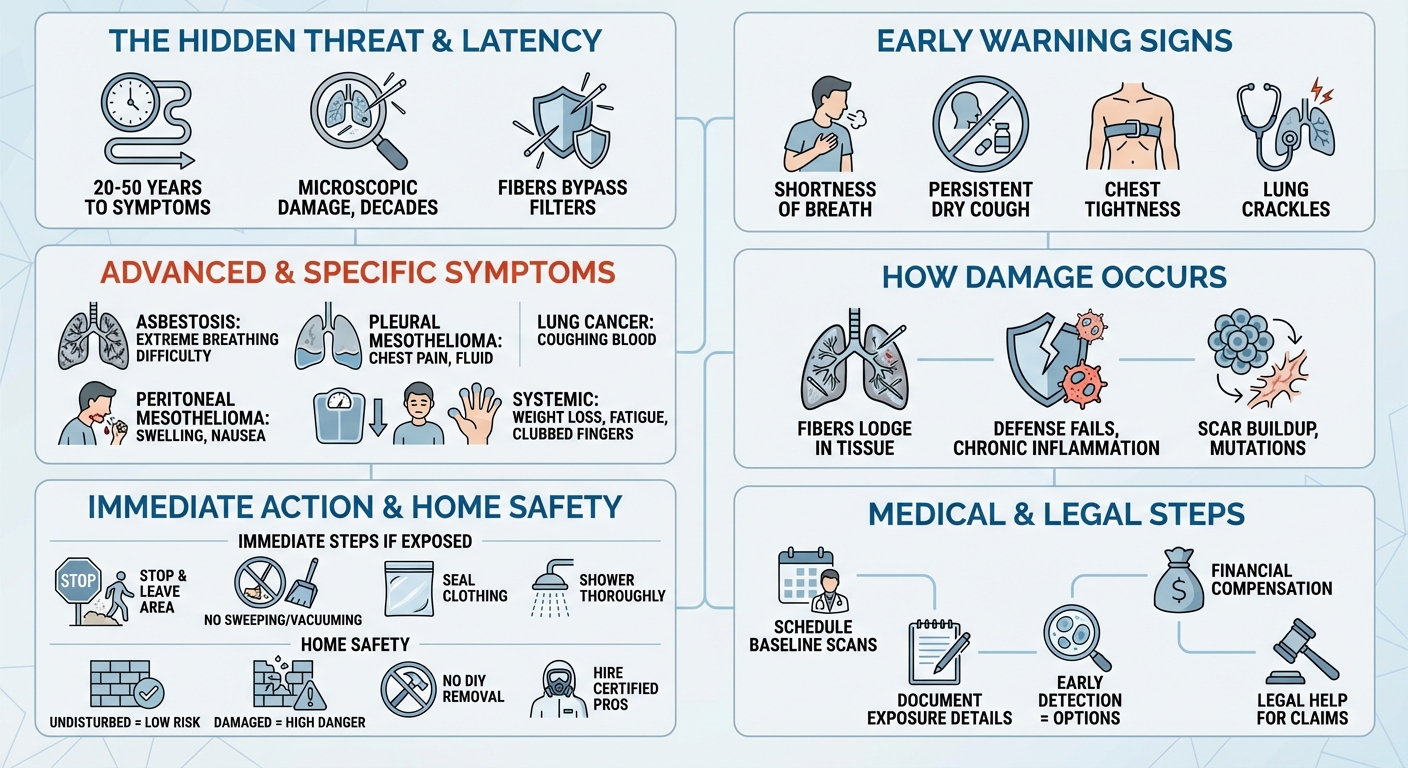
Symptoms of asbestos exposure typically take 20 to 50 years to appear. The most common early warning signs include shortness of breath, a persistent dry cough, chest tightness or pain, and a dry, crackling sound in the lungs when inhaling. In advanced stages, individuals may experience weight loss and clubbed fingertips.
Symptoms of Asbestos Exposure: Early Warning Signs and Next Steps
Asbestos exposure is a silent threat. Unlike many toxic substances, inhaling asbestos does not cause immediate acute symptoms like sneezing, coughing fits, or skin rashes. Instead, the damage occurs on a microscopic level over decades.
The hidden dangers of asbestos exposure
Asbestos is a naturally occurring mineral composed of millions of microscopic, needle-like fibers. When asbestos-containing materials are disturbed, these invisible fibers become airborne. Once inhaled or swallowed, they bypass the body’s natural filtration systems and embed themselves deep within the lung tissue or the lining of the abdomen.
Why symptoms take decades to appear (The Latency Period)
The most defining characteristic of asbestos-related diseases is the latency period. It typically takes 20 to 50 years after initial exposure for symptoms to manifest. During this time, the trapped fibers cause chronic inflammation and cellular damage, slowly leading to scar tissue buildup or cancerous mutations.
What are the first signs of asbestos exposure?
The first signs of asbestos exposure rarely appear immediately. When symptoms do develop decades later, early warning signs typically include shortness of breath during routine activities, a persistent dry cough, mild chest tightness, and a dry, crackling sound in the lungs when inhaling.
- Shortness of breath during routine activities: Often the earliest noticeable symptom, you may feel winded after climbing stairs or performing light chores that previously caused no strain.
- A persistent, dry cough that worsens over time: A lingering cough that does not produce mucus and fails to respond to standard cold or allergy treatments.
- Mild chest tightness or pain: A dull ache or feeling of constriction in the chest cavity, caused by inflammation in the lung lining (pleura).
- Dry, crackling sounds in the lungs when inhaling: Known medically as rales or crepitations, this sound occurs as scarred, stiff lung tissue attempts to expand during breathing.
Common Symptoms Categorized by Asbestos-Related Disease
Because asbestos exposure can lead to several distinct conditions, your specific symptoms will depend on the resulting disease.
Symptoms of Asbestosis (Lung scarring)
Asbestosis is a non-cancerous but progressive respiratory condition caused by severe lung scarring. Symptoms include extreme shortness of breath, chronic coughing, chest pain, and a distinct crackling sound in the lungs. Over time, breathing becomes increasingly difficult as the lungs lose their elasticity.
Symptoms of Pleural and Peritoneal Mesothelioma
Mesothelioma is an aggressive cancer primarily affecting the organ linings. Pleural mesothelioma (affecting the lungs) causes severe chest pain, painful coughing, and fluid buildup around the lungs (pleural effusion). Peritoneal mesothelioma (affecting the abdomen) presents with abdominal swelling, unexplained weight loss, nausea, and changes in bowel habits.
Symptoms of Asbestos-Related Lung Cancer
Asbestos exposure significantly increases the risk of developing lung cancer, especially for smokers. Symptoms mirror other forms of lung cancer and include coughing up blood (hemoptysis), chronic respiratory infections like bronchitis or pneumonia, wheezing, and persistent chest pain.
Less common signs: Clubbed fingertips, weight loss, and fatigue
In advanced stages of asbestos-related diseases, systemic symptoms often appear. You may experience chronic fatigue, unexplained weight loss, and loss of appetite. Another distinct sign is clubbing, where the fingertips and toes become swollen and round due to long-term oxygen deprivation in the blood.
Does asbestos stay in your lungs?
Yes, asbestos stays in your lungs. Because the microscopic fibers are sharp and highly durable, your body cannot break them down or expel them. Once inhaled, these fibers become permanently trapped in lung tissue, causing chronic inflammation, cellular mutation, and progressive scarring over decades.
How microscopic asbestos fibers become trapped in lung tissue
When you breathe in asbestos, the tiny, jagged fibers travel down your airways and penetrate the alveoli (the tiny air sacs in your lungs) or the pleura (the protective lining of the lungs). Their spear-like shape allows them to lodge firmly into the tissue.
The body’s inability to break down or expel asbestos
The human body has defense mechanisms, like macrophages, designed to engulf and destroy foreign particles. However, asbestos fibers are highly resistant to chemical breakdown and physical destruction. The body’s immune cells attempt to destroy the fibers but fail, often dying in the process and releasing inflammatory enzymes.
How trapped fibers cause cellular mutation and scarring over time
The continuous cycle of immune attack and failure leads to chronic inflammation. Over decades, this inflammation causes the formation of dense scar tissue (asbestosis) or triggers DNA damage in the cells, which can mutate into malignant tumors (mesothelioma or lung cancer).
What to do if you’ve inhaled asbestos?
If you suspect you have inhaled asbestos, immediately stop the exposure and safely decontaminate your clothing and body. Next, schedule a medical evaluation with your doctor, request baseline imaging like X-rays or CT scans, and carefully document your complete exposure history for future reference.
Immediate steps: Stop exposure and decontaminate
Leave the area immediately. Do not sweep or vacuum the suspected asbestos dust, as this makes it airborne. Carefully remove your clothing, seal it in a plastic bag, and take a thorough shower to wash any residual fibers from your skin and hair.
Schedule a medical evaluation and request imaging (X-rays, CT scans)
Visit a healthcare provider or a pulmonologist. While immediate imaging won’t show fresh asbestos exposure, establishing a baseline chest X-ray or high-resolution CT scan is crucial for monitoring future changes in your lung health.
Inform your doctor about your complete exposure history
Be highly specific with your physician. Tell them exactly when, where, and how you were exposed. This ensures that asbestos-related diseases remain on their radar during future check-ups, allowing for early detection if symptoms eventually arise.
Begin documenting your work history and exposure sources
Write down the dates of exposure, the location, the materials involved, and the names of employers or contractors. This documentation is vital if you later develop a disease and need to file a legal claim or seek compensation from an asbestos trust fund.
Can you live in a house with asbestos?
Yes, you can safely live in a house with asbestos as long as the materials are in good condition and left undisturbed. Intact, non-friable asbestos does not release dangerous fibers into the air. However, if the material becomes damaged or friable, you must hire a certified professional for removal.
The difference between intact (non-friable) and damaged (friable) asbestos
Non-friable asbestos is tightly bound within materials like vinyl floor tiles or cement roofing and poses little risk. Friable asbestos can be easily crumbled by hand pressure (like old pipe insulation or popcorn ceilings) and is highly dangerous because it readily releases toxic fibers into the air.
Why undisturbed asbestos in older homes is generally safe
If your home was built before the 1980s, it likely contains some asbestos. As long as these materials are not cracking, peeling, or being drilled into during renovations, the fibers remain trapped and cannot be inhaled. Monitoring the condition of these materials is usually sufficient.
When to hire a certified asbestos abatement professional
Never attempt a DIY removal of damaged asbestos. If you find crumbling insulation, plan to remodel an older home, or experience water damage that compromises asbestos-containing materials, you must hire a licensed asbestos abatement contractor to safely test, contain, and remove the hazard.
Protecting Your Health and Your Legal Rights
An asbestos-related diagnosis is overwhelming, but understanding your medical and legal options can help you protect your family’s future.
Why early detection is critical for treatment options
Because asbestos diseases have such a long latency period, they are often diagnosed in later stages. Regular screenings for individuals with a history of exposure can lead to earlier detection, opening the door to life-extending treatments like surgery, targeted therapy, and clinical trials.
Understanding your right to compensation for medical bills and lost wages
If you developed asbestosis, lung cancer, or mesothelioma due to occupational exposure or secondary exposure, you may be entitled to financial compensation. This can cover exorbitant medical bills, lost income, and provide financial security for your dependents.
How an asbestos exposure lawyer can help you build a claim
Navigating asbestos litigation is complex. An experienced asbestos attorney can help you identify the exact products and companies responsible for your exposure, file claims with established asbestos trust funds, and aggressively pursue the compensation you deserve without adding stress to your medical journey.