

Table of contents
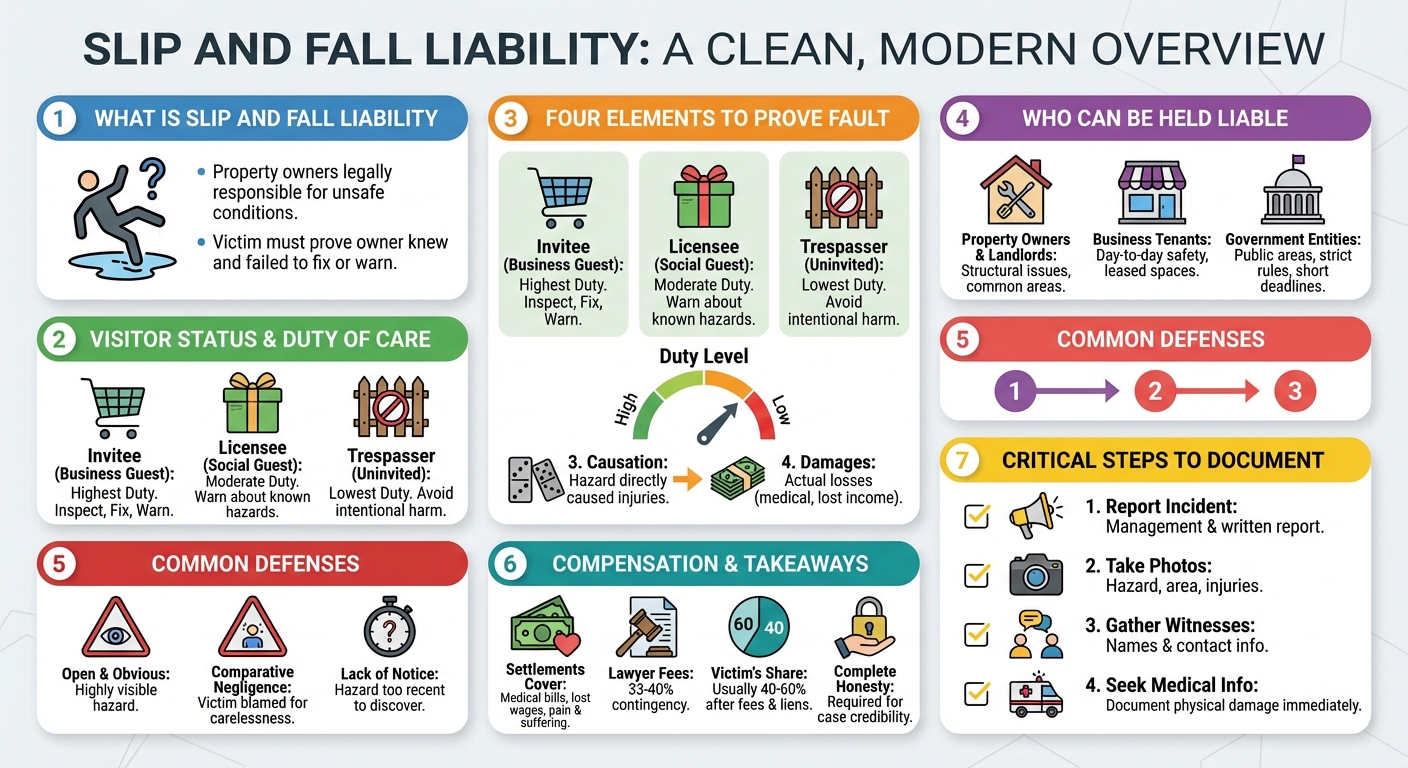
Slip and fall liability is a legal concept holding property owners responsible if someone is injured on their premises due to a hazardous condition. To establish liability, the injured party must prove the owner owed a duty of care, knew about the hazard, and negligently failed to fix it or provide a warning.
Slip and Fall Liability Explained: How to Prove Fault and Win Your Case
A sudden slip and fall can lead to devastating injuries, mounting medical bills, and lost wages. However, getting hurt on someone else’s property does not automatically mean they are legally responsible for your damages. To secure compensation, you must navigate the complex rules of slip and fall liability.
This comprehensive guide explains how premises liability works, the key elements you must prove to win your case, and what to expect during the settlement process.
What is Slip and Fall Liability?
Slip and fall liability is a legal concept that holds property owners or occupiers responsible when someone is injured on their property due to a dangerous condition. It is a specific category of personal injury law governed by the rules of premises liability.
Premises Liability Basics
Under premises liability law, property owners have a legal obligation to maintain a reasonably safe environment. If they fail to fix a hazard or warn visitors about it, and someone gets hurt as a result, the owner can be held financially liable for the victim’s injuries.
Invitee vs. Licensee vs. Trespasser: How Duty of Care Changes
The level of responsibility a property owner owes you depends entirely on your legal status at the time of the accident. Courts generally classify visitors into three categories:
| Visitor Status | Definition | Owner’s Duty of Care |
|---|---|---|
| Invitee | Someone invited for business purposes (e.g., a grocery store shopper). | Highest Duty: Must actively inspect for hazards, fix them, and warn visitors. |
| Licensee | Someone invited for social reasons (e.g., a guest at a house party). | Moderate Duty: Must warn about known hazards, but no duty to actively inspect. |
| Trespasser | Someone on the property without permission. | Lowest Duty: Generally, no duty of care, except to refrain from intentionally harming them. |
The 4 Key Elements to Prove in a Slip and Fall Case
To win a slip and fall lawsuit, your attorney must establish four critical legal elements. If any of these elements are missing, your claim will likely fail.
1. Duty of Care
First, you must prove that the defendant owned, leased, or controlled the property and therefore owed you a duty of care based on your visitor status.
2. Breach of Duty (Negligence)
Next, you must show that the owner breached their duty. This usually means proving they had actual or constructive notice of the hazard. Actual notice means they knew about the spill or broken stair. Constructive notice means the hazard existed long enough that a reasonable property owner should have discovered it.
3. Causation
It is not enough to prove a hazard existed; you must prove that this specific hazard directly caused your injuries. Medical records and accident reports are vital here to link the fall to your physical damage.
4. Damages
Finally, you must demonstrate that you suffered actual, quantifiable losses. This includes medical bills, lost income, and non-economic damages like pain and suffering.
Who is Liable in a Slip and Fall Accident?
Liability is not always straightforward. Depending on where the accident occurred, multiple parties could be held responsible.
Property Owners and Landlords
Property owners are generally liable for structural issues, such as broken staircases, inadequate lighting, or uneven sidewalks. Landlords are typically responsible for maintaining common areas in apartment complexes.
Business Tenants and Store Managers
If a business leases a commercial space, the tenant (the business owner) is usually responsible for day-to-day safety. If you slip on a spilled drink in a restaurant, the restaurant owner—not the building’s landlord—is typically the liable party.
Government Entities
If you fall on a public sidewalk, in a government building, or at a public park, a municipality or government agency may be liable. However, suing the government involves strict rules, sovereign immunity protections, and much shorter deadlines (statutes of limitations).
Why are slip and fall cases hard to win?
Slip and fall cases are hard to win because the burden of proof rests entirely on the injured party. You must prove the property owner knew or should have known about the hazard and failed to act. Furthermore, owners often aggressively defend claims by arguing the victim wasn’t paying attention.
Common Defenses Used by Property Owners
Insurance companies and defense attorneys will try to minimize or deny your claim. Here are the most common defenses they use.
The Open and Obvious Doctrine
If a hazard is so large and visible that any reasonable person would have noticed and avoided it (like a massive, brightly colored hole in the ground), the property owner may argue they had no duty to warn you.
Comparative Negligence (Blaming the Victim)
The defense will try to shift the blame to you. They might claim you were texting, wearing inappropriate footwear, or running in a dangerous area. Under comparative negligence laws, if you are found partially at fault, your compensation will be reduced by your percentage of blame.
Lack of Actual or Constructive Notice
This is the “spill happened two minutes ago” defense. If another customer drops a jar of pickles and you slip on it 30 seconds later, the store will argue they did not have a reasonable amount of time to discover and clean the spill.
Compensation and Settlement Expectations
Victims often wonder what their case is worth and how the payout process works.
How much compensation for a slip and fall?
Compensation for a slip and fall varies widely based on injury severity, ranging from a few thousand dollars for minor sprains to over $100,000 for severe fractures. Settlements typically cover medical expenses, lost wages, rehabilitation costs, and non-economic damages like pain and suffering caused by the accident.
How much of a $100K settlement will I get?
From a $100,000 settlement, you will typically receive between $40,000 and $60,000. Personal injury lawyers usually charge a contingency fee of 33% to 40%. After deducting these legal fees, court costs, and reimbursing any medical liens or health insurance providers, the remaining balance goes directly to you.
Working With a Personal Injury Lawyer
Having skilled legal representation is the best way to level the playing field against aggressive insurance adjusters.
What not to say to your attorney?
Never lie or withhold crucial information from your attorney. Do not hide pre-existing injuries, downplay your physical activities, or exaggerate your current pain levels. Complete honesty is crucial; if the defense discovers inconsistencies, it can destroy your credibility and ruin your chances of winning your slip and fall claim.
How to Document Your Accident for Your Lawyer
- Report the incident: Notify the store manager or property owner immediately and ask for a written accident report.
- Take photos: Capture images of the hazard, the surrounding area, and your injuries before the scene is cleaned up.
- Gather witness info: Get names and phone numbers of anyone who saw you fall.
- Seek medical attention: See a doctor immediately, even if you feel fine. Adrenaline can mask severe injuries.
Next Steps: Protect Your Legal Rights
If you have been injured on someone else’s property, time is of the essence. Evidence disappears quickly, and state laws impose strict deadlines on how long you have to file a lawsuit. To protect your rights and build a strong foundation for your premises liability claim, consult with an experienced personal injury attorney who can evaluate your case and help you pursue the compensation you deserve.