

Table of contents
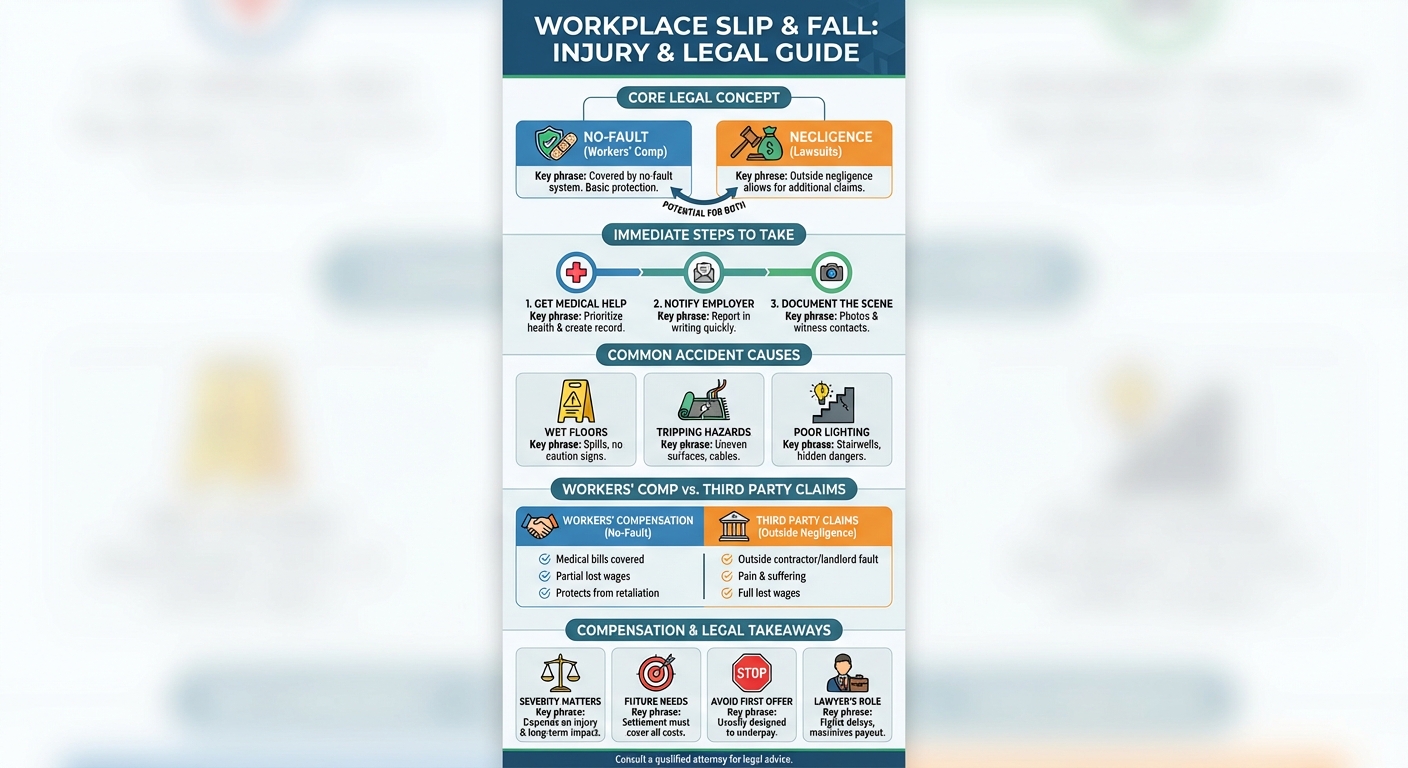
If you suffer a slip and fall injury at work, immediately seek medical attention and report the incident to your employer. You are generally entitled to workers’ compensation for medical bills and lost wages. If a third party caused the hazard, you may also file a personal injury lawsuit for additional damages.
What to Do After a Slip and Fall Injury at Work
The High Cost of Workplace Falls
Slip and fall accidents are among the most common and costly workplace incidents in the United States. A sudden fall can result in severe injuries, ranging from broken bones and torn ligaments to traumatic brain injuries. For victims, the physical pain is often compounded by mounting medical bills and the sudden inability to earn a paycheck.
Why Workplace Slip and Falls Are Legally Unique
Unlike a standard personal injury claim where you must prove another party was negligent, workplace injuries generally fall under the umbrella of workers’ compensation. This is a no-fault system. However, if a negligent third party—such as an outside contractor or equipment manufacturer—contributed to your fall, your legal options expand significantly, allowing you to pursue additional compensation outside of the workers’ comp system.
When injured, the most important thing for the employee to do is?
When injured, the most important thing for the employee to do is seek immediate medical attention. Getting prompt medical care ensures your injuries are properly treated and creates an official medical record linking your injury directly to the workplace accident, which is critical for any future compensation claims.
Step 1: Seek Immediate Medical Attention
Your health is your top priority. Even if you feel fine initially, adrenaline can mask the symptoms of serious injuries like concussions or spinal damage. Visit an emergency room or an approved occupational health clinic as soon as possible.
Step 2: Report the Incident to Your Employer
Notify your supervisor or HR department immediately. Most states require you to report a workplace injury within a specific timeframe (often 30 days) to remain eligible for workers’ compensation benefits. Always submit this report in writing and keep a copy for your records.
Step 3: Document the Scene and Gather Evidence
If you are physically able, document the hazard that caused your fall. Take clear photos of the wet floor, uneven surface, or poor lighting. Collect the names and contact information of any coworkers who witnessed the accident. This evidence is invaluable if liability is questioned later.
What happens if you slip and fall at work?
If you slip and fall at work, you are generally entitled to file a workers’ compensation claim to cover your medical expenses and a portion of your lost wages, regardless of who was at fault. You must report the injury to your employer immediately to initiate the claims process.
The Workers’ Compensation Process Begins
Once you report the injury, your employer must provide you with the necessary paperwork to file a workers’ compensation claim. Their insurance carrier will review the claim to approve medical treatments and calculate your disability benefits while you are unable to work.
Potential Employer Retaliation and Your Rights
Many employees fear losing their jobs if they report an injury. It is illegal for an employer to fire, demote, or otherwise retaliate against you for filing a workers’ compensation claim. If you experience workplace retaliation, you have the right to take legal action against your employer.
Workers’ Compensation vs. Third-Party Claims
Understanding the Exclusive Remedy Rule
In most cases, workers’ compensation is considered an exclusive remedy. This means that in exchange for receiving no-fault benefits, you generally forfeit the right to sue your direct employer for negligence. However, this rule does not protect negligent third parties who may have caused your accident.
When You Can Sue a Third Party for a Workplace Fall
If someone other than your employer or coworker created the hazard that led to your fall, you can file a third-party personal injury lawsuit. Unlike workers’ comp, a third-party claim allows you to recover damages for pain and suffering, emotional distress, and full lost earning capacity.
Examples of Liable Third Parties (Contractors, Property Owners, Equipment Manufacturers)
- Contractors: A cleaning service that leaves a floor wet without posting warning signs.
- Property Owners: A landlord who fails to repair a leaking roof or crumbling staircase in a leased commercial space.
- Equipment Manufacturers: A company that produces defective safety harnesses or faulty ladders.
Common Causes of Slip and Fall Accidents on the Job
Wet or Recently Mopped Floors
Spills, leaks, and recently cleaned floors are leading causes of workplace falls. Without proper caution signs or prompt cleanup protocols, employees can easily slip on these slick surfaces.
Uneven Surfaces and Torn Carpeting
Tripping hazards are just as dangerous as slippery floors. Loose floorboards, torn carpets, exposed cables, and unexpected changes in elevation frequently lead to severe workplace injuries.
Poor Lighting and Hidden Hazards
Stairwells, parking lots, and storage rooms with inadequate lighting make it impossible for workers to see hazards in their path. Poor visibility significantly increases the risk of a devastating fall.
How much compensation for a slip and fall?
How much compensation you receive for a slip and fall depends on the severity of your injuries and the type of claim. Workers’ compensation covers medical bills and partial lost wages, while a successful third-party lawsuit can yield much higher compensation by including damages for pain and suffering.
Calculating Workers’ Comp Benefits (Medical Bills and Lost Wages)
Under workers’ compensation, your approved medical bills are covered entirely. Additionally, you will receive a percentage of your average weekly wage (typically around two-thirds) while you are recovering. If you suffer a permanent impairment, you may also be entitled to permanent disability benefits.
Calculating Third-Party Damages (Pain and Suffering)
In a third-party claim, compensation is not capped by statutory formulas. You can seek full reimbursement for all lost wages, future medical care, and non-economic damages. Pain and suffering compensation is calculated based on the severity of your injury, the length of your recovery, and the impact the injury has on your daily life.
What is a reasonable settlement offer?
A reasonable settlement offer should fully cover your past and future medical expenses, lost income, and, in third-party claims, adequately compensate you for pain and suffering. An offer is only reasonable if it accounts for the long-term physical and financial impact of your specific workplace injury.
Factors That Determine a Fair Settlement
Several variables influence the value of your case, including the clarity of liability, the extent of your medical treatment, whether you require surgery, and if you have any permanent restrictions. A fair settlement must project these costs into the future.
Why You Should Never Accept the First Offer from an Insurance Adjuster
Insurance companies are focused on protecting their profits, not your well-being. The initial settlement offer is almost always a lowball figure designed to close the case quickly and cheaply. Accepting it too soon often leaves victims paying out of pocket for future medical care.
How a Workplace Injury Lawyer Can Protect Your Claim
Navigating Bad Faith Insurance Tactics
Insurance adjusters may try to delay your claim, deny necessary medical treatments, or argue that your injury was pre-existing. An experienced personal injury lawyer knows how to counter these bad faith tactics and hold the insurance company accountable.
Maximizing Your Financial Recovery
By conducting an independent investigation, a lawyer can identify all liable parties. They will gather medical records, consult with experts, and build a compelling case to ensure you receive maximum compensation through both workers’ comp and third-party claims.
Contact Our Injury Law Team for a Free Consultation
If you have suffered a slip and fall injury at work, you do not have to navigate the complex legal system alone. Protect your rights and your financial future. Contact our injury law team today for a free, confidential consultation to discuss your case and explore your legal options.