

Table of contents
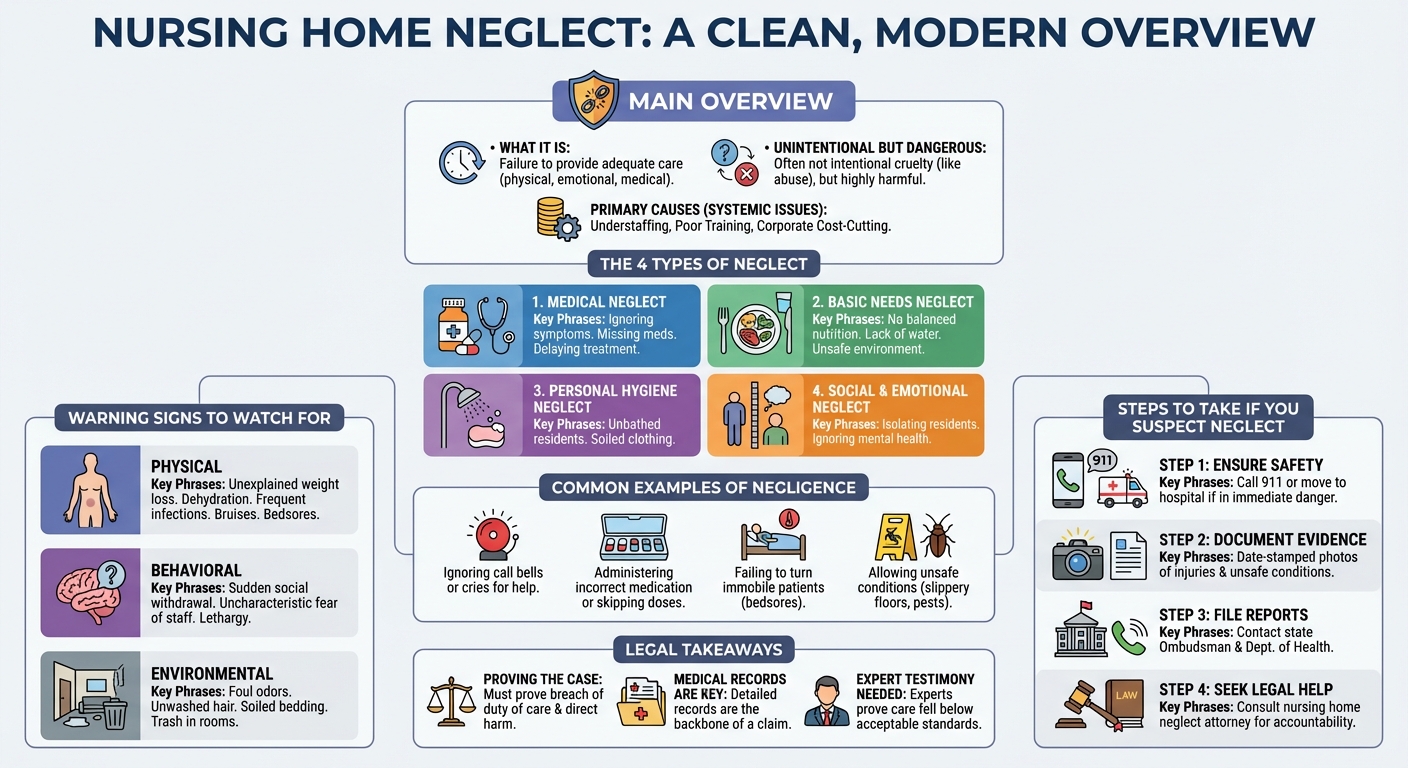
Nursing home neglect occurs when a facility fails to provide adequate care, resulting in physical, emotional, or medical harm to a resident. The four main types include medical neglect, neglect of basic needs, personal hygiene neglect, and social or emotional neglect. Warning signs include bedsores, unexplained weight loss, and poor hygiene.
Understanding Nursing Home Neglect: When Care Fails
Placing a loved one in a nursing home is a difficult decision built on trust. When that trust is broken through substandard care, the consequences can be devastating. Nursing home neglect occurs when a facility fails to provide the basic necessities, medical attention, or supervision required to keep a resident safe and healthy.
The Difference Between Abuse and Neglect
While both cause severe harm, abuse and neglect are fundamentally different in their intent:
| Nursing Home Abuse | Nursing Home Neglect |
|---|---|
| Intentional harm or cruelty inflicted on a resident. | A failure to provide adequate care, often unintentional but highly dangerous. |
| Examples: Hitting, verbal threats, financial exploitation. | Examples: Ignoring call bells, failing to bathe residents, missed medications. |
Why Neglect Happens (Understaffing and Poor Training)
Most caregivers do not set out to harm residents. Neglect is typically a systemic issue. Corporate cost-cutting often leads to severe understaffing, meaning there simply aren’t enough nurses or aides to attend to every resident. High turnover rates and inadequate training further compound the problem, leaving inexperienced staff overwhelmed by complex medical and personal care needs.
What counts as patient neglect?
Patient neglect counts as any failure by a caregiver or facility to provide the standard level of care, resulting in harm. This includes ignoring a resident’s medical needs, failing to assist with personal hygiene, withholding food or water, or leaving a vulnerable patient unsupervised in unsafe conditions.
The 4 Main Types of Nursing Home Neglect
Neglect manifests in several different ways, all of which compromise a resident’s quality of life and physical health.
Medical Neglect
Medical neglect occurs when staff fail to manage a resident’s healthcare needs. This includes ignoring new symptoms, failing to administer prescribed medications, improperly caring for wounds, or delaying necessary medical treatment when a resident falls ill.
Neglect of Basic Needs (Food, Water, Shelter)
Facilities are legally obligated to provide a safe environment and adequate nutrition. Failing to provide a balanced diet, ignoring a resident’s specific dietary restrictions, or failing to offer enough water—leading to severe dehydration—are critical forms of neglect.
Personal Hygiene Neglect
Many residents rely entirely on staff for their daily hygiene. When staff fail to bathe residents, brush their teeth, or change soiled adult diapers and clothing, it strips the resident of their dignity and creates a breeding ground for severe infections.
Social and Emotional Neglect
Mental health is just as important as physical health. Social neglect happens when staff repeatedly ignore a resident, leave them isolated in their room for days, or fail to provide mobility assistance so they can interact with others. This isolation often leads to rapid cognitive decline and depression.
What is an example of negligence in a nursing home?
An example of negligence in a nursing home is failing to reposition a bedbound resident regularly, which leads to severe, infected bedsores. Other examples include leaving fall-risk patients unattended, failing to provide prescribed mobility aids, or allowing a resident to wander off the premises unsupervised.
Facility-Wide Failures
Negligence isn’t always isolated to a single staff member. Facility-wide failures include broken security systems, chronic understaffing that violates state regulations, or failing to maintain emergency protocols. These systemic issues put the entire resident population at risk.
Unsafe Living Conditions
A nursing home must be a safe haven. Unsafe living conditions—such as slippery floors, inadequate heating or cooling, broken wheelchairs, and pest infestations—are clear examples of facility negligence that can lead to preventable accidents.
What are examples of nursing negligence?
Examples of nursing negligence include administering the wrong medication, skipping required doses, ignoring a patient’s call bell, failing to monitor vital signs, or improperly using restraints. These failures by nursing staff directly violate the standard of care and can cause severe medical complications or death.
Medication Errors and Missed Doses
Administering medication requires precision. Giving a resident the wrong pill, an incorrect dosage, or skipping a dose entirely can cause catastrophic health crises, especially for residents managing diabetes, heart conditions, or severe pain.
Ignoring Call Bells and Cries for Help
When a resident presses their call bell, they may need to use the restroom, be experiencing a medical emergency, or have fallen. Ignoring these alerts forces residents to attempt tasks on their own, frequently resulting in devastating falls and fractured bones.
Failure to Prevent or Treat Bedsores
Bedsores (pressure ulcers) are almost entirely preventable with proper care. When nursing staff fail to turn immobile patients every few hours or neglect to keep their skin clean and dry, painful ulcers develop. Left untreated, these can lead to fatal sepsis.
Warning Signs of Nursing Home Neglect
Because residents may be unable to communicate their suffering due to dementia or fear, family members must remain vigilant.
Physical Signs (Unexplained Weight Loss, Infections)
- Sudden, unexplained weight loss or signs of malnutrition.
- Frequent urinary tract infections (UTIs) or unexplained sepsis.
- Unexplained bruises, cuts, or frequent falls.
- The presence of bedsores (pressure ulcers).
Behavioral and Emotional Changes
- Sudden withdrawal from social activities.
- Uncharacteristic anger, agitation, or fear, especially around certain staff members.
- Lethargy or unresponsiveness, which may indicate over-medication (chemical restraint).
Environmental Red Flags (Soiled Bedding, Hazards)
- Foul odors in the resident’s room or the facility’s hallways.
- Soiled clothing, unwashed hair, or overgrown nails.
- Trash left in the room, lack of fresh drinking water, or unemptied bedpans.
Steps to Take if You Suspect Nursing Home Neglect
If you believe your loved one is suffering from neglect, you must act quickly to protect them.
Ensure Immediate Safety (Call 911 if Necessary)
If your loved one is in immediate, life-threatening danger, do not wait for the facility to act. Call 911 or arrange for an immediate transfer to a local hospital.
Document the Evidence
Take clear, date-stamped photographs of injuries, bedsores, or unsanitary room conditions. Keep a detailed journal of dates, times, and the names of staff members you spoke with regarding your concerns.
Report to the Long-Term Care Ombudsman
Every state has a Long-Term Care Ombudsman program designed to advocate for nursing home residents. File a formal complaint with them, as well as with your state’s Department of Health, to trigger an official investigation.
Consult a Nursing Home Neglect Attorney
Nursing homes have legal teams ready to protect their interests. Consulting a specialized attorney ensures your loved one’s rights are protected, evidence is preserved, and the facility is held accountable for their negligence.
Is it hard to sue a nursing home for neglect?
It can be hard to sue a nursing home for neglect because you must definitively prove that the facility breached its duty of care and directly caused harm. However, with strong evidence, detailed medical records, and an experienced attorney, families can successfully hold negligent facilities accountable.
Proving Breach of Duty and Harm
To win a neglect case, you must establish four elements: the facility owed a duty of care, they breached that duty, the breach directly caused an injury, and the injury resulted in measurable damages. This requires meticulous documentation and investigation.
The Role of Medical Records and Expert Testimony
Medical records are the backbone of a neglect claim. They show a timeline of declining health, missed medications, or the sudden appearance of bedsores. Often, medical experts are brought in to testify how the facility’s actions fell below the accepted standard of medical care.
Next Steps: Understanding Your Case Value
If you are considering legal action, you likely have questions about compensation for medical bills, pain and suffering, and relocation costs. To learn more about what to expect financially, read our guide on how much you can sue a nursing home for negligence.