
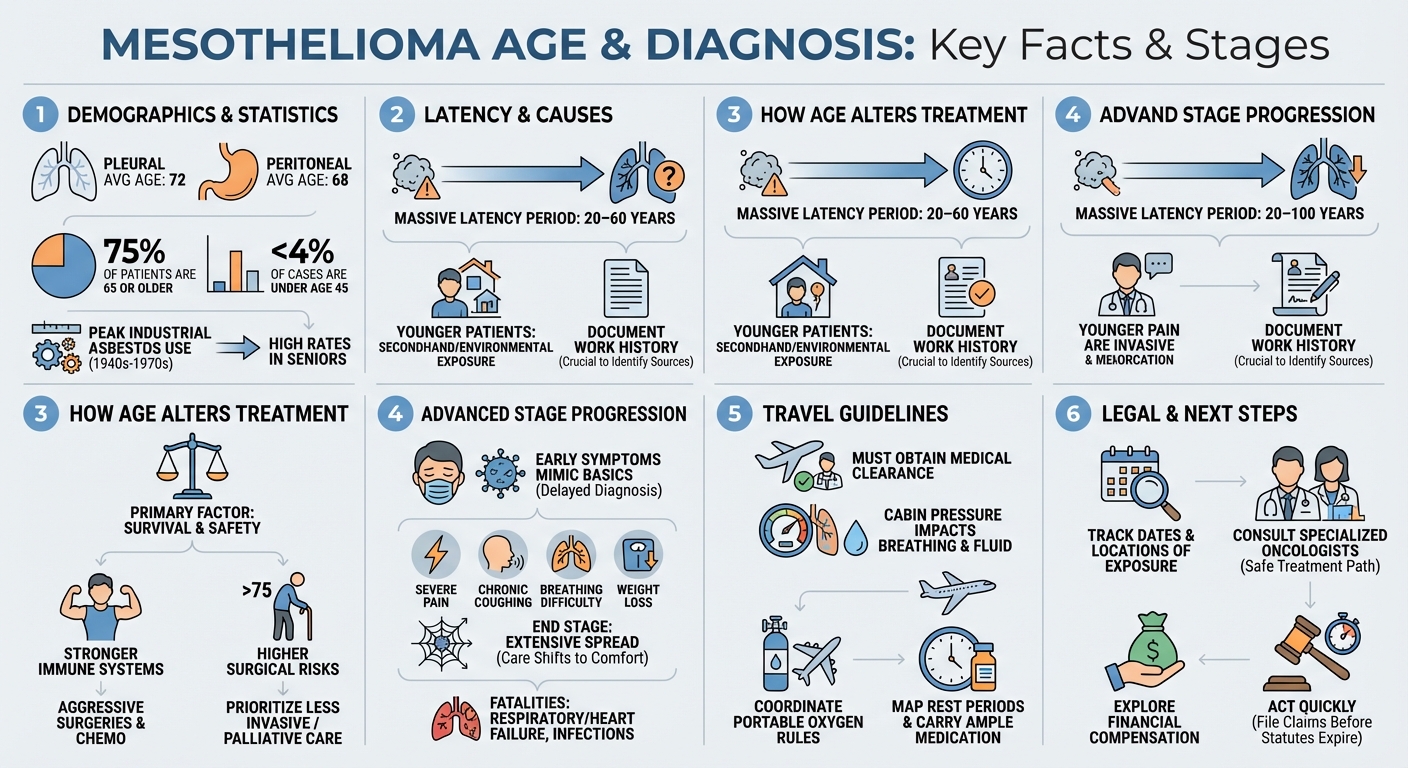
The average age for a mesothelioma diagnosis is 72 years old. Because the disease has a long latency period of 20 to 60 years, it is extremely rare in people under 45. Approximately 75% of all mesothelioma patients are diagnosed at age 65 or older.
Mesothelioma Age of Diagnosis: Statistics, Latency, and Prognosis
Mesothelioma is overwhelmingly a disease of older adults. Because this aggressive cancer is caused by asbestos exposure, its demographic profile is directly tied to the timeline of industrial asbestos use and the biological time it takes for tumors to form. Understanding the link between age and a mesothelioma diagnosis is critical for patients and their families as they navigate treatment options and legal rights.
Key takeaways on mesothelioma age demographics:
- The vast majority of patients are senior citizens.
- The disease requires decades to develop after initial exposure.
- Age plays a significant role in determining which treatments are safe and effective.
- Older patients often face unique challenges regarding travel, symptom management, and legal timelines.
What is the Average Age for a Mesothelioma Diagnosis?
According to the American Cancer Society, the average age of diagnosis for pleural mesothelioma—the most common type—is 72 years old. For peritoneal mesothelioma, the median age is slightly lower, typically around 68 years old.
Because of how the disease develops, mesothelioma is exceptionally rare in people under age 45. In fact, younger adults account for less than 4% of all diagnosed cases. When younger individuals do develop the disease, it is often linked to secondhand exposure (such as a parent bringing asbestos fibers home on their clothing) or environmental exposure.
The highest incidence rates occur in patients aged 65 to 84. Statistics show that roughly 75% of all people diagnosed with mesothelioma are 65 or older. This demographic concentration is a direct result of peak industrial asbestos use occurring between the 1940s and 1970s.
The Mesothelioma Latency Period Explained
The primary reason mesothelioma strikes older adults is its extensive latency period. There is typically a 20 to 60-year gap between the moment a person first inhales or ingests asbestos fibers and the onset of noticeable symptoms.
During the mid-20th century, millions of Americans were exposed to asbestos in the military, construction, shipbuilding, and manufacturing sectors. A worker exposed to asbestos in a shipyard in 1970 might not experience their first symptom until 2010 or later. This historic occupational exposure heavily impacts today’s elderly population.
Because so much time has passed, tracking your work history is a vital step following a diagnosis. Identifying exactly when, where, and how you were exposed decades ago is necessary for both medical context and potential legal claims.
How Age Impacts Mesothelioma Survival Rates
Age is one of the most significant prognostic factors for mesothelioma. Generally, younger patients have higher survival rates and longer life expectancies. This is primarily because younger individuals tend to have fewer pre-existing health conditions and stronger immune systems, allowing them to withstand aggressive treatments.
Treatment viability varies drastically by age group:
- Younger Patients (Under 65): More likely to be candidates for multimodal therapy, which includes aggressive surgeries like an extrapleural pneumonectomy (EPP), combined with heated chemotherapy or radiation.
- Older Adults (75+): Often face higher surgical risks. For elderly or frail patients, oncologists may recommend less invasive procedures, targeted therapies, or prioritize palliative care to maximize comfort and quality of life.
Advanced Mesothelioma: Symptoms and Progression
Because early-stage mesothelioma mimics common respiratory issues, many older adults are not diagnosed until the cancer has reached an advanced stage.
What are the symptoms of advanced mesothelioma?
Advanced mesothelioma symptoms typically include severe chest or abdominal pain, chronic coughing, coughing up blood, difficulty breathing (dyspnea), extreme fatigue, and unexplained weight loss. As the tumors expand, fluid buildup (pleural effusion) often worsens, making even minor physical exertion highly uncomfortable for older patients.
What is the end stage of mesothelioma?
The end stage of mesothelioma, or Stage 4, occurs when the cancer has metastasized extensively beyond the original lining to distant organs, the brain, or the spine. During this final phase, curative treatments are no longer viable, and medical care shifts entirely to palliative measures focused on comfort.
What causes death from mesothelioma?
Death from mesothelioma is most commonly caused by respiratory failure or heart failure. As tumors grow and spread throughout the chest cavity, they restrict lung expansion and compress vital organs. Additionally, severe infections, such as pneumonia, or complications from fluid buildup can ultimately lead to fatal organ failure.
Living and Traveling with Mesothelioma
Maintaining quality of life is the primary goal for elderly patients living with mesothelioma. This often involves navigating daily logistics, including travel for specialized medical care or family visits.
Can you fly with mesothelioma?
Yes, you can fly with mesothelioma, but it requires careful medical clearance. Changes in cabin pressure can exacerbate breathing difficulties, especially if you have pleural effusions or rely on supplemental oxygen. Always consult your oncologist before flying and coordinate with the airline regarding portable oxygen concentrator regulations.
When planning travel, older patients should map out rest periods, ensure they have ample medication, and keep emergency medical contacts readily available.
Next Steps: Legal and Financial Assistance for Older Adults
A mesothelioma diagnosis at an advanced age brings immediate financial and emotional burdens. Because the disease is almost exclusively caused by corporate negligence regarding asbestos use, patients have legal rights to seek financial relief.
Time is of the essence. Statutes of limitations restrict how long you have to file a claim after a diagnosis, and these timelines vary by state. If you or an elderly loved one has been diagnosed, taking prompt action is crucial.
For more specific guidance on your next steps, you can explore resources on what to do first after a diagnosis, learn about potential compensation amounts, or consult with Houston specialists and legal experts to protect your family’s future.
 Call (713) 747-7777