

Table of contents
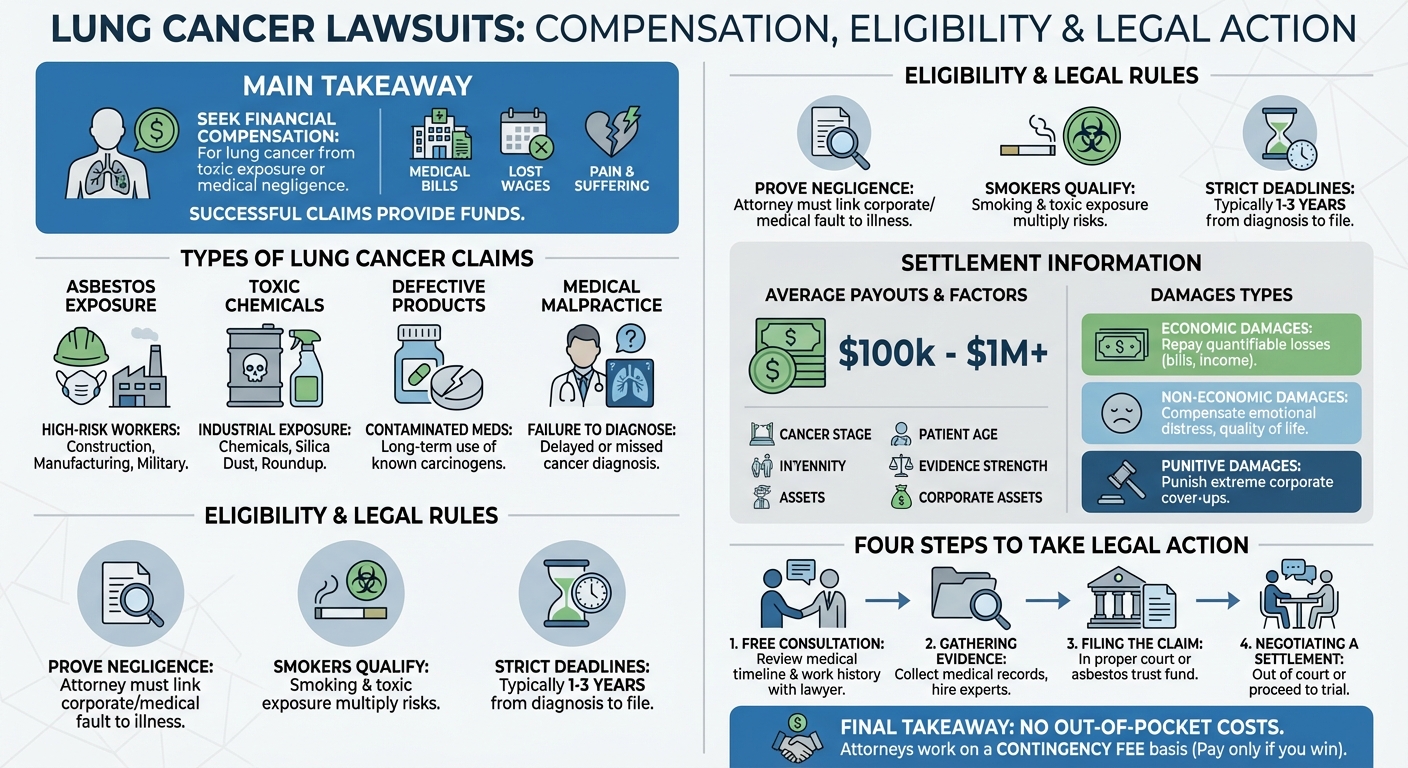
Yes, you can file a lung cancer lawsuit if your diagnosis was caused by toxic exposure, such as asbestos, or due to a medical professional’s failure to diagnose the disease. Successful lawsuits can provide financial compensation for medical bills, lost wages, and pain and suffering.
Lung Cancer Lawsuits: Eligibility, Settlements, and How to File
A lung cancer diagnosis is devastating, bringing immense physical, emotional, and financial burdens to patients and their families. While smoking is a well-known cause, thousands of lung cancer cases each year are triggered by corporate negligence, toxic workplace environments, or medical errors. If your illness was caused by another party’s actions, you may be entitled to financial compensation. This guide explains the different types of lung cancer claims, who qualifies, and what to expect during the legal process.
Is there a lawsuit for lung cancer?
Yes, there are several types of lawsuits for lung cancer. If your cancer was caused by exposure to toxic substances like asbestos, hazardous workplace chemicals, or defective products, you can file a personal injury claim. Additionally, you can sue for medical malpractice if a doctor failed to diagnose it promptly.
Types of Lung Cancer Lawsuits
Lung cancer litigation is not a single type of lawsuit. Depending on how and why you developed the disease, your case will fall into one of several distinct legal categories.
Asbestos Exposure and Mesothelioma Claims
Asbestos is one of the leading causes of occupational lung cancer. While it is famous for causing mesothelioma, asbestos exposure is actually responsible for up to six times as many cases of standard lung cancer. Workers in construction, shipbuilding, manufacturing, and the military are at high risk. Many asbestos manufacturers have established trust funds to compensate victims without the need for a lengthy trial.
Toxic Chemical Exposure (Roundup, Paraquat, and Silicosis)
Prolonged exposure to certain industrial chemicals, herbicides, and particulates can severely damage the lungs. For example, agricultural workers exposed to Paraquat or Roundup, and industrial workers exposed to silica dust (leading to silicosis and subsequent cancer), may have grounds for a lawsuit. These cases act as hubs of toxic tort litigation, holding manufacturers accountable for failing to warn users of cancer risks.
Defective Drugs and Products
Certain prescription medications and consumer products have been recalled after being contaminated with known carcinogens, such as NDMA. If you took a contaminated drug for an extended period and later developed lung cancer, you might be eligible to join a mass tort lawsuit against the pharmaceutical company.
Medical Malpractice: Failure to Diagnose or Delayed Diagnosis
Early detection is the most critical factor in lung cancer survival. If a medical professional ignored your symptoms, misread an X-ray or CT scan, or failed to order appropriate biopsies, the cancer may progress to an advanced, incurable stage. In these instances, patients or their surviving families can file a medical malpractice lawsuit for delayed diagnosis.
Who Qualifies to File a Lung Cancer Claim?
Not every lung cancer diagnosis qualifies for a lawsuit. To have a valid claim, your attorney must prove that another party’s negligence directly contributed to your illness.
Proving Negligence and Liability
A successful claim requires establishing four elements: duty of care, breach of that duty, direct causation, and damages. In toxic exposure cases, this means proving that a company knew (or should have known) about the cancer risks of their product but failed to protect or warn you.
Can Smokers Still File a Lung Cancer Lawsuit?
Yes. A history of smoking does not automatically disqualify you from seeking compensation. In asbestos cases, for example, the combination of smoking and asbestos exposure creates a synergistic effect, increasing the risk of lung cancer by up to 50 times. Courts recognize this, though your settlement may be adjusted based on comparative negligence rules in your state.
Understanding the Statute of Limitations
You have a limited window to file a lawsuit, known as the statute of limitations. This deadline varies by state but generally ranges from one to three years from the date of your diagnosis or the date you discovered the cause of your cancer. Missing this deadline permanently bars you from recovering compensation.
What is the average settlement for lung cancer?
The average settlement for a lung cancer lawsuit typically ranges from $100,000 to over $1 million, depending on the specific facts of the case. Asbestos-related lung cancer settlements often average between $100,000 and $400,000, while medical malpractice or major corporate negligence verdicts can occasionally reach multi-million dollar payouts.
Factors That Influence Your Settlement Amount
- Severity and Stage: Advanced-stage cancer requiring aggressive treatment generally yields higher compensation.
- Age and Earning Capacity: Younger patients who lose decades of potential income often receive larger economic damages.
- Proof of Liability: Cases with clear, undeniable evidence of corporate negligence or medical error settle for higher amounts.
- Defendant’s Resources: The available insurance coverage or corporate assets play a major role in the final payout.
Types of Damages You Can Recover
Compensation in a lung cancer lawsuit is divided into economic and non-economic damages.
| Damage Type | Description | Examples |
|---|---|---|
| Economic Damages | Quantifiable financial losses caused by the illness. | Hospital bills, chemotherapy costs, lost wages, loss of future earning capacity. |
| Non-Economic Damages | Subjective losses related to your quality of life. | Pain and suffering, emotional distress, loss of consortium, loss of enjoyment of life. |
| Punitive Damages | Awarded in rare cases to punish extreme corporate negligence. | Fines levied against a company that actively hid cancer risks from the public. |
How to File a Lung Cancer Lawsuit
Taking legal action can feel overwhelming while battling cancer. Fortunately, experienced personal injury lawyers handle the heavy lifting. Here is how the process works:
Step 1: Free Legal Consultation
Your first step is to speak with an attorney who specializes in toxic torts or medical malpractice. They will review your diagnosis, work history, and medical timeline to determine if you have a viable case. This consultation is completely free.
Step 2: Gathering Medical Records and Evidence
If you have a case, your legal team will collect your medical records, pathology reports, employment history, and witness statements. In exposure cases, they may hire industrial hygienists or medical experts to definitively link your cancer to the toxic substance.
Step 3: Filing the Claim or Lawsuit
Your lawyer will officially file the complaint in the appropriate court or submit a claim to an established settlement trust fund (such as an asbestos trust). The defendants will then have an opportunity to respond.
Step 4: Negotiating a Settlement or Going to Trial
Most lung cancer lawsuits settle out of court. Your attorney will negotiate aggressively on your behalf. If the defendant refuses to offer a fair settlement, your legal team will prepare to present your case before a judge and jury.
Lung Cancer Prognosis and Survival FAQs
What’s the longest you can live with lung cancer?
The longest you can live with lung cancer depends heavily on the stage at diagnosis and the tumor’s response to treatment. Many patients diagnosed at an early stage (Stage 1) undergo successful surgery and go on to live 15, 20, or more years, effectively achieving a normal lifespan.
Has anyone survived stage 4 lung cancer?
Yes, people have survived stage 4 lung cancer. While it is historically considered incurable, modern medical advancements in targeted therapies and immunotherapy have allowed some patients to live for five to ten years or more, effectively managing the advanced disease as a long-term chronic condition.
Get Help From an Experienced Lung Cancer Lawyer Today
If you or a loved one has been diagnosed with lung cancer due to toxic exposure, a defective product, or a delayed diagnosis, you do not have to fight this battle alone. Financial compensation can secure your family’s future and ensure you have access to the best possible medical care. Most lung cancer attorneys work on a contingency fee basis, meaning you pay nothing out of pocket and only owe legal fees if they win your case. Contact an experienced lung cancer lawyer today for a free case evaluation.