

Table of contents
While mesothelioma is an aggressive and terminal cancer, it is not always immediately fatal. Although there is no definitive cure, advancements in treatments like immunotherapy and surgery have helped many patients achieve long-term remission, allowing them to live for years or even decades after their diagnosis.
Is Mesothelioma Always Fatal? The Short Answer
When facing a new diagnosis, the most pressing question is often: is mesothelioma always fatal? The short answer is that while mesothelioma is an aggressive, terminal illness, it is not always immediately fatal. There is currently no definitive cure for the disease, but advancements in medical research have changed the landscape of what a diagnosis means.
Today, thanks to multimodal treatments like immunotherapy, targeted chemotherapy, and advanced surgical techniques, many patients are living well beyond the average prognosis. While it remains a deadly disease, achieving long-term remission is becoming a reality for a growing number of survivors who live for years—and sometimes decades—after their initial diagnosis.
Understanding the Disease: Is Mesothelioma One of the Worst Cancers?
Is Mesothelioma One of the Worst Cancers?
Yes, mesothelioma is considered one of the most aggressive and deadly cancers. Because it develops rapidly and is highly resistant to many standard treatments, it has a lower survival rate than most other malignancies. Its long latency period also means it is rarely caught in its early, most treatable stages.
Why Mesothelioma is Highly Aggressive
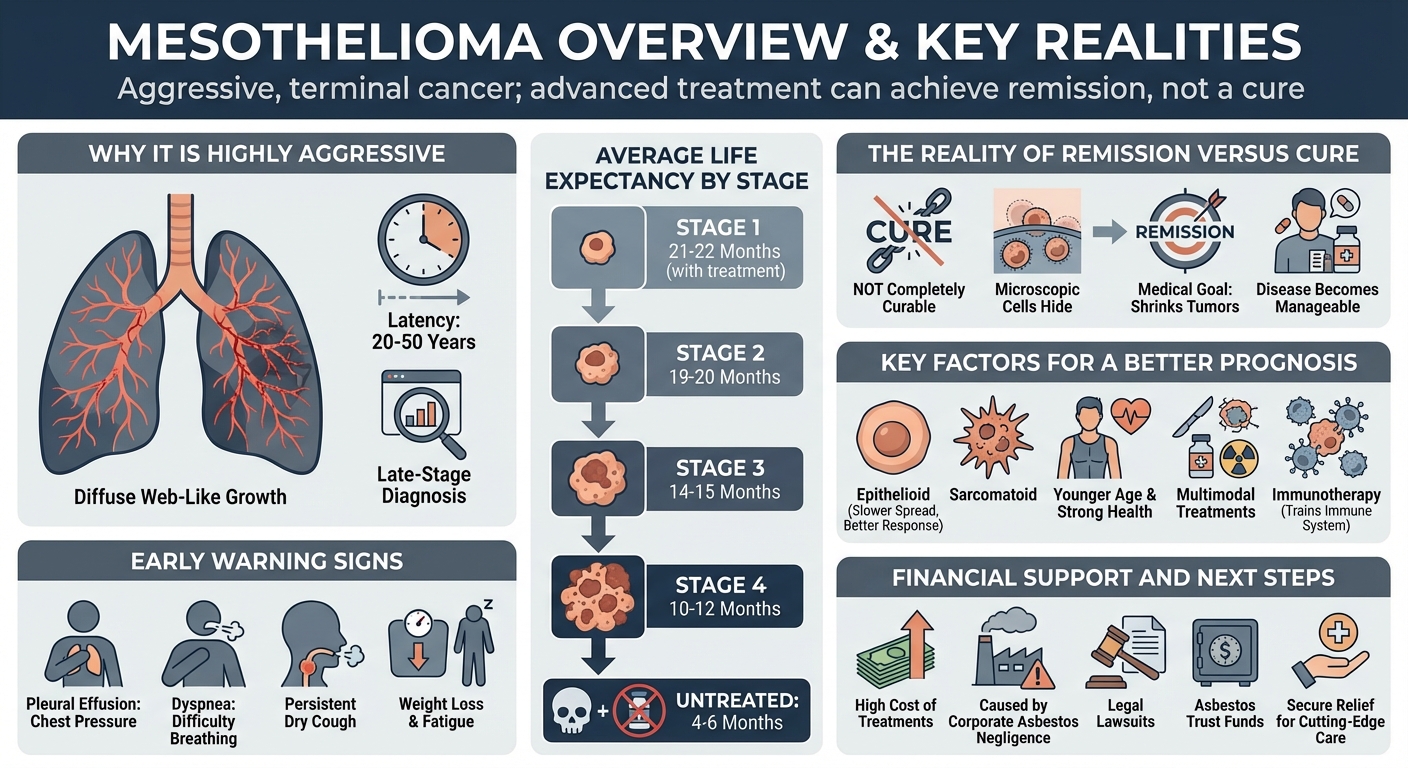
Mesothelioma tumors do not grow as a single, easily removable mass. Instead, they form a web-like network of nodules that spread across the lining of the lungs (pleura), abdomen (peritoneum), or heart (pericardium). This diffuse growth pattern makes it incredibly difficult for surgeons to remove all cancerous cells, allowing the disease to spread rapidly to vital organs.
The Impact of the Long Latency Period
One of the most devastating aspects of mesothelioma is its latency period. It typically takes 20 to 50 years after initial asbestos exposure for symptoms to appear. By the time a patient feels sick enough to visit a doctor, the cancer has usually advanced to stage 3 or stage 4, severely limiting curative treatment options.
Early Detection: What Are the First Signs of Mesothelioma?
What Are the First Signs of Mesothelioma?
The first signs of pleural mesothelioma typically include a persistent dry cough, shortness of breath, and chest pain. Patients may also experience unexplained weight loss, fatigue, and fluid buildup in the lungs. Because these symptoms mimic common respiratory illnesses, misdiagnosis is frequent, often delaying crucial life-extending treatment.
Common Respiratory Symptoms
- Pleural Effusion: A buildup of fluid between the layers of tissue lining the lungs, causing severe chest pressure.
- Dyspnea: Difficulty breathing or shortness of breath, even when resting.
- Chronic Cough: A dry, raspy cough that does not go away with standard medications.
Systemic Warning Signs (Weight Loss, Fatigue)
As the cancer progresses, it takes a massive toll on the body’s energy reserves. Patients often report sudden, unexplained weight loss, loss of appetite, and profound fatigue. Night sweats and generalized body aches are also common systemic indicators that the body is fighting an aggressive disease.
Mesothelioma Survival Rates and Life Expectancy
Average Life Expectancy by Stage
Survival rates are heavily dependent on the stage of the cancer at the time of diagnosis. While these are statistical averages, individual results vary widely based on treatment response.
| Cancer Stage | Average Life Expectancy (with treatment) |
|---|---|
| Stage 1 | 21 to 22 months |
| Stage 2 | 19 to 20 months |
| Stage 3 | 14 to 15 months |
| Stage 4 | 10 to 12 months |
How Long Can You Live With Untreated Mesothelioma?
If left untreated, the average life expectancy for a mesothelioma patient is typically between four to six months. Because this cancer spreads aggressively, foregoing treatment allows the tumors to invade surrounding organs rapidly. Palliative care is often recommended even if curative treatments are declined to manage pain.
Can Mesothelioma Be Cured?
Is Mesothelioma Curable If Caught Early?
Mesothelioma is not considered completely curable, even if caught early. However, early-stage diagnosis drastically improves a patient’s prognosis. When detected in stage 1 or 2, aggressive treatments like tumor-removing surgery and chemotherapy can push the cancer into long-term remission, allowing some patients to live for many years.
The Difference Between Remission and a Cure
In oncology, a cure means the cancer is entirely gone and will never return. Because mesothelioma cells are microscopic and easily hide in the body’s linings, doctors rarely use the word cure. Instead, the goal is remission—a state where the tumors shrink or stop growing, and symptoms are managed, effectively turning the cancer into a chronic but manageable condition for a period of time.
Factors That Improve Your Prognosis
Not all mesothelioma diagnoses are the same. Several key factors influence how long a patient can survive and how well they respond to treatment.
Cell Type (Epithelioid vs. Sarcomatoid)
The cellular makeup of the tumor plays a massive role in survival rates:
- Epithelioid Mesothelioma: The most common cell type (about 70% of cases). These cells stick together and spread slower, making them much more responsive to surgery and chemotherapy.
- Sarcomatoid Mesothelioma: A rarer, highly aggressive cell type that spreads quickly and resists most traditional treatments.
- Biphasic Mesothelioma: A combination of both cell types. Prognosis depends on which cell type is dominant.
Patient Age and Overall Health
Younger patients and those in excellent physical condition generally have better survival rates. A strong immune system and healthy organs allow patients to withstand aggressive, life-extending treatments like major surgery (such as an extrapleural pneumonectomy) and high-dose chemotherapy.
Advanced Treatment Options (Immunotherapy and Surgery)
The FDA approval of immunotherapy drugs has revolutionized mesothelioma care. By training the body’s immune system to attack cancer cells, immunotherapy has extended the lives of patients who are not candidates for surgery. For early-stage patients, combining surgery, radiation, and chemotherapy (multimodal therapy) offers the best chance at long-term survival.
Affording Life-Extending Treatment Through Legal Compensation
Connecting Financial Support to Better Medical Care
The treatments that extend life—such as specialized surgeries, clinical trials, and cutting-edge immunotherapy—are extraordinarily expensive. Because mesothelioma is almost exclusively caused by corporate negligence regarding asbestos exposure, patients have legal rights to seek financial relief. Securing compensation through asbestos trust funds or lawsuits is not just about justice; it is a vital step in affording the best medical specialists and treatments available, ultimately giving patients the best possible chance to beat the odds.