

Table of contents
The average settlement for nursing home negligence typically ranges from $50,000 to over $400,000. Minor injuries often settle near the lower end, while cases involving wrongful death or gross negligence can exceed $1 million. The final amount depends on injury severity, medical costs, state damage caps, and the facility’s insurance limits.
How Much Can You Sue a Nursing Home for Negligence?
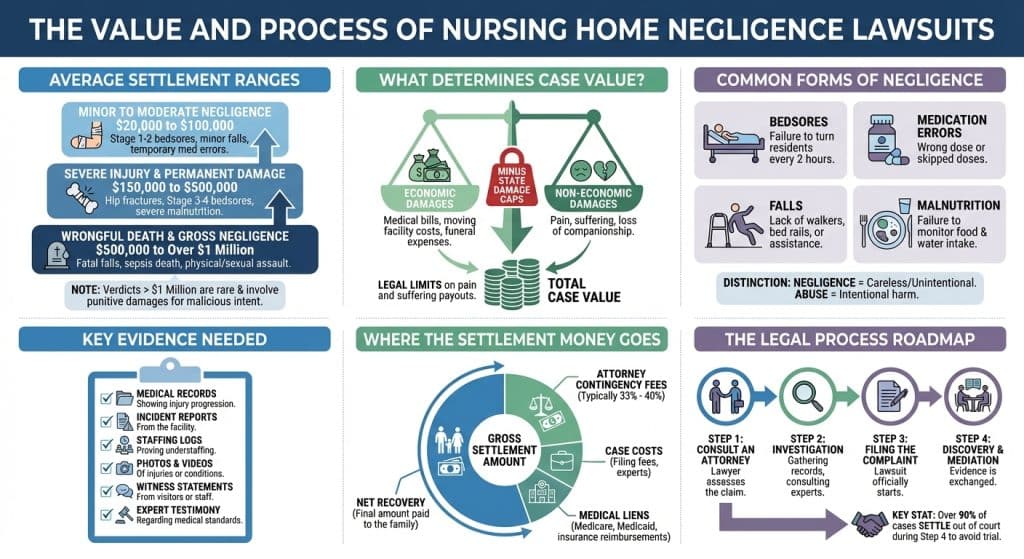
When a loved one suffers due to the carelessness of a care facility, families often ask: how much can you sue a nursing home for negligence? While every case is unique, the average settlement for nursing home negligence typically ranges from $50,000 to over $400,000. In cases involving wrongful death or egregious abuse, verdicts and settlements can exceed $1 million.
However, the amount you can sue for (the demand) and the amount you actually recover (the settlement or verdict) are distinct. Recoverable amounts are heavily influenced by the severity of the injury, the cost of medical care, and specific state laws regarding damage caps.
Average Nursing Home Neglect Settlement Amounts
Settlement values are rarely public, but legal industry data suggests a tiered structure based on the harm caused. Most facilities prefer to settle privately to avoid the negative publicity of a trial.
- Minor Injuries (Bedsores stage 1-2, minor falls): Settlements often fall between $50,000 and $100,000. These cover immediate medical bills and minor pain and suffering.
- Severe Injuries (Broken hips, advanced bedsores, malnutrition): These cases frequently settle in the $150,000 to $400,000 range due to the need for long-term medical intervention.
- Wrongful Death: When negligence leads directly to a resident’s passing, settlements often exceed $500,000, sometimes reaching multi-million dollar figures if punitive damages are awarded.
What is considered a large settlement amount?
A settlement is generally considered “large” if it exceeds $1 million. These amounts are typically reserved for cases involving gross negligence, such as systemic abuse, intentional harm, or administrative failures that resulted in a preventable death. Large settlements often include punitive damages intended to punish the facility rather than just compensate the victim.
Key Factors That Determine Your Case Value
Why does one case settle for $75,000 and another for $750,000? The disparity usually comes down to four critical factors.
1. Severity of Injury and Permanence
Temporary injuries yield lower settlements. Permanent disabilities—such as loss of mobility after a fall or cognitive decline due to medication errors—command higher compensation because they fundamentally alter the resident’s quality of life.
2. Cost of Past and Future Medical Care
The “hard costs” of a lawsuit are the easiest to prove. If negligence caused a hip fracture requiring surgery, rehabilitation, and 24/7 private nursing, the lawsuit must cover all these expenses. Future care costs often drive settlement figures up significantly.
3. Evidence of Systemic Negligence
If you can prove that the injury was caused by understaffing or a facility-wide policy of cutting corners (rather than a one-time mistake by a single aide), the case value increases. Juries and insurance adjusters view systemic failure more harshly.
4. Insurance Policy Limits
Regardless of how much you sue for, you are often limited by the facility’s liability insurance cap. If a nursing home only carries a $1 million policy per occurrence, recovering more than that amount is difficult without pursuing the facility’s corporate assets directly.
Types of Damages You Can Recover
In a nursing home lawsuit, the total compensation is a sum of three categories of damages:
- Economic Damages: Reimbursement for quantifiable financial losses, such as hospital bills, physical therapy costs, and the cost of relocating the resident to a safer facility.
- Non-Economic Damages: Compensation for subjective losses, including physical pain, emotional distress, loss of enjoyment of life, and disfigurement.
- Punitive Damages: Awarded specifically to punish the defendant for malicious or recklessly indifferent conduct. These are rare but can double or triple the final payout.
Defining the Basis of the Lawsuit
To sue successfully, you must prove that the facility failed to provide the standard of care required by law.
What is considered negligence in a nursing home?
Negligence in a nursing home is defined as the failure to provide the standard of care that a reasonably prudent facility would provide under similar circumstances. Common examples include failure to prevent falls, failure to treat bedsores, medication errors, malnutrition, dehydration, and inadequate supervision of residents with dementia.
Distinguishing Between Negligence and Active Abuse
Negligence is usually unintentional—a result of carelessness or understaffing. Abuse is an intentional act to cause harm (physical assault, sexual abuse, or emotional torment). While both are actionable, cases involving active abuse are more likely to result in punitive damages.
Likelihood of Success and Legal Hurdles
Filing a lawsuit does not guarantee a payout. Families must navigate complex legal standards and defense tactics.
How hard is it to win a negligence case?
Winning a negligence case can be difficult because the plaintiff must prove causation—that the facility’s specific action directly caused the injury. Defense attorneys often argue that the resident’s decline was a natural result of aging or pre-existing conditions rather than the facility’s lack of care.
How successful are nursing home lawsuits?
Despite the hurdles, nursing home lawsuits are generally successful when evidence is strong. Industry data suggests that a significant majority of meritorious claims result in a financial settlement before reaching trial. However, success relies heavily on detailed medical records and expert testimony linking the injury to the facility’s actions.
The Impact of Binding Arbitration
Many nursing home admission contracts include binding arbitration clauses. If the resident signed one, you may be forced to resolve the dispute before a private arbitrator rather than a judge and jury, which often results in lower payouts.
State Caps on Damages: A Critical Limitation
One of the biggest constraints on “how much you can sue for” is state law. Many states have implemented tort reform measures that cap damages.
- Non-Economic Damage Caps: Some states limit pain and suffering awards (e.g., to $250,000 or $500,000), regardless of how severe the negligence was.
- Medical Malpractice Classifications: In some jurisdictions, nursing home neglect is treated as medical malpractice, which often comes with stricter filing deadlines and lower damage caps than standard personal injury cases.
Settlement vs. Trial: Which Yields More?
| Comparison | Settlement | Trial Verdict |
|---|---|---|
| Potential Payout | Guaranteed amount, usually lower. | High potential, but $0 if you lose. |
| Timeline | Resolved in months. | Can take years. |
| Privacy | Confidential. | Public record. |
While trials can yield massive verdicts, they are risky. Most attorneys recommend settling if the offer covers all medical expenses and provides fair compensation for pain and suffering, as it guarantees funds are available for the resident’s immediate care.
FAQs
What is considered negligence in a nursing home?
Negligence is the failure to provide the standard of care a reasonably prudent facility would offer. This includes failure to prevent falls, allowing bedsores to develop, medication errors, malnutrition, dehydration, and inadequate supervision of at-risk residents.
How successful are nursing home lawsuits?
Nursing home lawsuits are generally successful when supported by strong medical evidence and documentation. Most valid claims are resolved through settlements rather than trials, ensuring compensation for the victim without the risk of a jury verdict.
What is considered a large settlement amount?
A settlement is considered large if it exceeds $1 million. These amounts are typically associated with wrongful death cases, severe permanent disability, or instances where punitive damages are awarded due to malicious intent or gross negligence.
How hard is it to win a negligence case?
Winning can be challenging because plaintiffs must prove the facility’s actions directly caused the injury, rather than the resident’s underlying health conditions. Success requires detailed medical records, expert testimony, and overcoming potential arbitration clauses.
Is there a time limit to sue a nursing home?
Yes, every state has a statute of limitations for personal injury and medical malpractice claims, typically ranging from 1 to 3 years. Failing to file within this window will permanently bar you from recovering compensation.