

Table of contents
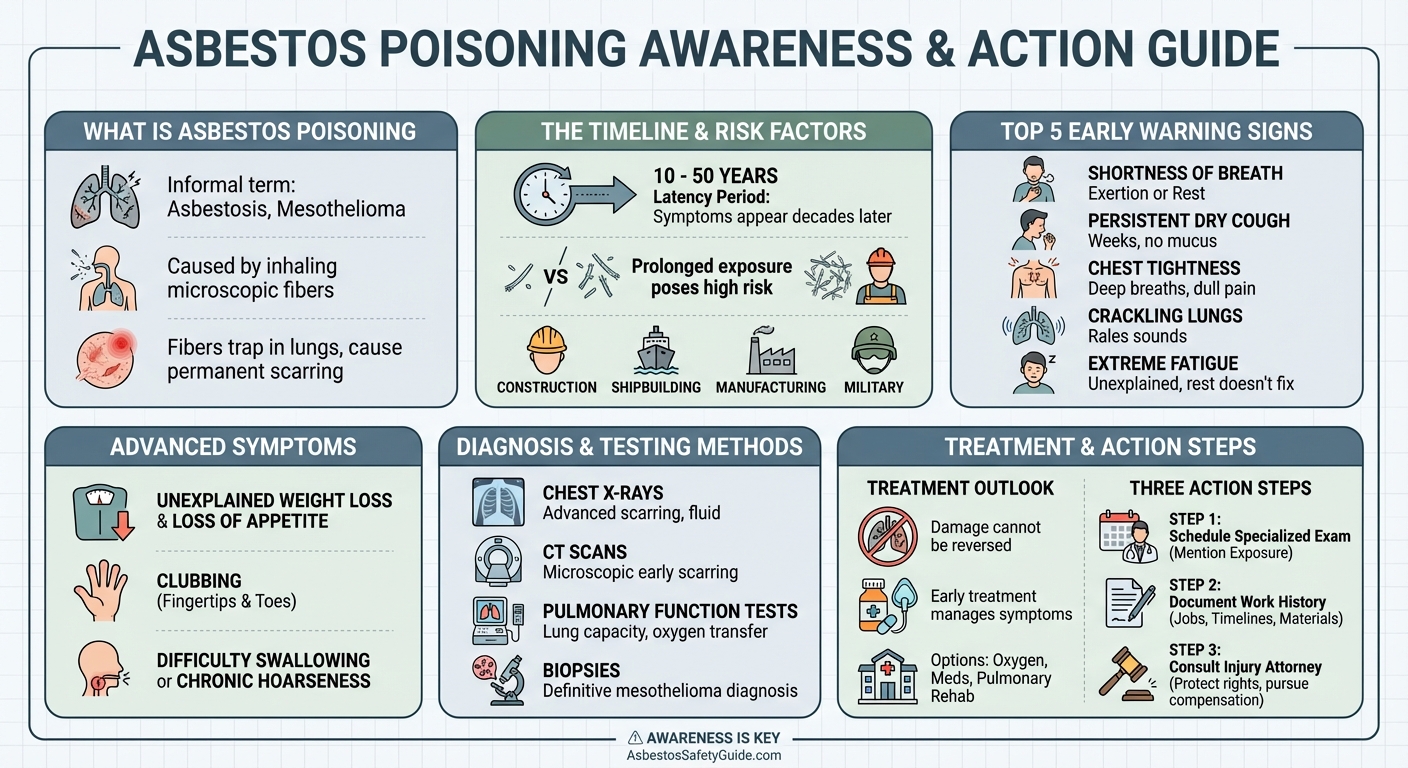
The first signs of asbestos poisoning typically include shortness of breath during physical exertion, a persistent dry cough, and chest tightness or pain. Other early symptoms are extreme fatigue and a dry, crackling sound in the lungs when inhaling. These signs often appear decades after initial exposure.
What Are the First Signs of Asbestos Poisoning?
The term “asbestos poisoning” is not a formal medical diagnosis. Instead, it is a common phrase used to describe the onset of asbestos-related diseases, such as asbestosis, mesothelioma, and asbestos-related pleural disease. When microscopic asbestos fibers are inhaled, they become permanently trapped in the lung tissue. Over time, these fibers cause severe inflammation and scarring.
Because this scarring process is incredibly slow, the first signs of asbestos poisoning rarely appear immediately. When symptoms finally do surface, they often mimic common respiratory issues like asthma, bronchitis, or the natural effects of aging. Recognizing these early warning signs is critical for securing a prompt diagnosis and improving your long-term prognosis.
The 5 Earliest Symptoms of Asbestos Exposure
If you have a history of working in construction, shipbuilding, manufacturing, or the military, you should be highly vigilant for the following early symptoms.
Shortness of Breath (Dyspnea)
Trouble breathing is usually the very first noticeable symptom of asbestos-related lung damage. Initially, you may only feel winded during heavy physical exertion, such as climbing stairs or exercising. As the scar tissue in your lungs thickens and stiffens, shortness of breath can occur even while resting.
Persistent, Dry Cough
A chronic cough that lasts for several weeks and does not respond to standard over-the-counter medications is a major red flag. Unlike a cold or flu, an asbestos-related cough is typically dry, meaning it does not produce mucus or phlegm in its early stages.
Chest Tightness or Pain
Asbestos fibers can irritate the pleura (the lining of the lungs), causing inflammation. This often manifests as a dull, persistent ache in the chest or a feeling of tightness, making it uncomfortable to take a deep breath.
Dry, Crackling Sounds in the Lungs (Rales)
When a doctor listens to your lungs with a stethoscope, they may hear a distinct, dry, crackling sound when you inhale. Known medically as “rales,” this sound is often compared to the noise of Velcro being pulled apart and is a classic indicator of pulmonary fibrosis (lung scarring).
Extreme Fatigue
As lung capacity decreases, your body has to work significantly harder to oxygenate your blood. This constant physical strain can lead to profound, unexplained exhaustion that does not improve with rest or sleep.
Secondary and Advanced Symptoms to Watch For
If asbestos-related diseases progress without medical intervention, more severe systemic symptoms can develop.
Unexplained Weight Loss and Loss of Appetite
Breathing difficulties can make eating uncomfortable and physically exhausting. Additionally, if the asbestos exposure has led to mesothelioma (a type of cancer), the body’s metabolic rate may change, leading to rapid, unintentional weight loss.
Clubbing of the Fingertips and Toes
In advanced cases of asbestosis, a chronic lack of oxygen in the bloodstream can cause “clubbing.” This is a physical deformity where the tips of the fingers and toes become wider, rounder, and bulbous, while the nail beds soften.
Difficulty Swallowing or Hoarseness
If a tumor develops or severe inflammation spreads, it can press against the esophagus or vocal cords. This may cause a raspy voice, chronic hoarseness, or a feeling that food is getting stuck in your throat.
The Latency Period: Understanding the Timeline of Asbestos Diseases
One of the most dangerous aspects of asbestos exposure is the “latency period”—the gap between when you inhale the fibers and when you actually feel sick.
How soon after asbestos exposure do you get sick?
You typically do not get sick immediately after asbestos exposure. Because asbestos fibers cause slow, progressive scarring in the lungs, it usually takes anywhere from 10 to 50 years for the first symptoms of asbestos-related diseases to appear. This extended delay is known as the latency period.
Can you feel symptoms of asbestos exposure years later?
Yes, you can absolutely feel symptoms of asbestos exposure years later. In fact, this is the standard progression for asbestos-related diseases. The microscopic fibers remain trapped in lung tissue, causing gradual inflammation and scarring that only produces noticeable respiratory symptoms decades after the initial exposure occurred.
Assessing Your Exposure Risk
Understanding your risk level is vital for proactive healthcare. Those who worked directly with asbestos insulation, roofing materials, or automotive brakes face the highest risks.
Is one time exposure to asbestos okay?
While no amount of asbestos exposure is considered completely safe, a single, brief exposure rarely leads to severe diseases like asbestosis or mesothelioma. The highest risk of illness comes from prolonged, heavy, and repeated exposure to asbestos dust, typically experienced in industrial or construction workplaces.
Diagnosis and Medical Intervention
If you exhibit early signs of asbestos poisoning, a general practitioner will likely refer you to a pulmonologist (lung specialist) for targeted testing.
How Doctors Diagnose Asbestos-Related Diseases
Because symptoms mirror other illnesses, doctors rely on advanced imaging and functional tests to confirm asbestos damage.
| Diagnostic Test | What It Detects |
|---|---|
| Chest X-Ray | Can reveal advanced lung scarring, pleural plaques, or fluid buildup around the lungs. |
| CT Scan | Provides highly detailed, cross-sectional images to spot early-stage scarring that X-rays miss. |
| Pulmonary Function Test (PFT) | Measures how well your lungs hold air and how effectively they transfer oxygen to the blood. |
| Biopsy | The only definitive way to diagnose mesothelioma by examining lung tissue or fluid under a microscope. |
Can asbestosis be treated if caught early?
While asbestosis cannot be cured or reversed, it can be effectively managed if caught early. Early treatment focuses on relieving symptoms, slowing disease progression, and preventing complications. Doctors may prescribe supplemental oxygen, pulmonary rehabilitation, and medications to help you breathe easier and maintain your quality of life.
What to Do If You Suspect Asbestos Poisoning
Taking immediate action can drastically improve your medical and financial outlook if you suspect your symptoms are tied to past asbestos exposure.
Schedule a Specialized Medical Exam
Do not wait for symptoms to become unbearable. Schedule an appointment with a pulmonologist and explicitly mention your history of asbestos exposure. This ensures they order the correct high-resolution imaging rather than standard tests.
Document Your Work and Exposure History
Write down every job site, employer, and timeframe where you believe you were exposed to asbestos. Note the specific products you handled and whether protective gear was provided. This timeline is crucial for both your medical diagnosis and potential legal claims.
Protect Your Legal Rights
Asbestos-related diseases are almost always the result of corporate negligence. If you are diagnosed with asbestosis or mesothelioma, you may be entitled to significant compensation to cover your medical bills, lost wages, and pain and suffering. Consulting with an experienced personal injury attorney early on ensures your rights are protected before strict legal deadlines expire.