
Table of contents
Fire damages refer to the physical destruction of property caused by flames, smoke, and extinguishing efforts, as well as the financial compensation victims seek for their losses. Common types of fire damage include primary heat damage, corrosive soot buildup, water damage from firefighting, and hidden structural weakening.
Understanding Fire Damages: Physical Destruction and Financial Loss
When a fire strikes, the aftermath leaves property owners facing a complex web of destruction and financial strain. Navigating this recovery requires a clear understanding of what constitutes fire damages, both physically and legally.
The Dual Meaning of Fire Damages
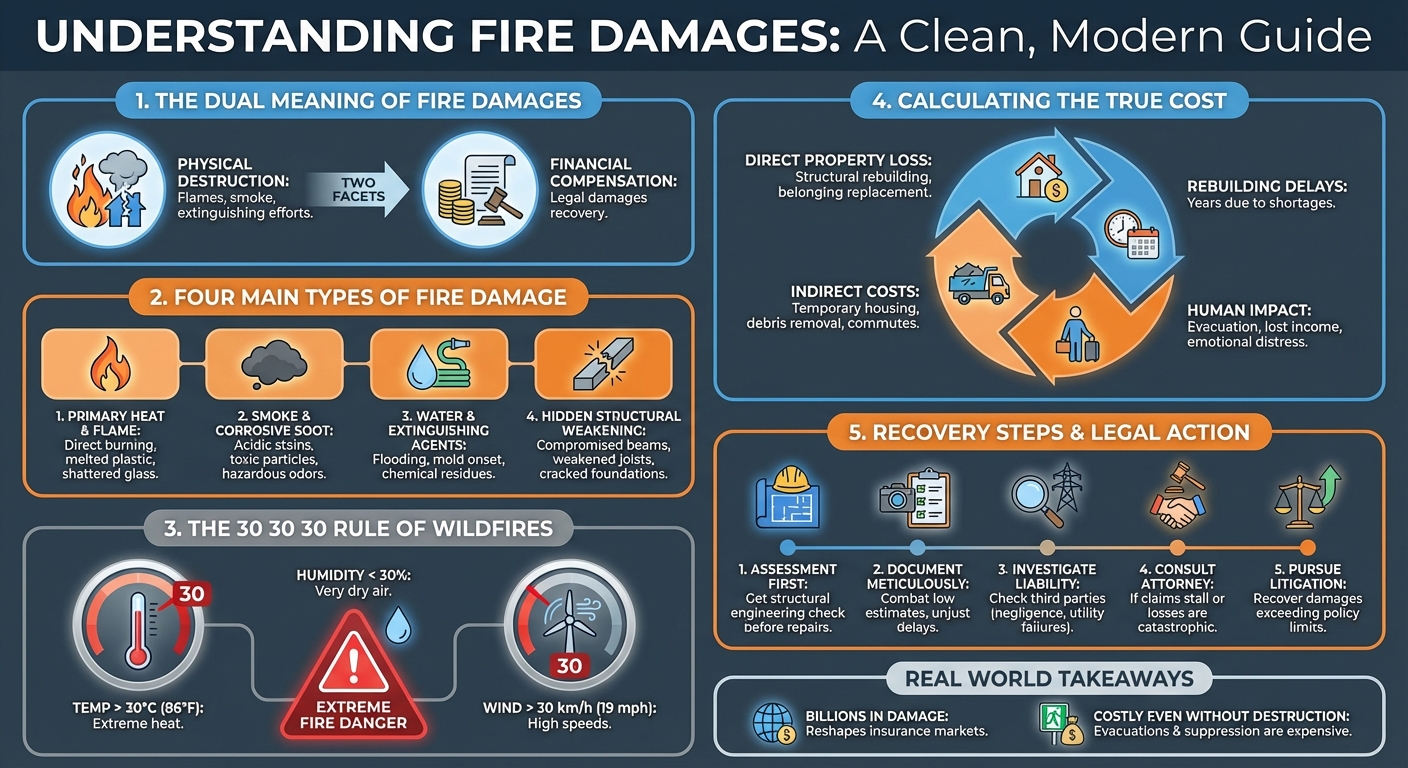
In legal and insurance contexts, “fire damages” has a dual meaning. First, it refers to the literal, physical destruction of property caused by flames, smoke, and extinguishing efforts. Second, it represents the financial compensation or legal damages that victims seek to recover their losses, whether through an insurance claim or third-party litigation.
What is an example of a fire damage?
An example of a fire damage is a compromised roof structure caused by burning embers, or severe smoke and soot staining on interior walls. It also includes secondary destruction, such as water damage to flooring and drywall resulting from firefighters extinguishing the blaze.
What are the different types of fire damage?
The different types of fire damage include primary heat and flame destruction, smoke and corrosive soot contamination, water damage from extinguishing efforts, and hidden structural weakening. Each type requires specific professional restoration techniques and impacts your property insurance claims and legal recovery differently.
Primary Fire and Heat Damage
This is the most visible form of destruction. Direct flames consume combustible materials like wood, drywall, and fabric. Even if flames do not touch a surface, extreme heat can melt plastics, warp metal fixtures, and shatter glass, leaving a property uninhabitable.
Smoke and Corrosive Soot Damage
Smoke damage often extends far beyond the burn line. Soot is highly acidic and can permanently etch glass, tarnish metal, and discolor walls within days if not properly mitigated. Furthermore, toxic smoke particles embed themselves into porous materials, creating lingering odors and severe respiratory hazards.
Water and Extinguishing Agent Damage
Putting out a fire introduces a new set of problems. High-pressure fire hoses flood properties, leading to saturated drywall, warped flooring, and the rapid onset of mold. Chemical fire retardants and foams can also leave behind toxic, corrosive residues that require specialized hazardous material cleanup.
Hidden Structural and Foundation Damage
Not all fire damage is immediately visible. Intense heat can compromise the integrity of steel beams, weaken wooden joists inside walls, and even cause concrete foundations to crack or spall. A thorough structural engineering assessment is vital before beginning any cosmetic repairs.
Wildfire Behavior and Environmental Factors
While house fires are often contained to a single structure, wildfires are driven by environmental variables that make them unpredictable and highly destructive.
How Weather Conditions Exacerbate Fire Spread
Wildfires thrive on a combination of dry vegetation, steep topography, and erratic weather. High winds can carry burning embers miles ahead of the main fire front, igniting spot fires that overwhelm containment efforts. Low humidity further dries out brush, turning it into explosive fuel.
What is the 30/30/30 rule for fire?
The 30/30/30 rule for fire is a weather guideline used to identify extreme wildfire danger conditions. It occurs when temperatures exceed 30 degrees Celsius (86 degrees Fahrenheit), relative humidity drops below 30 percent, and wind speeds surpass 30 kilometers per hour (about 18 mph).
Calculating the True Cost of Fire Damages
Recovering from a fire involves more than just rebuilding a structure. The true cost encompasses a wide range of direct and indirect expenses.
Direct Property Loss vs. Indirect Costs
| Damage Category | Examples |
|---|---|
| Direct Property Loss | Structural rebuilding, replacing furniture, electronics, and personal heirlooms. |
| Indirect Costs | Temporary housing, increased commute costs, debris removal, and landscaping. |
Evacuation Expenses, Lost Income, and Emotional Distress
During a major fire, families are often displaced for weeks or months. Evacuation brings immediate out-of-pocket costs for hotels and food. Additionally, victims frequently suffer lost wages from missing work, alongside severe emotional distress and trauma that can be factored into legal settlements.
Estimating Repair and Rebuilding Timelines
Rebuilding after a fire is rarely a swift process. Widespread wildfires often lead to regional shortages of contractors and building materials. Securing permits, passing environmental soil tests, and negotiating with insurance adjusters can extend rebuilding timelines to several years.
Legal Avenues for Recovering Fire Damages
Securing fair compensation is often a battle. Property owners must be prepared to advocate for their rights against powerful entities.
Navigating Insurance Claims and Bad Faith Tactics
Homeowners insurance is supposed to be a safety net, but insurers frequently employ bad faith tactics to protect their bottom line. This includes unjustifiably delaying payouts, lowballing repair estimates, or denying coverage for secondary issues like smoke and water damage. Documenting every loss meticulously is your best defense.
Pursuing Wildfire Litigation and Third-Party Liability
When a wildfire is caused by human negligence, victims may have grounds for a lawsuit. Utility companies failing to maintain power lines, negligent contractors, or arsonists can be held liable. Wildfire litigation allows victims to recover damages that exceed their insurance policy limits.
When to Consult a Fire Damage Attorney
You should consult a fire damage attorney if your insurance claim is stalled, if you have suffered catastrophic, life-altering losses, or if a third party is responsible for the blaze. Legal representation ensures your damages are accurately valued and aggressively pursued.
Real-World Impact: Examining Recent Wildfires
Recent history highlights the devastating physical and financial toll of uncontrolled fires on communities.
The Devastating Toll of California Wildfires
California has seen some of the most destructive fire seasons on record, driven by climate shifts and aging utility infrastructure. These fires have leveled entire towns, resulting in billions of dollars in property damage, massive utility settlements, and a complete reshaping of the state’s insurance market.
What were the damages of the Palisades fire?
The 2021 Palisades fire in Los Angeles burned approximately 1,202 acres of brush in the Santa Monica Mountains. While no civilian homes were destroyed, the damages included minor injuries to firefighters, the mandatory evacuation of roughly 1,000 residents, and significant environmental and municipal fire suppression costs.