

Table of contents
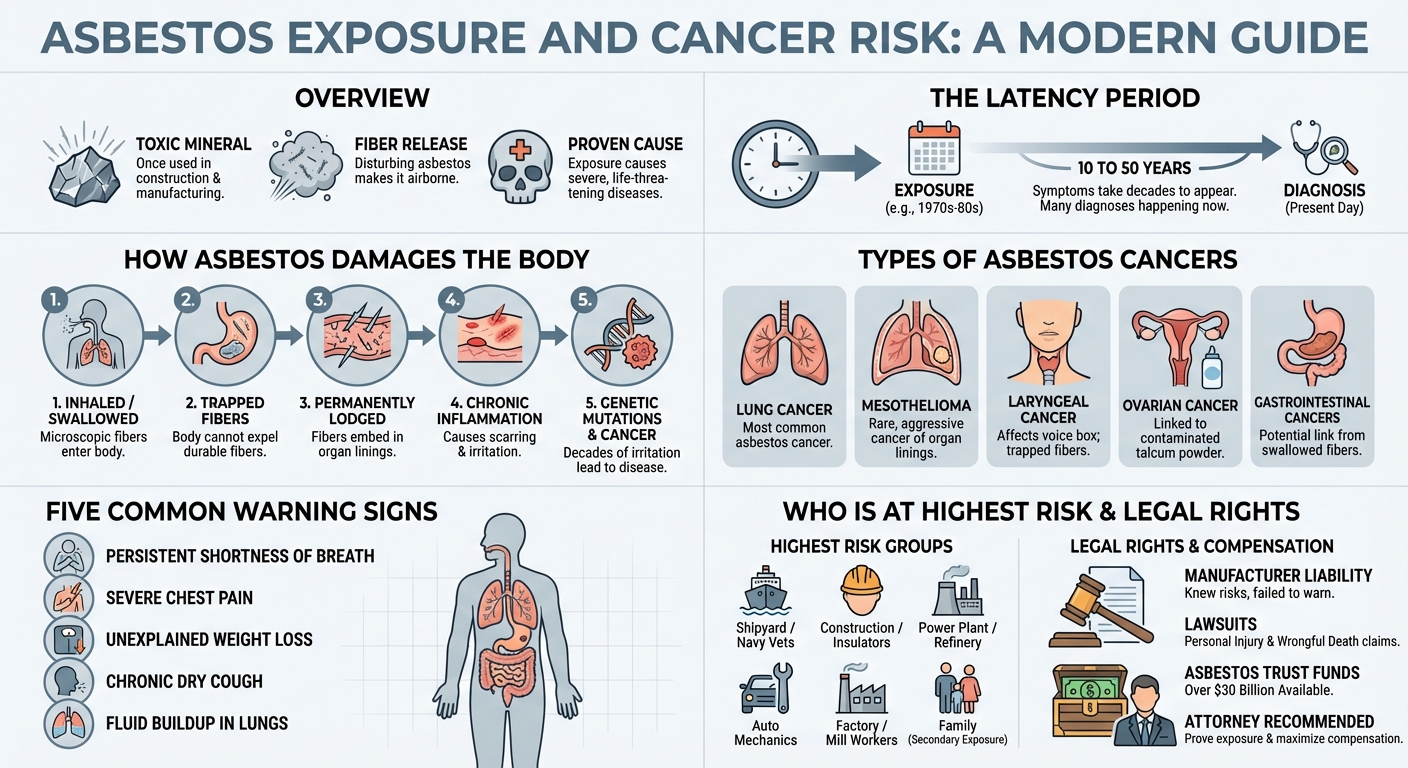
Asbestos exposure is a proven cause of several severe cancers. The primary cancers caused by asbestos include mesothelioma, lung cancer, laryngeal cancer, and ovarian cancer. When microscopic asbestos fibers are inhaled or swallowed, they become trapped in the body, causing long-term inflammation and genetic damage that leads to cancer.
Understanding the Link Between Asbestos and Cancer
Asbestos is a naturally occurring mineral once heavily used in construction, manufacturing, and shipbuilding due to its heat resistance and durability. However, it is now recognized as a highly toxic human carcinogen. When asbestos-containing materials are disturbed, they release microscopic fibers into the air. Inhaling or swallowing these fibers can lead to severe, life-threatening diseases.
How Asbestos Fibers Damage the Body
Because asbestos fibers are microscopic and incredibly durable, the human body cannot easily break them down or expel them. Once inhaled or ingested, these jagged fibers become permanently lodged in the tissues lining the lungs, abdomen, or heart. Over time, the trapped fibers cause chronic inflammation, cellular scarring, and genetic damage. This continuous cellular irritation eventually triggers the mutations that lead to cancer.
The Latency Period: Why Symptoms Take Decades to Appear
One of the most dangerous aspects of asbestos exposure is its prolonged latency period. The damage caused by asbestos fibers occurs very slowly. It typically takes anywhere from 10 to 50 years after the initial exposure for symptoms of asbestos-related cancers to manifest. Because of this delay, many individuals exposed in the 1970s and 1980s are only now receiving devastating diagnoses.
What is the most common cancer caused by asbestos?
While mesothelioma is the most well-known disease linked to asbestos, asbestos-related lung cancer is actually the most common cancer caused by asbestos exposure. According to health experts, asbestos exposure contributes to thousands of lung cancer diagnoses each year, making it far more prevalent than rare cancers like mesothelioma.
Primary Cancers Directly Caused by Asbestos Exposure
Major health organizations, including the World Health Organization (WHO) and the CDC, recognize asbestos as a definitive cause of several specific types of cancer.
Mesothelioma (Pleural, Peritoneal, and Pericardial)
Mesothelioma is a rare, aggressive cancer that develops in the mesothelium, the thin membrane lining the body’s internal organs. Asbestos exposure is the only established cause of this disease. It most commonly affects the lining of the lungs (pleural mesothelioma), but can also develop in the lining of the abdomen (peritoneal) or the heart (pericardial).
Asbestos-Related Lung Cancer
Asbestos exposure significantly increases the risk of developing lung cancer, especially for individuals who also smoke. The asbestos fibers lodge deep within the lung tissue, causing tumors to form over decades. Symptoms closely mirror those of smoking-related lung cancer, including chronic cough, chest pain, and respiratory infections.
Laryngeal Cancer (Cancer of the Voice Box)
Inhaled asbestos fibers must pass through the voice box (larynx) on their way to the lungs. Scientific evidence confirms that fibers can become trapped in the laryngeal tissue, leading to laryngeal cancer. Symptoms often include a persistent sore throat, hoarseness, and difficulty swallowing.
Ovarian Cancer
Recent studies and legal rulings have confirmed a definitive link between asbestos and ovarian cancer. This exposure often occurred through the use of asbestos-contaminated talcum powder products for personal hygiene. The fibers can travel through the reproductive system, embedding in the ovaries and causing malignant tumors.
Other Cancers Potentially Linked to Asbestos
Beyond the primary cancers, ongoing medical research suggests asbestos may play a role in the development of other malignancies, particularly within the digestive system.
Gastrointestinal (GI) Cancers
When asbestos fibers are swallowed—either from contaminated drinking water or by clearing inhaled fibers from the respiratory tract with mucus—they pass through the digestive system. This has led researchers to investigate the link between asbestos and various gastrointestinal cancers.
Stomach and Colon Cancer Risks
While the evidence is not as definitive as it is for mesothelioma or lung cancer, several studies have shown an elevated risk of stomach and colon cancers in populations with heavy asbestos exposure. The continuous irritation of the gastrointestinal lining by swallowed fibers is believed to be the contributing mechanism.
What are 5 signs and symptoms of mesothelioma?
The five most common signs and symptoms of pleural mesothelioma include persistent shortness of breath, severe chest pain, unexplained weight loss, a chronic dry cough, and fluid buildup in the lungs (pleural effusion). These symptoms often mimic less serious respiratory conditions, making early and accurate diagnosis difficult.
Prognosis and Survival Rates for Asbestos-Related Diseases
A cancer diagnosis related to asbestos is generally severe, but survival rates vary widely depending on the specific type of cancer, the stage at diagnosis, and the patient’s overall health.
Is mesothelioma always fatal?
Mesothelioma is an aggressive cancer with no known cure, making it generally fatal. However, it is not always immediately terminal. With early detection and aggressive treatments like surgery, chemotherapy, and immunotherapy, many patients can significantly extend their survival time and improve their overall quality of life.
What is the life expectancy of asbestosis patients?
Asbestosis is a chronic, non-cancerous lung disease, and life expectancy varies widely based on severity. While it cannot be cured, many patients live for decades after diagnosis with proper medical management. However, severe cases can lead to heart failure or respiratory failure, potentially reducing overall lifespan.
Who is at the Highest Risk for Asbestos-Related Cancers?
While any level of asbestos exposure carries risk, certain groups face a significantly higher likelihood of developing asbestos-related diseases due to prolonged, heavy exposure.
High-Risk Occupations (Construction, Shipyards, Manufacturing)
Before strict regulations were enacted in the late 1970s, millions of workers handled asbestos daily. The highest-risk occupations include:
- Shipyard workers and Navy veterans
- Construction workers, roofers, and insulators
- Power plant and refinery workers
- Auto mechanics (especially brake and clutch repair)
- Factory and textile mill workers
Secondary Exposure Risks for Family Members
You did not have to work directly with asbestos to be at risk. Many spouses and children developed mesothelioma through secondary (take-home) exposure. This occurred when workers unknowingly brought microscopic asbestos fibers home on their clothing, skin, and hair, exposing their families during laundry or physical contact.
Legal Options and Compensation for Asbestos Victims
Because asbestos manufacturers knew about the health risks for decades but failed to warn workers, victims of asbestos-related cancers have strong legal rights to pursue financial compensation.
Filing an Asbestos Claim or Lawsuit
Patients diagnosed with mesothelioma, lung cancer, or other asbestos-related diseases can file personal injury lawsuits against the companies responsible for their exposure. If a loved one has passed away from an asbestos disease, surviving family members can file a wrongful death lawsuit to recover medical expenses, lost wages, and funeral costs.
Accessing Asbestos Trust Funds
Many asbestos companies filed for bankruptcy to avoid lawsuits. In response, the courts forced them to establish Asbestos Trust Funds to compensate current and future victims. There is currently over $30 billion available in these trusts. Claims can often be resolved without ever going to court.
Why You Need an Experienced Toxic Tort Attorney
Asbestos litigation is highly complex. Proving exactly when, where, and how you were exposed to asbestos decades ago requires specialized legal expertise. An experienced toxic tort attorney will have access to extensive databases of asbestos products and job sites, ensuring you identify all liable parties and maximize your compensation.